MDR Compliance Checklist: What You Need Before Submitting

A Comprehensive Pre-Submission Readiness Guide

Navigating the European Union’s (EUs) Medical Device Regulation (Regulation [EU] 2017/745; MDR) demands meticulous preparation. Submitting incomplete technical documentation to a Notified Body (NB) for review triggers lengthy review cycles and costly delays. This guide serves as a final gap analysis to ensure a robust, coherent, and compliant submission, paving a smoother path to Conformité Européenne (CE) marking.

Your technical documentation is an output of your quality management system (QMS). The NB will review your technical file and your QMS, in accordance with the requirements of Annex IX of the MDR. Other conformity assessment routes, such as those outlined in Annex X (based on type-examination) or Annex XI (based on product conformity verification), may also be selected, although they are less commonly used.

The foundational systems and roles required of all manufacturers, regardless of device classification, are as follows:

  • MDR-compliant QMS: Per MDR Article 10(9), a QMS for developing, manufacturing, and post-market monitoring is mandatory. Although certification to ISO 13485:2016 is not mandatory, it is commonly used to demonstrate compliance and is considered the most effective way to fulfil the requirements of Article 10(9) of the MDR. For all devices, the QMS should incorporate MDR-specific processes such as post-market surveillance (PMS), vigilance, and unique device identification (UDI) management.

For Class IIa, IIb, and III devices, as well as certain Class I devices placed on the market in sterile condition, with a measuring function, or intended to be reused, the QMS is typically assessed by a Notified Body as part of the conformity assessment. For other Class I devices, while a QMS is still required under Article 10(9), it does not require Notified Body involvement.

  • Risk management system: Mandated by MDR Annex I, risk management per ISO 14971 must be a continuous process implemented throughout the entire product lifecycle, ensuring risks are controlled and an acceptable benefit-risk ratio.
  • Person Responsible for Regulatory Compliance (PRRC): MDR Article 15 obliges manufacturers to designate at least one qualified PRRC permanently and continuously at their disposal. This ensures technical documentation and declarations of conformity (DoC) are prepared and maintained in compliance with the Regulation.
  • Understanding stakeholder obligations: Ensure that your organisation understands, and has communicated, the necessary information to distributors and importers, who have specific obligations under MDR Articles 13 and 14 regarding verification, storage, and complaint handling.

Your technical documentation is the core evidence dossier for your device, structured in accordance with MDR Annexes II (Technical Documentation) and III (Technical Documentation on PMS).

Technical documentation (Annex II)

Must provide comprehensive evidence that all General Safety and Performance Requirements (GSPRs) from Annex I are met.

  • Device description & specifications: Detailed description of the device, including trade name, intended purpose, users, patient population, principles of operation, and key functional elements (components, materials, software). Identification via Basic UDI-DI (per MDR Article 27 and Annex VI, Part C) or other traceable identifiers. Justification of device qualification, risk class, and applied classification rules in accordance with MDR Annex VIII. Overview of previous and similar generations of the device
  • Labelling & Instructions for Use (IFU): All labelling must comply with MDR Annex I, Chapter III. Claims made in the IFU or labelling must be consistent with, and supported by, the clinical evaluation, GSPRs, and RMF. Labels and Instructions for Use (IFU) in all applicable EU languages
  • Design and Manufacturing Information: Description of design stages, manufacturing processes, validation data, and control of critical suppliers/subcontractors.
  • GSPR checklist: Links each applicable safety and performance requirement of the device to the source of objective evidence (ie, verification & validation [V&V] reports, test data, or procedures); GSPRs not considered applicable should be justified. Reference to applied harmonised standards, common specifications (CS), or equivalent solutions.
  • Risk management file (RMF): Must demonstrate a complete lifecycle approach to risk per ISO 14971, including analysis, evaluation, control, and a report concluding a favourable benefit-risk profile.
  • V&V reports: Data supporting device safety and performance, including
    • Biocompatibility (ISO 10993 series)
    • Electrical Safety & electromagnetic compatibility (IEC 60601 series)
    • Software V&V (IEC 62304 for lifecycle processes)
    • Stability and shelf-life testing
    • Sterilisation validation
    • Performance and safety testing relevant to intended use

Clinical Evaluation (Annex XIV)

Includes a clinical evaluation report (CER) based on a compliant clinical evaluation plan (CEP), providing sufficient clinical evidence to demonstrate device safety, performance, and a favourable benefit-risk ratio. It must also:

  • critically appraise data from manufacturer clinical investigations or an equivalent device (if claimed according to strict MDR criteria);
  • be updated continuously throughout the device’s lifecycle with post-market data.

PMS & vigilance (Annex III)

The Post-Market Surveillance (PMS) Documentation ensures continuous evaluation of device performance and compliance throughout its lifecycle, through the following documents.

  • A PMS plan: Proactively and systematically collects and analyses post-market data on device quality, performance, and safety.
  • A post-market clinical follow-up (PMCF) plan: Actively gathers clinical data post-market, required unless exclusion is justified.
  • Vigilance System: Robust procedures for reporting Serious Incidents and Field Safety Corrective Actions to competent authorities per MDR Article 87.
  • PMS reporting: Preparation of a Periodic Safety Update Report (PSUR) (Article 86) or Post-Market Surveillance Report (PMSR) (Article 85), depending on device class

Step 3: Pre-Submission – Administrative and Conformity Assessment Planning

Final checks before NB engagement.

  • Conformity assessment: Based on device classification, the correct conformity assessment procedure (detailed in MDR Annexes IX-XI) must be followed.
  • EU DoC (Annex IV): A draft DoC must be prepared, listing all applicable regulations and standards, signed after the NB grants CE certification.
  • Summary of Safety and Clinical Performance (SSCP): For implantable and Class III devices; must be written in clear, layperson language and must be consistent with the CER and IFU.
  • CRITICAL STEP – Internal Consistency Review: A cross-functional review to ensure the device name, intended purpose, indications, and key performance claims are consistent across documentation.
  • NB Engagement:
    • Designation Scope: Confirm your chosen NB is officially designated for your device type and classification.
    • HIGHLY RECOMMENDED – Pre-Submission Meeting: Discuss your strategy and the NB’s expectations through structured dialogues, de-risking the formal submission process.

Supporting Documents and Guidance

  • ISO 13485:2016 (QMS)
  • ISO 14971:2019 (Risk Management)
  • ISO 14155:2020 (Clinical Investigations)
  • MEDDEV 2.7/1 Rev. 4 (Clinical Evaluation: A Guide for Manufacturers and Notified Bodies)
  • MDCG 2020-6 (Clinical evidence needed for medical devices previously CE marked under Directives 93/42/EEC or 90/385/EEC: A guide for manufacturers and notified bodies)
  • MDCG 2020-7 (Post-market clinical follow-up [PMCF] Plan Template: A guide for manufacturers and notified bodies)
  • MDCG 2020-8 (Post-market clinical follow-up [PMCF] Evaluation Report Template: A guide for manufacturers and notified bodies)
  • MDCG 2019-9 (Summary of safety and clinical performance: A guide for manufacturers and notified bodies)

Key Takeaway

MDR compliance transcends document creation. It is about building a coherent, evidence-based narrative weaving together quality management, risk analysis, clinical data, and post-market vigilance into a single, compelling story of your device’s safety and performance. Using this comprehensive checklist to perform a final, critical gap analysis ensures your story is not only complete but also clear, consistent, and readily verifiable, paving a smoother path to successful CE marking under the MDR.

Contact us today for a consultation with our medical devices team.

Written by:
Grace Chia, PhD

Grace Chia, PhD

RA Specialist

Regulatory Affairs Specialist in MDR & IVDR with expertise in CERs, SVRs, literature review, and regulatory compliance.
Industry Insights & Regulatory Updates

Clinical Development for Medical Devices: From Strategy to Submission

Clinical development for medical devices is a complex and continuous process under Regulation (EU) 2017/745 (MDR), requiring robust clinical evidence to demonstrate safety and performance. Regardless of whether your product is a novel technology or an updated version of an existing device, regulators demand comprehensive evaluation across every phase. This guide walks you through the key steps, from early strategy to final submission, to help you achieve MDR compliance.

To begin with, this phase is critical for defining the scope, evidence routes, and overall resource allocation for your clinical efforts. A well-constructed strategy at this stage prevents costly errors and oversights, setting the trajectory for a successful submission. As a result, this phase produces the clinical evaluation plan (CEP), your core strategic document.

Key strategic actions:

Comprehensive gap analysis: Assess all existing data against the MDR requirements applicable to your device’s risk class and intended purpose. This includes preclinical data (biocompatibility, electrical safety, software validation, usability engineering) and potential sources of clinical data.

Defining the evidence route map: Decide if conformity with the general safety and performance requirements (GSPRs) set out in Annex I of the MDR can be demonstrated through existing data or if a new clinical investigation is required.

  • Waiver of clinical data: Under MDR Article 61(10), a justification for omitting clinical data may be possible if deemed “not appropriate.” This is reserved for low-risk devices where safety and performance can be demonstrated through comprehensive preclinical testing (e.g., bench testing, non-clinical performance evaluation). You must justify the waiver through risk management and support it with clear technical documentation.
  • Clinical investigation route: For novel devices or when equivalence cannot be sufficiently proven, a new clinical investigation is unavoidable, especially for Class IIb implantable and all Class III devices.
  • Equivalence route: Alternatively, if you rely on data from another device, you must provide rigorous proof of technical, biological, and clinical equivalence as per the MDR’s strict criteria. Notified Bodies (NBs) apply these requirements strictly, which makes this path to clinical evidence more difficult.

Developing the Clinical Development Plan (CDP): This overarching document integrates pre-market and post-market clinical activities, ensuring a seamless transition from pre-market approval to post-market surveillance.

Using the CEP as the roadmap:

The CEP must define the device and its intended purpose. It should also establish specific clinical safety and performance objectives that are aligned with the device’s intended clinical benefits and risk profile. It must outline clear clinical questions, list relevant data sources, and explain the literature search strategy. A well-crafted CEP is the strategic backbone of clinical development for medical devices, ensuring your evidence generation aligns with MDR expectations.

Need expert guidance navigating MDR clinical development? Partner with MDx CRO to streamline your clinical strategy, generate robust evidence, and ensure regulatory success. Contact us today.

While the clinical evaluation identifies evidence gaps, a clinical investigation may be required to generate the data needed to address them.

Clinical investigation set-up and conduct:

  • Investigation plan and protocol development: You must ensure the protocol is scientifically rigorous and ethically sound, in line with ISO 14155:2020. It should clearly define endpoints, sample size, and study methodology.
  • Navigating regulatory approvals: Secure necessary approvals from Competent Authorities and favourable opinions from Ethics Committees in each target member state.
  • Trial conduct, monitoring and oversight: Additionally, ensure all sites are adequately trained and monitored in study procedures. Use robust data systems to ensure data integrity and accuracy.
  • Vigilance and Safety Reporting: Establish clear processes for capturing, assessing, and reporting all adverse events and device deficiencies in accordance with regulatory timelines. You must ensure these processes comply with MDR requirements, particularly Articles 80–89 and Annex III Section 1.1(c). In addition, where applicable to clinical investigations, compliance with ISO 14155:2020 is also required.

At this stage, you must transform raw data into compelling evidence. The data must be critically appraised, synthesised, and contextualised within the current state of the art.

Understanding clinical data:

Per MDR Article 2(48), clinical data are information concerning safety or performance of a device that are generated from the use of a device, and are sourced from one or more of the following:

  • Clinical investigations of the device under evaluation (DuE).
  • Clinical investigation(s) or other studies reported in scientific literature, involving a device for which equivalence to the device in question can be demonstrated.
  • Peer-reviewed scientific literature reporting other clinical experience with the device in question or with a device for which equivalence can be demonstrated.
  • Clinically relevant information from post-market surveillance (PMS), particularly post-market clinical follow-up (PMCF).

Core components of data analysis and compiling the clinical evaluation report (CER):

  • Systematic literature review and data appraisal: Execute the literature search as defined in the CEP. The process must be fully transparent, systematic, and reproducible. Evaluate each data source critically for validity, quality, and relevance—whether from your study or existing literature. Standardised appraisal tools should be used to assess the risk of bias and the strength of the evidence.
  • Demonstrating conformity with GSPRs: You must clearly link your clinical evidence to the GSPRs in the CER. It should clearly state how the collected data verifies that each applicable clinical requirement is met.
  • State-of-the-art comparison: Compare your device’s performance, safety, and benefit-risk profile against the current standard of care and available alternatives. This contextualises your device’s value within the medical landscape.
  • Writing a comprehensive and well-structured CER: The final report should clearly justify the device’s clinical safety and performance. It must affirm that the overall benefit-risk conclusion is favourable for the intended target population and clinical setting. Your evaluator(s) must sign the CER to confirm responsibility, and all data, appraisals, and conclusions must be traceable.

Synthesising data into a Clinical Evaluation Report (CER) is a critical milestone in clinical development for medical devices, connecting raw data to a clear regulatory conclusion.

Under MDR, clinical evaluation is a continuous process. In fact, certification is not the finish line—it’s the midpoint of an ongoing cycle of evidence generation.

Ongoing post-market obligations:

  • PMS: Proactively collect and evaluate real-world data from various sources, including user feedback, complaint handling, literature screening, and registries. This system helps detect emerging risks or performance issues.
  • PMCF studies: Where required by the risk profile or as outlined in the CDP, conduct targeted PMCF studies to investigate the long-term performance and safety of the device, or to address any residual uncertainties from pre-market clinical evaluation.
  • CER updates: Treat the CER as a living document. Therefore, update it annually for Class III and implantable devices, or every 2–5 years for lower-risk classes. An immediate update is warranted upon the discovery of significant new information that could impact the benefit-risk assessment, such as newly available clinical data, emerging risks, or advancements in the state-of-the-art.

Navigating Challenges

  • Data quantity and quality: Data must be sufficient for statistical significance and come from reputable sources. Manufacturers must demonstrate a thorough search of relevant databases (e.g., PubMed, EMBASE) and a critical appraisal of the data’s scientific validity.
  • Justifying a waiver: However, waiving clinical data is risky. You must justify it scientifically and ethically, rooted in strong risk management
  • Proving equivalence: The bar for demonstrating technical, biological, and clinical equivalence is high. Because NBs assess equivalence strictly, a new clinical investigation is often the better option.

Supporting Documents and Guidance

Regulations

Harmonised Standards:

  • ISO 14155:2020 (Clinical investigation of medical devices for human subjects — Good clinical practice)

Guidance Documents:

  • MDCG 2020-13 (Clinical evaluation assessment report template)

Key Takeaway

Successful clinical development for MDR compliance is not a series of isolated tasks but an integrated, lifecycle-spanning process with clinical evaluation as its continuous core. To sum up, by planning strategically with a thorough gap analysis and a robust CEP, executing clinical investigations with rigor, synthesising data into compelling evidence in the CER, and embracing the ongoing cycle of PMS and CER updates, you demonstrate more than just compliance. You build and maintain a strong, evidence-based case for your device’s enduring value, safety, and performance in the marketplace.

Written by:
Grace Chia, PhD

Grace Chia, PhD

RA Specialist

Regulatory Affairs Specialist in MDR & IVDR with expertise in CERs, SVRs, literature review, and regulatory compliance.
Industry Insights & Regulatory Updates

Running Clinical Studies Under IVDR: What You Need to Know

The In Vitro Diagnostic Regulation (IVDR EU 2017/746) has redefined the requirements for bringing in vitro diagnostic (IVD) devices to the European market. Compared with the previous IVD Directive, most devices are now subject to higher classification, more rigorous oversight, and stricter evidence requirements.

At the heart of these new obligations lies the clinical performance study. To comply with IVDR, manufacturers must demonstrate that their devices perform safely and effectively in real-world conditions. The standard ISO 20916:2024 sets the benchmark for conducting these studies to recognised international good practice.

In this article, we’ll explore what clinical performance studies are, why they matter under IVDR, the role of ISO 20916, and how manufacturers can successfully run studies to secure CE marking and maintain market access.

What Is a Clinical Performance Study?

A clinical performance study is an investigation carried out to establish how an IVD performs using human specimens. Unlike laboratory-based analytical performance tests, clinical performance studies focus on real-world clinical outcomes:

  • Does the device detect the intended condition accurately?
  • Does it provide reproducible and reliable results in the target population?
  • Is its performance clinically meaningful for diagnosis or monitoring?

In regulatory terms, clinical performance means the device’s ability to yield results that correlate with a specific clinical condition or physiological state. Under IVDR, Clinical Performance Studies provide essential evidence to confirm this performance.

Why Clinical Performance Studies Are Critical Under IVDR

The IVDR dramatically increases the need for robust clinical evidence:

  1. Higher device classification – Many IVDs previously self-certified under the IVD Directive now require Notified Body review.
  2. Performance evaluation requirements – Clinical performance is one of the three pillars of evidence (alongside scientific validity and analytical performance) outlined in IVDR Article 56.
  3. Regulatory approval and CE marking – Without a compliant Clinical Performance Study, manufacturers risk delays or refusal of certification.
  4. Market competitiveness – Strong clinical data builds confidence with regulators, clinicians, and end-users.

Put simply: no strong clinical evidence, no EU market access.

The Role of ISO 20916

ISO 20916 provides the internationally recognised framework for running Clinical Performance Study.

The standard sets out requirements across the study lifecycle, including:

  • Planning: Protocol design, objectives, endpoints, sample size, and bias control
  • Ethics: Protecting participant rights, safety, and data privacy in line with the Declaration of Helsinki and GDPR
  • Conduct: Investigator qualification, site selection, specimen handling, and monitoring
  • Data integrity: Ensuring quality, traceability, and Good Clinical Practice oversight
  • Reporting: Producing structured, regulator-ready study reports

By following ISO 20916, manufacturers can ensure their Clinical Performance Study meet both IVDR requirements and global best practice. This reduces the risk of regulatory rejection.

Key Components of a Clinical Performance Study

1. Study Planning and Protocol Development

Every Clinical Performance Study begins with a comprehensive study protocol, which must define:

  • Study objectives and endpoints.
  • Target population and specimen types.
  • Statistical methodology and sample size.
  • Ethical and data protection considerations.

A strong protocol is the backbone of a successful Clinical Performance Study.

2. Regulatory and Ethical Approvals

Before starting, approvals must be obtained from:

  • Ethics committees – Ensuring participant protection.
  • Competent authorities – Depending on Member State requirements and risk of the study.

For example, interventional clinical performance studies require competent authority approval, whereas observational, non-invasive studies may only require ethics approval.

Timelines vary across the EU, so early planning is essential. MDx can act as your study legal representative in the EU.

3. Study Design Options

Common approaches include:

  • Prospective studies – Collecting new samples directly from participants.
  • Retrospective studies – Using existing, stored, or leftover samples.
  • Multicentre studies – Increasing robustness and diversity of data.

The chosen design must reflect the device’s intended use and risk class.

4. Specimen Management

The validity of results depends heavily on proper specimen handling. ISO 20916 requires:

  • Documented collection procedures.
  • Controlled storage and transport.
  • Full traceability from donor to result.

5. Data Capture and Monitoring

Accurate and reliable data is non-negotiable. Clinical Performance Study should use:

  • Validated electronic data capture systems.
  • On-site and remote monitoring.
  • Independent oversight where appropriate.

6. Statistical Analysis

Predefined statistical methods must cover:

  • Sample size calculations.
  • Handling of missing or invalid data.
  • Robust evaluation of endpoints.

7. Reporting and Submission

At study close, results are documented in a Clinical Performance Study Report (CPSR). This feeds into the Performance Evaluation Report (PER), a mandatory element of IVDR technical documentation reviewed by Notified Bodies.

Common Challenges in Running a Clinical Performance Study

Many manufacturers encounter obstacles, including:

  • Navigating complex approval processes across different EU Member States.
  • Recruiting enough suitable participants within target populations.
  • Coordinating specimen collection, transport, and storage logistics.
  • Addressing GDPR compliance for personal and health data.
  • Aligning study expectations with Notified Bodies to avoid re-work.

Without careful planning, these issues can lead to costly delays.

Best Practices for Successful Clinical Performance Study

  1. Where possible, engage early with regulators and Notified Bodies to avoid surprises.
  2. Develop a robust protocol that anticipates operational and statistical challenges.
  3. Invest in investigator training to maintain study consistency.
  4. Implement real-time monitoring to catch issues before they escalate.
  5. Document everything thoroughly for audit readiness.
  6. Seek external expertise where internal resources are limited.

How a IVD MedTech CRO Adds Value

Running a compliant Clinical Performance Study is resource intensive. Partnering with a specialist consultancy like MDx CRO can help by:

  • Designing protocols aligned with ISO 20916 and IVDR requirements.
  • Managing submissions to ethics committees and competent authorities.
  • Overseeing study conduct across multiple sites and geographies.
  • Ensuring GDPR-compliant data management.
  • Engaging with Notified Bodies through structured dialogues to align on expectations early.

Leading to faster approvals, stronger evidence, and smoother market access.

Concluding Remarks

Running a clinical performance study under IVDR is not just a regulatory box-ticking exercise, it is the foundation of market approval and long-term trust in your device. ISO 20916 provides the global standard for good study practice, ensuring that evidence is ethically gathered, scientifically robust, and regulator ready.

For IVD manufacturers, the journey can be challenging, but with the right planning and support, it becomes an opportunity to demonstrate value, accelerate approvals, and build credibility with clinicians and patients alike.

As an experienced full service IVD MedTech CRO partner, MDx helps companies design, conduct, and report clinical performance studies that meet both regulatory demands and business objectives. Whether you are preparing your first IVDR submission or adapting existing devices, our team provides the expertise and operational support you need to succeed.

Contact MDx CRO today to discuss your IVD Clinical Study needs.

Written by:
Floella Otudeko

Floella Otudeko

Senior QARA Specialist

Senior QA/RA consultant with MDR, IVDR, Usability/Human Factors and MDSW expertise, supporting MedTech and IVD innovation globally.
Industry Insights & Regulatory Updates

A CRO’s Guide to IVD Analytical Validation: Best Practices & Common Pitfalls

Mastering IVD Analytical Validation Under IVDR

Analytical validation is the cornerstone of in vitro diagnostic (IVD) development. Under the European Union’s In Vitro Diagnostic Regulation (IVDR; EU 2017/746), it provides evidence that an IVD device performs as intended—accurately, reliably, and consistently within its defined scope. For both CE-marking manufacturers and laboratories operating under Article 5(5), analytical validation sits at the center of the performance evaluation framework in Article 56 and Annex XIII.

Core Parameters of Analytical Performance

The IVDR requires a full demonstration of the analytical performance characteristics in Annex I, Section 9.1(a). These include:

  • Trueness (Bias): Closeness of agreement between measured values and a reference (ISO 5725-1; JCGM 200:2012).
  • Precision: Repeatability and reproducibility across instruments, operators, and time (CLSI EP05-A3; ISO 20776-2).
  • Accuracy: Combination of trueness and precision; essential for reliable results.
  • Analytical Sensitivity (Limit of Detection, LoD): Smallest analyte amount distinguishable from background (CLSI EP17; MM06).
  • Analytical Specificity: Ability to measure only the target analyte, avoiding cross-reactivity and interference (ISO 15193; CLSI MM09, MM26).
  • Linearity: Proportional response across a defined concentration range (CLSI EP06, EP10).
  • Limit of Quantification (LoQ): Minimum (and where relevant maximum) concentrations quantifiable with acceptable error.
  • Cut-off Values: Thresholds separating positive from negative results (CLSI EP12, EP24).
  • Reportable Range: Span of values that the assay can report reliably.
  • Metrological Traceability: Link results to references through a documented calibration chain (JCGM 200:2012).
  • Stability: Shelf-life and in-use stability (ISO 18113-1; EN ISO 23640).
  • Specimen Type & Stability: Validate all relevant sample types and storage conditions (CLSI M47).

If a parameter does not apply, provide robust justification. Regulators expect clear reasoning. Use harmonized standards and consistent definitions wherever possible. The CLSI Harmonized Terminology Database helps align terminology across documents and communications.

Challenges and Common Pitfalls

  • Ambiguity in Intended Use: Vague claims misalign studies and weaken evidence.
  • Suboptimal Study Design: Studies should be statistically powered with predefined acceptance criteria.
  • Uncontrolled Pre-analytical Variables: Validate collection, transport, and storage; justify them in the Performance Evaluation Plan (PEP).
  • Software Validation Gaps: Algorithm-driven IVDs require software lifecycle controls (IEC 62304; IEC 82304-1).
  • Inadequate Traceability: Link raw data to the Analytical Performance Report (APR) and Performance Evaluation Report (PER).
  • Lifecycle Oversight: Changes to reagents, software, or protocols may trigger revalidation. Maintain PMS and PMPF to stay compliant.

Strategic Solutions

At MDx CRO, teams combine regulatory, scientific, and statistical expertise to streamline analytical validation. Key services include:

  • Gap assessments against IVDR, MDCG, and CLSI guidance.
  • Custom analytical study design aligned with ISO 13485 and Annex XIII.
  • Software validation support with cybersecurity oversight.
  • Technical file preparation for Notified Body review.
  • Integration of PMS and PMPF into performance lifecycle management.

Conclusion

Analytical validation is more than a regulatory obligation—it forms the foundation of diagnostic credibility. When executed well, it shows that an IVD is accurate, safe, and clinically effective. With IVDR bringing heightened scrutiny, manufacturers should use clear definitions, rigorous justifications, and harmonized standards to achieve strong validation and long-term market success.

Need help building audit-ready analytical validation under IVDR? MDx CRO designs compliant studies, strengthens traceability, and prepares technical files for faster, smoother reviews. Contact us today.

Written by:
Marketa Svobodova, PhD

Marketa Svobodova, PhD

Regulatory Director, Precision Medicine

Expert in Precision Medicine, NGS & CDx, combining technical and regulatory expertise to guide IVDs through CE certification
Industry Insights & Regulatory Updates

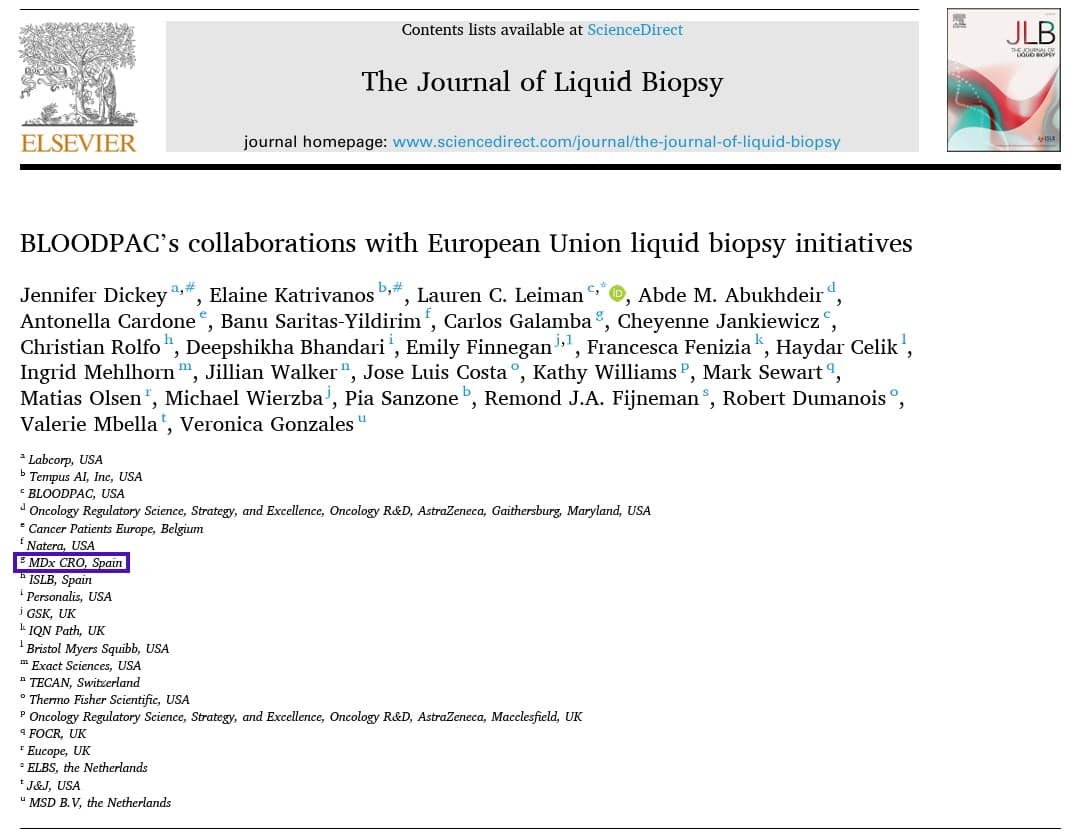
MDx CRO co-authors Journal of Liquid Biopsy paper on EU–US collaboration for IVDR-ready liquid biopsy validation

MDx CRO is proud to have contributed to the peer-reviewed article, “BLOODPAC’s collaborations with European Union liquid biopsy initiatives,” published in The Journal of Liquid Biopsy (Vol. 10, Article 100321; open access). The paper outlines practical pathways to align analytical validation, clinical performance evidence, and data standards that can accelerate European adoption of liquid biopsy under IVDR.

Carlos Galamba (CEO, MDx CRO) is listed among the authors, contributing European IVDR and clinical evidence expertise to this multi-stakeholder effort.

What the paper delivers (and why it matters)

  • Convergence on validation & evidence: It maps BLOODPAC’s US-developed minimum technical data elements and analytical validation protocols to EU needs—supporting more consistent clinical performance packages for IVDR submissions.
  • Data standards for reproducibility: The paper emphasizes fit-for-purpose standards and pre-competitive data sharing to improve comparability across clinical research for liquid biopsy, from cfDNA/ctDNA assay development to clinical use.
  • Practical EU–US collaboration: It proposes guidance and collaboration routes that can reduce variability across Member States and shorten time to patient access—without compromising IVDR rigor.

A broad coalition behind the work

The author affiliations span leading precision-medicine organizations and networks, including MDx CRO, Labcorp, Tempus AI, Natera, Exact Sciences, AstraZeneca, GSK, Bristol Myers Squibb, Johnson & Johnson, MSD, Thermo Fisher Scientific, TECAN, IQN Path, ELBS, EUCOPE, ISLB, Cancer Patients Europe, and BLOODPAC—a clear reflection of the field’s momentum toward shared, usable guidance.

MDx CRO’s contribution and perspective

Through our CEO, Carlos Galamba, MDx CRO contributed to this multi-stakeholder paper outlining practical EU–US collaboration to accelerate liquid biopsy adoption under IVDR. Our perspective aligns with the paper’s focus on:

  • IVDR-first evidence architecture that cleanly links intended use → analytical validation → clinical performance requirements for ctDNA/cfDNA assays.
  • Harmonized validation expectations by mapping BLOODPAC frameworks and data elements to EU evidence needs, supporting consistent submissions.
  • Clearer regulatory narratives that connect validation outcomes to performance claims and real-world clinical implementation.

“This contribution reflects MDx’s commitment to turning shared frameworks into credible, IVDR-ready evidence that speeds responsible patient access” – Carlos Galamba, CEO

For IVD developers: immediate takeaways

Think trans-Atlantic. Where appropriate, re-use US learnings and BLOODPAC frameworks to reduce duplication—while meeting EU requirements.

Design for IVDR from day zero. Lock pre-analytical variables and analytical validation plans that ladder to clinical performance claims.

Adopt shared data elements. Standardized data models future-proof submissions and enable cross-study comparisons for regulators and payers.

How we execute: turning frameworks into IVDR-ready evidence

1) Study architecture (IVDR-first)

We design from intended use → analytical validationclinical performance so claims, endpoints, and statistics line up from day one. For liquid biopsy (cfDNA/ctDNA), we predefine fit-for-purpose metrics (e.g., LoD/LoQ, precision, interference) and clinical endpoints (e.g., PPA/NPA, sensitivity/specificity).

2) Multisite execution (ISO 20916 aligned)

Feasibility and qualification of sites/labs, standardized pre-analytical controls (collection tubes, processing windows, storage), specimen logistics and chain-of-custody, risk-based monitoring, and documented deviation/CAPA management across centers.

3) Data you can trust (eCRF + eTMF)

We build validated eCRFs, enforce edit checks and audit trails, and maintain a complete eTMF/regulatory binder. Data dictionaries align with study objectives and, where appropriate, community data elements used in clinical research for liquid biopsy.

4) Analytical validation to clinical performance—without gaps

We run or coordinate liquid biopsy validation workstreams (method comparisons, reproducibility, cross-site concordance) and transition seamlessly into clinical performance studies so the evidence package is coherent under IVDR.

5) Reporting & regulatory narrative

IVDR-compliant documentation (Analytical Performance Report, Performance Evaluation Plan/Report, study reports), plus clear narratives that connect results to performance claims and labeling.

6) Governance & quality

Project governance with milestone dashboards, risk logs, vendor oversight, and audit-ready files under an ISO-driven clinical QMS.

Outcome: faster, cleaner submissions for IVDR liquid biopsy validation—and evidence that stands up to scrutiny.

Plan a study? Let’s map your assay’s intended use to the analytical validation and clinical performance evidence you’ll need.

Industry Insights & Regulatory Updates

COMBINE Programme: Streamlining EU Combined Studies for Medicines, Devices, and Diagnostics

Introduction to the COMBINE Programme

The European Union has taken a significant step towards streamlining combined studies involving medicinal products, medical devices, and in vitro diagnostics (IVDs) through the COMBINE Programme. Endorsed by national authorities across Member States, the programme aims to address long-standing challenges that hinder the efficiency of clinical trials and regulatory approvals under the Clinical Trials Regulation (CTR), Medical Device Regulation (MDR), and In Vitro Diagnostic Regulation (IVDR).

The Need for Streamlined Combined Studies

Combined studies, which investigate the use of multiple healthcare products—such as a medicinal product with a medical device or companion diagnostic—are essential for advancing patient care and supporting innovative treatments. However, the fragmented regulatory processes across the CTR, MDR, and IVDR create significant hurdles:

  • Administrative Complexity: Sponsors face parallel and often redundant assessment processes across Member States, leading to delays.
  • Ambiguities in Regulation: Overlapping requirements on reporting and classification of studies often result in confusion.
  • Harmonisation Gaps: Diverging approaches among national competent authorities slow down multi-country studies.

These challenges risk delaying the development and availability of critical healthcare solutions, impacting patients and stifling innovation.

The COMBINE Programme: A Collaborative EU Initiative

To overcome these challenges, the European Commission launched the COMBINE Programme, a cross-sector initiative designed to foster collaboration between regulatory authorities, ethics committees, and stakeholders. By unifying processes and addressing gaps at the interface of CTR, MDR, and IVDR, the COMBINE Programme sets out to:

  1. Simplify and harmonise the approval of combined studies across the EU.
  2. Improve collaboration between national competent authorities, the European Medicines Agency (EMA), ethics committees, and sponsors.
  3. Enhance Europe’s competitiveness in clinical research, aligning with the recommendations of the Draghi Report.

A Phased Approach to Change

The COMBINE Programme will be implemented over the coming years through seven cross-sector projects that focus on key areas such as piloting single assessment processes, harmonising serious adverse event (SAE) reporting, and enhancing advisory services for sponsors. The programme reflects a shared commitment to supporting innovation while ensuring patient safety and regulatory efficiency across the EU.

The Seven Cross-Sector Projects of the COMBINE Programme

The COMBINE Programme will be implemented through seven cross-sector projects, each addressing specific challenges in the regulatory landscape of combined studies. These projects represent a collaborative effort between national competent authorities, ethics committees, the European Medicines Agency (EMA), and other stakeholders to streamline processes, harmonise reporting, and improve advisory services for sponsors.

1. Piloting a Single Assessment Process for Multi-Country Combined Studies

  • Objective: Introduce a coordinated, unified assessment process for combined studies involving medicinal products, medical devices, and in vitro diagnostics across multiple EU Member States.
  • Why It Matters: Current processes require separate national submissions under different frameworks (CTR, MDR, and IVDR). This pilot project aims to reduce duplication, align timelines, and ensure a single, streamlined review process.
  • Outcome: A harmonised approach that accelerates study approvals, reduces administrative burden, and improves efficiency for sponsors conducting multinational combined studies.

2. Harmonisation of Serious Adverse Event (SAE) Reporting Processes

  • Objective: Align the reporting requirements for Serious Adverse Events (SAEs) across the CTR, MDR, and IVDR frameworks.
  • Challenges Addressed: SAEs are reported differently under each regulation, creating confusion and inefficiencies for sponsors and regulators. Lack of harmonised processes delays decision-making and impacts patient safety monitoring.
  • Outcome: A unified, consistent SAE reporting process that improves clarity, facilitates timely reporting, and ensures compliance across sectors.

3. Clarifying the Interface Between Clinical Trials and Medical Device Regulations

  • Objective: Resolve regulatory ambiguities where the Clinical Trials Regulation (CTR) intersects with the Medical Device Regulation (MDR) and IVD Regulation (IVDR).
  • Key Questions Addressed: When does a study require a Clinical Trial (CT), a Clinical Investigation (CI), or a Performance Study (PS)? How should combined studies be classified and approved under multiple regulatory frameworks?
  • Outcome: Clear, harmonised guidelines for sponsors and regulators to navigate the interface between these regulations, ensuring smoother approvals and regulatory compliance.

4. Enhancing Advisory Services for Sponsors

  • Objective: Explore new opportunities for providing coordinated, cross-sector advice to sponsors conducting combined studies.
  • Why It Matters: Sponsors often face uncertainty when designing combined studies due to fragmented regulatory advice. A lack of centralized guidance increases the risk of regulatory non-compliance and delays.
  • Outcome: Improved advisory mechanisms, such as coordinated pre-submission meetings, that help sponsors navigate regulatory complexities, streamline submissions, and accelerate study timelines.

5. Facilitating Knowledge Exchange Between National Authorities

  • Objective: Promote collaboration and knowledge sharing among national competent authorities, ethics committees, and regulatory bodies.
  • Key Actions: Establish platforms for cross-sector dialogue and exchange of best practices. Encourage joint discussions on shared challenges, such as study assessments, adverse event reporting, and ethical considerations.
  • Outcome: A stronger, more unified regulatory network capable of addressing challenges efficiently and supporting the successful implementation of combined studies across the EU.

6. Aligning Regulatory Timelines and Approval Processes

  • Objective: Harmonise the timelines and approval procedures for combined studies under the CTR, MDR, and IVDR frameworks.
  • Challenges Addressed: Variations in national processes and timelines result in delays, particularly for multi-country studies. Sponsors face inconsistent requirements, creating additional administrative burden.
  • Outcome: A coordinated approach that aligns national approval processes, ensures predictable timelines, and fosters greater consistency across Member States.

7. Strengthening Stakeholder Engagement for the COMBINE Programme

  • Objective: Foster open dialogue and collaboration with key stakeholders, including sponsors, clinicians, patient representatives, and ethics committees.
  • Why It’s Important: Involving stakeholders ensures that the solutions developed under the COMBINE Programme are practical, efficient, and patient-centric. Enhanced engagement helps address real-world challenges faced by industry and clinicians in conducting combined studies.
  • Outcome: Improved stakeholder collaboration that ensures the programme’s goals align with industry needs, supports innovation, and prioritises patient outcomes.

Driving Regulatory Innovation Through the COMBINE Programme

The seven cross-sector projects under the COMBINE Programme address the core challenges of combined studies by streamlining processes, clarifying regulatory requirements, and fostering collaboration across the EU. These efforts are essential for improving efficiency, reducing delays, and enabling the development of innovative treatments that combine medicines, medical devices, and diagnostics.

Why the COMBINE Programme Matters

The COMBINE Programme represents a pivotal step toward addressing the regulatory inefficiencies that have long challenged combined studies involving medicinal products, medical devices, and diagnostics. By introducing streamlined processes, harmonising reporting requirements, and fostering collaboration, the programme delivers tangible benefits for all stakeholders.

For Sponsors and Manufacturers: Streamlined Approval Processes

  • Simplified Submissions: The COMBINE Programme eliminates duplication by piloting a single assessment process for multi-country combined studies.
  • Reduced Administrative Burden: Sponsors will no longer have to navigate fragmented processes under the CTR, MDR, and IVDR, reducing time spent on regulatory paperwork.
  • Faster Approvals: Harmonised timelines and improved coordination across Member States will accelerate approvals for combined studies, enabling quicker market entry for innovative products.

For a sponsor conducting a clinical trial of a medicinal product alongside a performance study of an IVD, the single assessment process reduces redundant national submissions, ensuring a smoother and faster pathway to approval.

For National Competent Authorities and Ethics Committees: Improved Collaboration and Efficiency

  • Unified Approach: The programme fosters collaboration between national authorities, ethics committees, and the EMA, ensuring consistency in study evaluations.
  • Knowledge Sharing: By facilitating the exchange of best practices, authorities can address common challenges, such as adverse event reporting and interface ambiguities, more effectively.
  • Efficient Use of Resources: Coordinated assessment processes streamline workflows, reducing the strain on regulatory bodies and ensuring a more efficient allocation of resources.

For Patients: Faster Access to Innovative Treatments

  • Accelerated Innovation: By simplifying regulatory pathways, the COMBINE Programme ensures that groundbreaking treatments—such as combined therapies and diagnostics—reach patients more quickly.
  • Improved Safety: Harmonised serious adverse event (SAE) reporting enhances patient safety by ensuring timely and consistent monitoring across all regulatory sectors.
  • Personalised Medicine: Combined studies enable the development of advanced solutions, such as companion diagnostics paired with targeted therapies, leading to more tailored and effective treatment options.

In diseases like cancer, where combined studies often involve companion diagnostics and therapies, delays in approval can mean a delay in access to life-saving treatments. The COMBINE Programme aims to eliminate these delays, prioritising patient needs.

For the EU: Enhancing Global Competitiveness

  • Addressing Recommendations from the Draghi Report: The Draghi Report underscored the importance of regulatory efficiency in maintaining the EU’s leadership in clinical research and innovation. The COMBINE Programme aligns directly with these goals, strengthening Europe’s position as a global hub for clinical trials.
  • Attracting Global Studies: A streamlined, harmonised approach makes the EU more attractive for multinational combined studies, encouraging sponsors to invest in research within Europe.
  • Supporting Innovation Ecosystems: By addressing regulatory hurdles, the programme fosters an environment conducive to innovation, benefiting SMEs, manufacturers, and healthcare systems.

The COMBINE Programme positions Europe as a leader in integrated clinical research, ensuring the EU remains competitive in the rapidly evolving MedTech and pharmaceutical industries.

Driving Real-World Impact Across Sectors

By addressing the challenges of combined studies, the COMBINE Programme delivers a balanced solution that benefits all stakeholders. For sponsors, it reduces complexity and accelerates approvals. For regulators, it ensures efficiency and collaboration. Most importantly, for patients, it enables faster access to innovative treatments that improve healthcare outcomes.

The COMBINE Programme and EU Competitiveness

The COMBINE Programme is not only a solution to regulatory complexity but also a cornerstone of the EU’s broader strategy to maintain global competitiveness in clinical research and medical innovation. By streamlining processes and fostering collaboration, the programme positions Europe as a leading region for conducting combined studies that integrate medicinal products, medical devices, and diagnostics.

Addressing the Recommendations of the Draghi Report

The Draghi Report, which outlines key priorities for strengthening Europe’s economic and technological competitiveness, highlights the importance of a streamlined regulatory environment for innovation in clinical research. The COMBINE Programme directly supports these recommendations by:

  • Reducing Regulatory Complexity: Simplifying combined studies ensures a faster path from research to patient access, allowing Europe to stay ahead of global competition.
  • Promoting Innovation: A harmonised and efficient system encourages sponsors and manufacturers to invest in research and development within the EU.
  • Improving Market Access: By removing administrative barriers, new treatments can reach the market sooner, boosting Europe’s role as a leader in health innovation.

Strengthening the EU as a Global Hub for Clinical Research

1. Attracting Multinational Studies

Global sponsors often face challenges when navigating fragmented regulatory systems in the EU. The COMBINE Programme resolves these issues by:

  • Offering single, coordinated assessments for multi-country studies.
  • Harmonising timelines and reporting requirements under the CTR, MDR, and IVDR frameworks.

This streamlined approach makes the EU a more attractive destination for conducting global clinical studies, ensuring sponsors can leverage Europe’s vast expertise, resources, and patient access.

2. Fostering Cross-Sector Innovation

The growing trend of personalised medicine relies on combining medicinal products with diagnostic devices. The COMBINE Programme removes regulatory hurdles that delay the integration of:

  • Companion diagnostics: Ensuring that innovative treatments are paired with advanced diagnostics for targeted patient care.
  • Advanced therapies: Supporting innovative combined treatments for diseases such as cancer, cardiovascular conditions, and rare diseases.

By addressing these challenges, the EU fosters a dynamic environment where innovation can thrive across sectors, benefiting both industry and patients.

3. Supporting Small and Medium Enterprises (SMEs)

The COMBINE Programme simplifies regulatory pathways, which is particularly critical for SMEs in the MedTech and pharmaceutical sectors. These companies often face resource constraints when navigating complex regulations. By providing:

  • Clear guidance on the interface between CTR, MDR, and IVDR.
  • Access to advisory services for combined studies.
  • Predictable timelines through harmonised processes.

The programme ensures SMEs can bring innovative products to market faster, strengthening Europe’s innovation ecosystem.

Delivering Economic and Healthcare Benefits

The successful implementation of the COMBINE Programme will not only drive regulatory efficiency but also deliver far-reaching benefits across Europe:

Economic Growth:

  • Attracting more clinical trials and combined studies generates investments in research and development, boosting the EU economy.
  • Improved innovation pathways strengthen the global competitiveness of EU-based manufacturers and sponsors

Healthcare Advancements:

  • Patients benefit from accelerated access to cutting-edge treatments that combine medicinal products, medical devices, and diagnostics.
  • A harmonised system ensures safer, more effective healthcare solutions reach the market efficiently.

For a European SME developing an innovative therapy paired with a diagnostic IVD, the streamlined approval process reduces delays, allowing faster market entry and broader patient access.

The EU’s Vision for Clinical Research Leadership

Through the COMBINE Programme, the European Union reaffirms its commitment to fostering innovation, supporting collaboration, and maintaining its position as a global leader in clinical research. By addressing regulatory inefficiencies and harmonising processes, the programme ensures that Europe remains an attractive hub for sponsors, manufacturers, and researchers driving the next generation of medical advancements.

Key Takeaway

The COMBINE Programme is a critical initiative that strengthens Europe’s competitive edge in clinical research. By simplifying pathways for combined studies, fostering innovation, and aligning with strategic goals outlined in the Draghi Report, the programme sets the stage for economic growth, global leadership, and improved patient outcomes across the EU.

Implementation and Next Steps for the COMBINE Programme

The successful roll-out of the COMBINE Programme requires a structured, phased approach to ensure that its ambitious goals are achieved efficiently and effectively. By leveraging cross-sector collaboration, pilot projects, and continuous evaluation, the programme sets the stage for lasting regulatory improvements across the EU.

COMBINE Programme Phased Rollout

The COMBINE Programme will be implemented in three key stages over the coming years:

1. Stage 1: Pilot and Early Initiatives (2024–2025)

Key Focus:

  • Launch the pilot for a single assessment process for combined studies involving medicinal products and medical devices across multiple Member States.
  • Initiate harmonisation efforts for Serious Adverse Event (SAE) reporting, streamlining processes under the CTR, MDR, and IVDR

Actions:

  • Identify candidate combined studies for the single assessment pilot.
  • Establish cross-functional task forces to develop and test harmonised SAE reporting frameworks.

Outcome: Early learnings from pilot initiatives will inform best practices and provide actionable insights for scaling solutions across the EU.

2. Stage 2: Scaling and Integration (2025–2026)

Key Focus:

  • Expand successful pilot initiatives, integrating the single assessment process into broader multi-country studies.
  • Strengthen cross-sector collaboration by enhancing knowledge exchange between national authorities and ethics committees.

Actions:

  • Roll out the harmonised assessment framework to additional Member States.
  • Launch training programmes to support national authorities, ethics committees, and sponsors in implementing new processes.
  • Develop and publish clear interface guidance to resolve ambiguities between CTR, MDR, and IVDR.

Outcome: A more unified and harmonised approach to combined studies across Member States, improving regulatory efficiency and reducing delays.

3. Stage 3: Full Implementation and Evaluation (2026–2027)

Key Focus:

  • Achieve full implementation of the programme’s objectives, ensuring long-term sustainability and continuous improvement.
  • Monitor progress and evaluate the impact of the COMBINE Programme on EU clinical research and innovation.

Actions:

  • Conduct comprehensive evaluations of the programme’s milestones, assessing its success in streamlining combined studies and supporting stakeholders.
  • Strengthen engagement with sponsors, clinicians, and patient representatives to identify opportunities for further refinement.
  • Publish progress reports to share achievements, challenges, and next steps.

Outcome: A fully harmonised regulatory framework that makes the EU a global leader in supporting combined studies of medicinal products, medical devices, and diagnostics.

Key Stakeholders Driving Implementation

The successful implementation of the COMBINE Programme depends on collaboration among a wide range of stakeholders, including:

  • National Competent Authorities (NCAs): Leading the development and execution of pilot initiatives and harmonised frameworks at the Member State level.
  • European Medicines Agency (EMA): Providing regulatory expertise, scientific consultation, and coordination for multi-country studies.
  • Ethics Committees: Aligning ethical review processes with the programme’s streamlined assessment objectives.
  • Sponsors and Manufacturers: Engaging in pilot studies, providing feedback, and adopting new processes to improve study timelines and regulatory compliance.
  • Clinicians and Patient Representatives: Contributing real-world perspectives to ensure that the programme prioritises patient safety and healthcare innovation.

Monitoring Progress and Ensuring Accountability

To ensure the COMBINE Programme delivers its objectives, robust monitoring and evaluation mechanisms will be implemented:

  • Regular Progress Reports: Published at key milestones to assess the programme’s impact, identify challenges, and showcase achievements.
  • Feedback Loops: Stakeholder input, including sponsors, NCAs, and ethics committees, will be collected to refine processes and address emerging issues.
  • Performance Metrics: Defined to measure success, including:
    • Reduction in approval timelines for multi-country combined studies.
    • Increased consistency in serious adverse event reporting.
    • Improved clarity on the interface between clinical trials and medical device regulations.

Building a Sustainable Future for Combined Studies

The COMBINE Programme is not just a short-term solution but a long-term framework for driving innovation and efficiency in EU clinical research. By fostering collaboration, aligning processes, and prioritising continuous improvement, the programme ensures that Europe remains at the forefront of healthcare innovation.

What’s Next for Stakeholders?

As the COMBINE Programme progresses, stakeholders can expect:

  1. Opportunities to Participate in Pilots: Sponsors and manufacturers are encouraged to engage with pilot projects for the single assessment process.
  2. Clearer Guidance: Publication of harmonised frameworks and interface clarifications to reduce regulatory ambiguity.
  3. Improved Communication: Enhanced dialogue between regulators, sponsors, ethics committees, and patient representatives.

By working together, all stakeholders can contribute to the success of the COMBINE Programme, ensuring it delivers its vision of a harmonised, streamlined regulatory environment for combined studies.

Key Takeaway: The phased implementation of the COMBINE Programme marks a transformative shift in the EU’s approach to combined studies. Through pilots, collaboration, and continuous evaluation, the programme sets the foundation for faster, more efficient approvals that benefit sponsors, regulators, and—most importantly—patients.

Conclusion: A Unified Vision for Combined Studies

The COMBINE Programme marks a pivotal step in the European Union’s commitment to creating a harmonised, efficient, and collaborative regulatory framework for combined studies. By addressing long-standing challenges at the intersection of the Clinical Trials Regulation (CTR), Medical Device Regulation (MDR), and In Vitro Diagnostic Regulation (IVDR), the programme sets a clear path toward innovation, competitiveness, and improved patient care.

Transforming Regulatory Efficiency

Through its seven cross-sector projects, the COMBINE Programme delivers concrete solutions to streamline combined studies:

  • Simplifying approvals with a single assessment process for multi-country studies.
  • Aligning serious adverse event (SAE) reporting across sectors to ensure safety and consistency.
  • Clarifying regulatory interfaces to resolve ambiguities between clinical trials and device regulations.
  • Fostering collaboration among national competent authorities, ethics committees, and stakeholders to promote knowledge exchange and efficiency.

These efforts reduce administrative burdens, harmonise timelines, and improve access to clear, actionable regulatory guidance.

COMBINE Programme Supporting Innovation and Competitiveness

By eliminating regulatory fragmentation and ensuring consistent, coordinated processes, the COMBINE Programme positions the EU as a global leader in clinical research and medical innovation.

  • Sponsors and manufacturers benefit from faster approvals and streamlined pathways, enabling them to bring innovative treatments to market more efficiently.
  • Patients gain quicker access to integrated healthcare solutions, including advanced therapies, medical devices, and companion diagnostics.
  • National authorities and ethics committees operate within a more efficient, harmonised framework, reducing duplication and ensuring safety.

In alignment with the Draghi Report recommendations, the COMBINE Programme strengthens Europe’s competitive edge, attracting global investment and driving economic growth in the MedTech and pharmaceutical sectors.

Looking Ahead: A Future of Innovation and Collaboration

The COMBINE Programme is more than a regulatory initiative; it is a transformative vision for the future of clinical research in the EU. By fostering collaboration, harmonising processes, and streamlining combined studies, the programme paves the way for a new era of healthcare innovation.

As Europe continues to lead the charge in medical and clinical advancements, the COMBINE Programme will play a critical role in ensuring that innovative treatments reach patients faster, safer, and more effectively.

Key Takeaway: The COMBINE Programme unifies the efforts of regulators, stakeholders, and innovators to streamline combined studies, strengthen Europe’s leadership in clinical research, and deliver groundbreaking healthcare solutions to patients across the EU.

Call to Action for the COMBINE Programme

Are you planning or conducting a combined study involving medicines, medical devices, or diagnostics? The MDx team is here to help you navigate the complexities of the COMBINE framework. Contact us today to streamline your regulatory strategy and ensure the success of your combined study.

Get in touch with the MDx team now to accelerate innovation and bring your study to life!

Industry Insights & Regulatory Updates 2