How Are Medical Devices Regulated Under MDR Annex XVI?
How does MDR Annex XVI regulate products without an intended medical purpose that fall within the scope of the MDR? This question has become increasingly relevant for manufacturers seeking EU market access.
The Medical Devices Regulation (MDR) 2017/745 has transformed the European Union (EU) regulatory framework. It replaced the previous Medical Devices Directive (MDD) and introduced stricter requirements for manufacturers, notified bodies, and competent authorities.
One of the most significant changes is the expanded scope under MDR Annex XVI. The regulation now includes certain products that do not have a medical purpose but may still present similar safety risks. As a result, these products are subject to the MDR regulatory requirements, even though they are not medical devices by definition.
What Is New Under MDR Annex XVI in 2026?
Recent regulatory developments continue to clarify how MDR Annex XVI applies in practice. Authorities expect manufacturers to align with Common Specifications, updated classification rules, and strengthened clinical evaluation requirements.
This expanded scope marks a clear departure from traditional definitions of medical devices. Certain aesthetic or cosmetic products listed in Annex XVI now fall within the scope of the MDR and are subject to conformity assessment and post-market obligations.
What Products Fall Under MDR Annex XVI?
Under MDR Annex XVI, the following product groups are subject to the MDR, even though they do not have an intended medical purpose:
- Contact lenses without vision correction (e.g., colored contact lenses)
- Devices intended to modify the anatomy or fixation of body parts (e.g., subdermal implants without a medical purpose, such as aesthetic implants)
- Facial and dermal fillers for aesthetic enhancement
- Equipment for body shaping and fat reduction (e.g., liposuction devices)
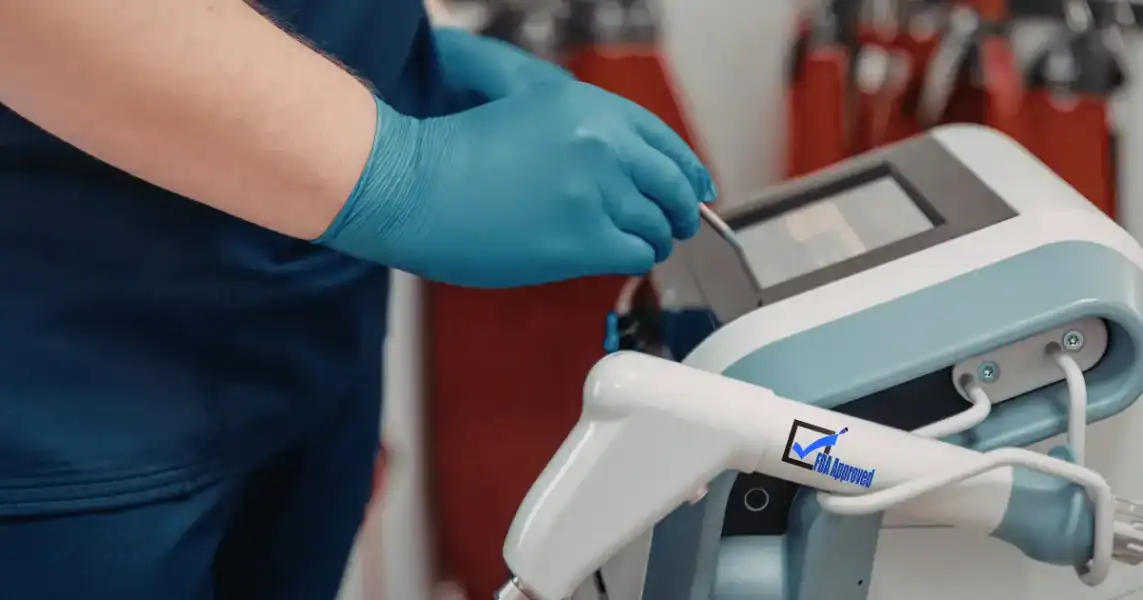
- High-intensity radiation devices for skin treatment, including IPL, lasers, infrared equipment, tattoo removal lasers, and hair removal systems
- Equipment intended for transcranial brain stimulation without a medical purpose
Manufacturers of these products must comply with the applicable MDR safety, performance, and documentation requirements, subject to adaptations reflecting the absence of a medical purpose.
Classification of Devices Under MDR Annex XVI
How are devices classified under MDR Annex XVI?
Manufacturers must apply the relevant classification rules under Annex VIII, as modified or clarified by applicable Common Specifications and Commission Implementing Regulation (EU) 2022/2347. However, not all rules apply automatically. For example, Rules 9 and 10 address active therapeutic and diagnostic devices and assume a medical purpose. Because Annex XVI products lack a medical purpose, regulators apply specific Common Specifications and implementing regulations to determine the appropriate classification.
Understanding the correct classification is essential. It determines the conformity assessment route, the level of notified body involvement, and the overall regulatory strategy for EU market approval.
Important to note that not all rules can be applied. For instance, rules 9 and 10, which pertain to active therapeutic and diagnostic devices, assume a medical purpose.
To address this, a Commission Implementing Regulation (2022/2347) was introduced to reclassify relevant devices alongside the Common Specifications. Let’s take a closer look at the classification of specific product classes:
- Certain body shaping devices are classified as Class IIb under Commission Implementing Regulation (EU) 2022/2347, depending on their specific characteristics.
- Devices for skin rejuvenation, hair removal, and similar purposes may fall under Class IIa or IIb, depending on the application. This classification is explained in Section 5.
- Equipment for transcranial brain stimulation is classified as Class III and is covered in Section 6.
Annex XVI Medical Devices: Key Regulatory Requirements
MDR 2017/745 establishes clear and structured obligations for products covered under MDR Annex XVI, even when they do not have an intended medical purpose. Manufacturers must meet safety, documentation, and post-market requirements comparable to those applied to traditional medical devices.
Core Compliance Requirements Under MDR Annex XVI
Manufacturers must design and manufacture devices to ensure safety and performance. They must conduct a documented risk analysis and implement appropriate risk control measures in accordance with Annex I.
They must also complete a conformity assessment procedure to demonstrate compliance with the applicable regulatory requirements. Depending on the classification of the device, a notified body may need to be involved.
In addition, manufacturers must prepare and maintain comprehensive technical documentation. This documentation must clearly describe the device design, intended purpose, manufacturing processes, risk management activities, and evidence supporting conformity.
Manufacturers must assign a Unique Device Identification (UDI) to each device. They must ensure traceability by registering the required information in the relevant UDI database.
Clinical Evaluation and Post-Market Obligations
Under MDR Annex XVI, manufacturers must perform a clinical evaluation to demonstrate safety and performance in accordance with Article 61(9) and the applicable Common Specifications. They must base this evaluation on relevant clinical data. Clinical investigations may be required unless sufficient existing clinical data can adequately demonstrate safety and performance, in line with Article 61(9) and the Common Specifications.
Manufacturers must also implement a post-market surveillance (PMS) system. This system must monitor device performance, analyze safety data, investigate complaints and adverse events, and trigger corrective actions when necessary.
Clear and accurate labeling remains essential. Manufacturers must provide instructions for use that specify the intended purpose, handling conditions, storage requirements, and relevant warnings or contraindications.
MDR 2017/745 significantly expands the regulatory scope by including devices without an intended medical purpose under MDR Annex XVI. This expansion ensures a high level of protection for users and strengthens oversight of aesthetic and non-therapeutic technologies entering the EU market.
By working with MDx CRO, manufacturers can navigate MDR Annex XVI requirements efficiently and position their products for successful EU market access.
From Annex XVI Compliance to Scientific validity reports for EU IVDR Submissions
Although Annex XVI devices do not have an intended medical purpose, they are still required to demonstrate safety and performance through robust evidence. This shift reflects a broader regulatory principle also seen under the In Vitro Diagnostic Regulation (IVDR): claims must be supported by structured, scientifically sound documentation.
Under the MDR, manufacturers of Annex XVI products must:
- Conduct a clinical evaluation based on available clinical data
- Justify safety and performance claims through documented evidence
- Align with Common Specifications and applicable classification rules
- Maintain technical documentation that withstands notified body scrutiny
This evidence-based mindset closely mirrors what is required for Scientific Validity Reports under the IVDR.
The Regulatory Convergence: MDR Annex XVI & IVDR Scientific Validity
While MDR Annex XVI focuses on devices without an intended medical purpose and IVDR governs in vitro diagnostic devices, both frameworks demand:
- A clear definition of claims
- Scientific substantiation of those claims
- Transparent literature review methodologies
- Structured documentation aligned with regulatory expectations
In IVDR submissions, the Scientific Validity Report is a foundational document demonstrating the association between an analyte and a clinical condition. Similarly, Annex XVI devices must justify safety and performance through documented clinical evaluation and risk analysis — even when no therapeutic or diagnostic purpose exists.
In both cases, regulatory authorities expect:
- Systematic literature review strategies
- Critical appraisal of available data
- Traceable evidence linking claims to supporting documentation
- Ongoing updates through post-market surveillance
The common denominator is simple: no claims without evidence.
Why This Matters for Manufacturers
Manufacturers working across MDR and IVDR portfolios increasingly face overlapping regulatory expectations. A strong internal capability to develop:
- Clinical Evaluation Reports (CERs)
- Scientific Validity Reports
- Performance Evaluation documentation
- Post-market evidence strategies
creates operational efficiency and reduces regulatory risk.
At MDx CRO, we support manufacturers not only in MDR Annex XVI compliance, but also in preparing scientifically robust documentation for EU IVDR submissions — including comprehensive Scientific Validity Reports aligned with notified body expectations.
Explore how Scientific Validity Reports are structured and what notified bodies look for under the IVDR. You can read our detailed guide on Scientific Validity Reports for EU IVDR Submissions.
FAQs
The MDR 2017/745 places strong emphasis on the concept of intended purpose. Manufacturers define the intended purpose through the information they provide on labeling, in the instructions for use (IFU), and in promotional materials.
The MDR defines “intended purpose” in Article 2(12). Whether a product has a medical purpose depends on the manufacturer’s intended use as reflected in labeling, instructions for use, and promotional materials.Manufacturers must clearly state whether the device supports diagnosis, treatment, monitoring, prevention, or alleviation of a disease or injury.
Under MDR Annex XVI, this distinction becomes particularly important, as certain products without a traditional medical purpose still fall within the scope of the regulation and must meet defined safety and performance requirements.
Yes. MDR 2017/745 establishes specific requirements for products covered under MDR Annex XVI, even though they do not have an intended medical purpose.
First, manufacturers must comply with the relevant Common Specifications adopted under Article 9(4). These specifications require manufacturers to apply risk management in line with Annex I and, where necessary, conduct a clinical evaluation focused on safety and performance.
For clinical evaluation, manufacturers do not need to demonstrate a clinical benefit in the traditional medical sense. Instead, under Article 61(9), they must demonstrate the performance and safety of the product.
Yes, devices without an intended medical purpose have specific information requirements that affect both labeling and the instructions for use (IFU).According to Annex I, Section 23 of MDR 2017/745 and the applicable Common Specifications, the instructions for use must clearly state that the device has no intended medical purpose and must describe the associated risks and any limitations of use.