Spanish IVD Regulation 2025 – New Royal Decree Updates for IVD Manufacturers, Sponsors, and Labs

On 21 October 2025, the Council of Ministers approved Spain’s new Royal Decree for in vitro diagnostic devices. AEMPS confirmed the approval and explained that the decree complements IVDR (EU) 2017/746, strengthens patient protection, and adds national rules on language, in-house manufacturing, performance studies, and vigilance. This development anchors the Spanish IVD Regulation 2025 and sets clear obligations for manufacturers, sponsors, and laboratories. (Official announcement: AEMPS)

Spanish IVD Regulation 2025: What Changed and Why It Matters

The Spanish IVD Regulation 2025 replaces Royal Decree 1662/2000. It clarifies how IVDR applies in Spain and fills Member-State choices, including competent authority, language regime, Article 5(5) in-house devices, genetic testing and counseling, a national marketing register, performance study authorization, and vigilance and market control.

The regulation aims to raise quality, ensure traceability, and speed up corrective actions. It also improves access to certain self-tests through pharmacy channels.

Quick Guide for Busy Teams (Manufacturers, Sponsors, Labs)

  • Confirm what the Spanish IVD Regulation 2025 changes for your role.
  • Map licensing, registration, language, Article 5(5), ISO 15189, performance studies, and vigilance to owners and deadlines.
  • Prepare Spanish-language materials and set up traceability and incident reporting workflows.
  • Labs should plan ISO 15189 and Article 5(5) notifications to AEMPS.

Competent Authority and Language Rules under the Spanish IVD Regulation 2025

AEMPS is the competent authority for IVDs in Spain. Under the Spanish IVD Regulation 2025, user-facing materials for devices marketed in Spain must appear in Spanish. That includes labels, IFU, and safety notices. Regulatory submissions to AEMPS should include Spanish content. Co-official languages may be added, but Spanish is mandatory.

Facility Licensing: Manufacturers, Sterilizers, and Importers

The Spanish IVD Regulation 2025 requires operating licenses for manufacturers, sterilizers, and importers before they place devices on the market. AEMPS evaluates facilities, personnel, and quality systems.

Each site must appoint a Technical Responsible Person (national role) and meet IVDR oversight led by a PRRC. One qualified person can cover both if they meet the criteria.

Transitional rule: Existing third-party manufacturers get up to one year from entry into force to secure the new license. Existing licenses remain valid until renewal or change, which then follow the new procedure.

Marketing Register and Traceability

The decree creates a Spanish marketing register for devices placed on the market. Manufacturers, authorized representatives, and importers must notify product information to support traceability and market surveillance. The register complements EUDAMED and UDI.

Transitional rule: Spain will activate notifications when the register is operational. Until then, use existing national channels.

In-House Devices (Article 5(5) IVDR): What Labs Must Do Now

Scope and intent

The Spanish IVD Regulation 2025 regulates in-house IVDs made and used within the same health institution. Labs must justify need: a commercial CE-marked device cannot meet the specific clinical need. No industrial-scale production. No commercial supply to third parties.

Quality and documentation

In-house devices must meet IVDR GSPRs. Labs should keep a technical file (intended purpose, risk management, analytical and clinical performance, V&V, SOPs, and labeling for internal use).

ISO 15189 accreditation

Labs that manufacture in-house devices must obtain ISO 15189 accreditation for the manufacturing scope. Spain ties this to the transitional schedule.

Notification to AEMPS

Before starting in-house manufacture, labs must notify AEMPS and submit the Article 5(5) declaration. They must designate a responsible person for the in-house manufacturing process.

Genetic Testing: Information and Counseling

The Spanish IVD Regulation 2025 requires clear information and appropriate counseling for genetic testing. Health professionals must explain limits, implications, and result interpretation. This duty applies before and after testing.

Health professionals and centers must obtain explicit informed consent from individuals before performing a genetic test. The patient must be made aware of the nature and purpose of the test and consent in writing (except where law may exempt certain public health screening). This goes beyond standard consent, recognizing the personal and familial implications of genetic data.

Before the test, patients should be informed about what the test can and cannot tell them, and after the test, a qualified professional should explain the results and any recommended follow-up. This requirement ensures genetic tests (such as those for hereditary disease risk) are not delivered without context or support, helping patients make informed decisions.

These obligations apply to genetic IVDs regardless of whether they are done in-house or as commercial tests. For example, a direct-to-consumer genetic test kit (if allowed on the market) would need to be accompanied by processes that ensure the purchaser gets necessary information and counseling. However, most genetic tests are administered in clinical settings; the decree effectively standardizes the practice of genetic counseling as part of testing.

Performance Studies in Spain

All performance studies in Spain must first obtain a favorable opinion from an accredited Research Ethics Committee (REC) and authorization from the health center’s management where the study will be conducted. This applies to any study using human specimens or data for evaluating an IVD’s performance, ensuring ethical considerations (informed consent, data protection, etc.) are addressed early.

When you need authorization

Interventional clinical performance studies and other studies involving risks require AEMPS authorization before first participant. Ethics approval remains mandatory.

What sponsors must prepare

  • Spanish protocol (CPSP), Investigator’s Brochure, and informed consent.
  • Insurance/indemnity for participants and a clear liability framework. The decree explicitly requires compensation for damages and defines the liability regime for sponsors. Sponsors should budget for a clinical trial insurance policy and follow the decree’s rules on coverage minimums and conditions (similar to drug trial insurance requirements in Spain).
  • Monitoring, data management, and safety reporting plans aligned with IVDR. Upon study completion, results (whether positive, negative, or inconclusive) should be documented and may need to be reported in the public database or to AEMPS.

Studies with CE-marked devices

If the study adds invasive or burdensome procedures or goes outside intended use, sponsors should request authorization and notify AEMPS.

Vigilance and Market Control

The Spanish IVD Regulation 2025 reinforces vigilance. Manufacturers must report serious incidents and FSCAs to AEMPS. Healthcare professionals and institutions should also report incidents. Authorities will coordinate inspections and market control actions.

For instance, if an IVD test yields false results that lead to patient harm, the manufacturer has to notify AEMPS and submit a Spanish-language safety notice so that users in Spain can be adequately informed. This ensures critical safety information is effectively communicated and mitigated in the local context.

The decree emphasizes that healthcare professionals, health institutions, and even patients/users have a responsibility to report any suspected serious incidents to AEMPS. Spain is thus bolstering a culture of vigilance: a lab that encounters a device malfunction or a clinician who notices a pattern of erroneous results should alert the authorities. The more comprehensive the reporting, the better AEMPS can intervene to prevent harm.

Self-Test Access and Pharmacy Channels

Notably, the new rules remove the prescription requirement for at-home self-testing kits (e.g. self-tests for glucose, pregnancy, COVID-19, etc.), making them more accessible. However, even without needing a prescription, these self-diagnostic products can only be sold through pharmacies (in-store or via an official pharmacy website) to ensure proper guidance on use. High-risk tests or those used for critical decisions may still require a prescription or professional administration.

Transitional Timelines You Should Track

  • Entry into force: The decree takes effect after BOE publication.
  • Licensing: Existing third-party manufacturers have up to one year to obtain the new operating license.
  • Marketing register: Notification duties start when the register goes live.
  • In-house devices: Spain applies the IVDR timelines. Labs must meet Article 5(5) conditions and ISO 15189 by the dates set in the transitional provisions and related guidance.
  • Legacy devices: Spain honors the IVDR transition for legacy IVDs and preserves specific old-rule processes until systems fully switch over.

Implications by Stakeholder

IVD manufacturers

  • Secure or update operating licenses.
  • Localize labels/IFU into Spanish.
  • Prepare marketing register data.
  • Strengthen PMS and vigilance interfaces with AEMPS.

Sponsors

  • Plan authorization for risk-involving performance studies.
  • Build Spain-ready dossiers and insurance.
  • Prepare Spanish IB, consent forms, and patient materials. Note: AEMPS may allow an english version of the IB if no objection is raised by the Ethics Committee.

Hospital and private labs

  • Confirm Article 5(5) eligibility and prepare technical documentation for the in-house test.
  • Achieve ISO 15189 for manufacturing scope.
  • Notify AEMPS and assign the in-house responsible person.
  • Update genetic testing consent and counseling SOPs.

How MDx CRO Helps You Execute

Regulatory strategy and submissions

We align IVDR with the Spanish IVD Regulation 2025 and prepare AEMPS submissions (licenses, notifications, marketing register onboarding when live).

ISO 15189 and Article 5(5)

We run gap assessments, build SOPs, and guide labs to ISO 15189 accreditation for in-house manufacture. We prepare the Article 5(5) declaration and AEMPS notification package.

Performance studies

We plan and manage interventional and risk-involving performance studies in Spain. We handle AEMPS authorization, ethics submissions, monitoring, and safety reporting. MDx can also act your IVD performance study legal representative in the EU.

Vigilance and PMS

We design Spanish-compliant PMS frameworks, incident workflows, and FSNs. We help you interface with AEMPS and prepare for inspections.

Written by:
David Tomé

David Tomé

President

Clinical research leader and MedTech entrepreneur with deep expertise in medical devices, IVDs & precision medicine, with global study experience.
Industry Insights & Regulatory Updates

MDx CRO at ESMO 2025 (Berlin): Advancing IVDR Transitions & Combined Clinical Trials

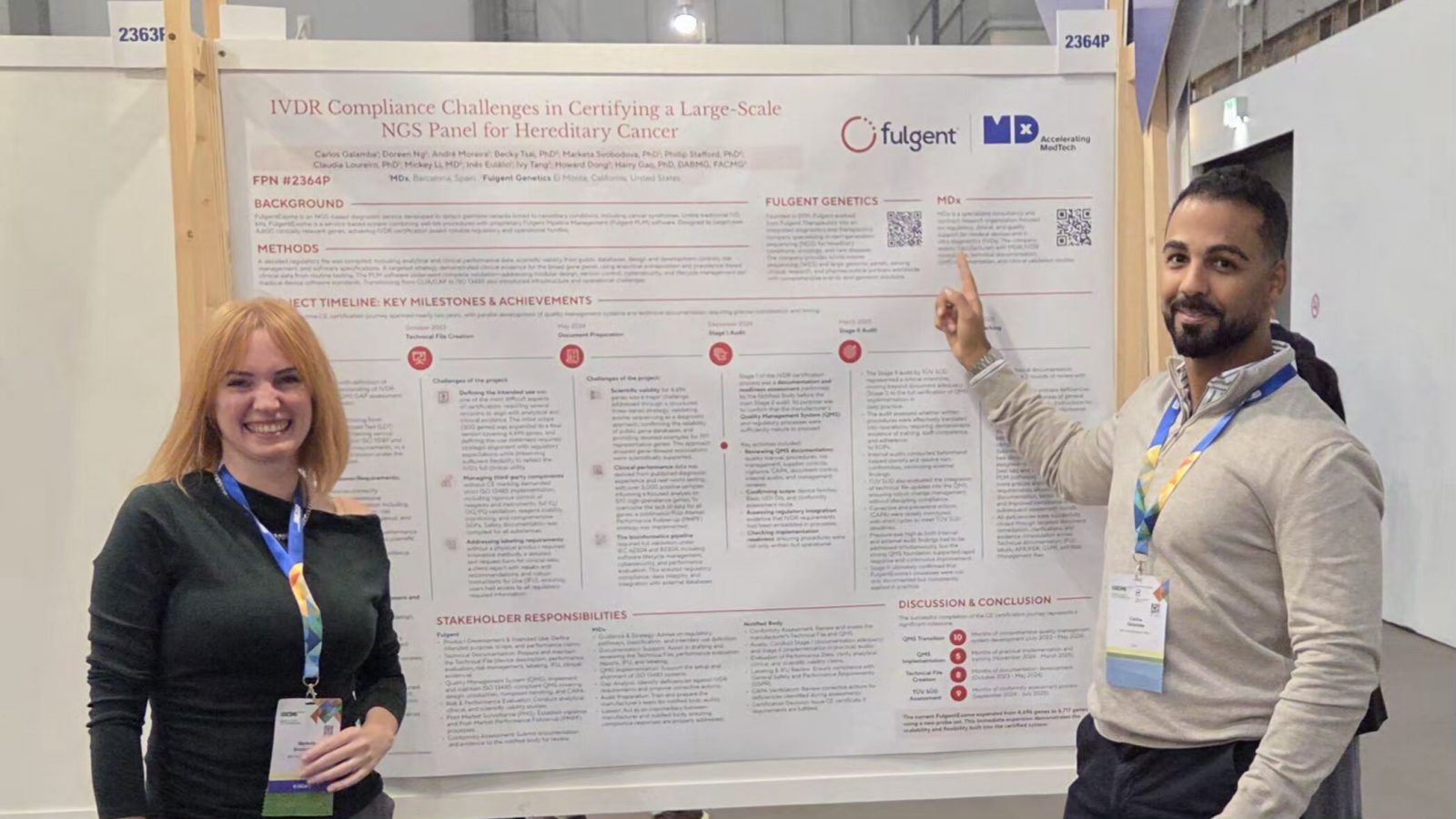
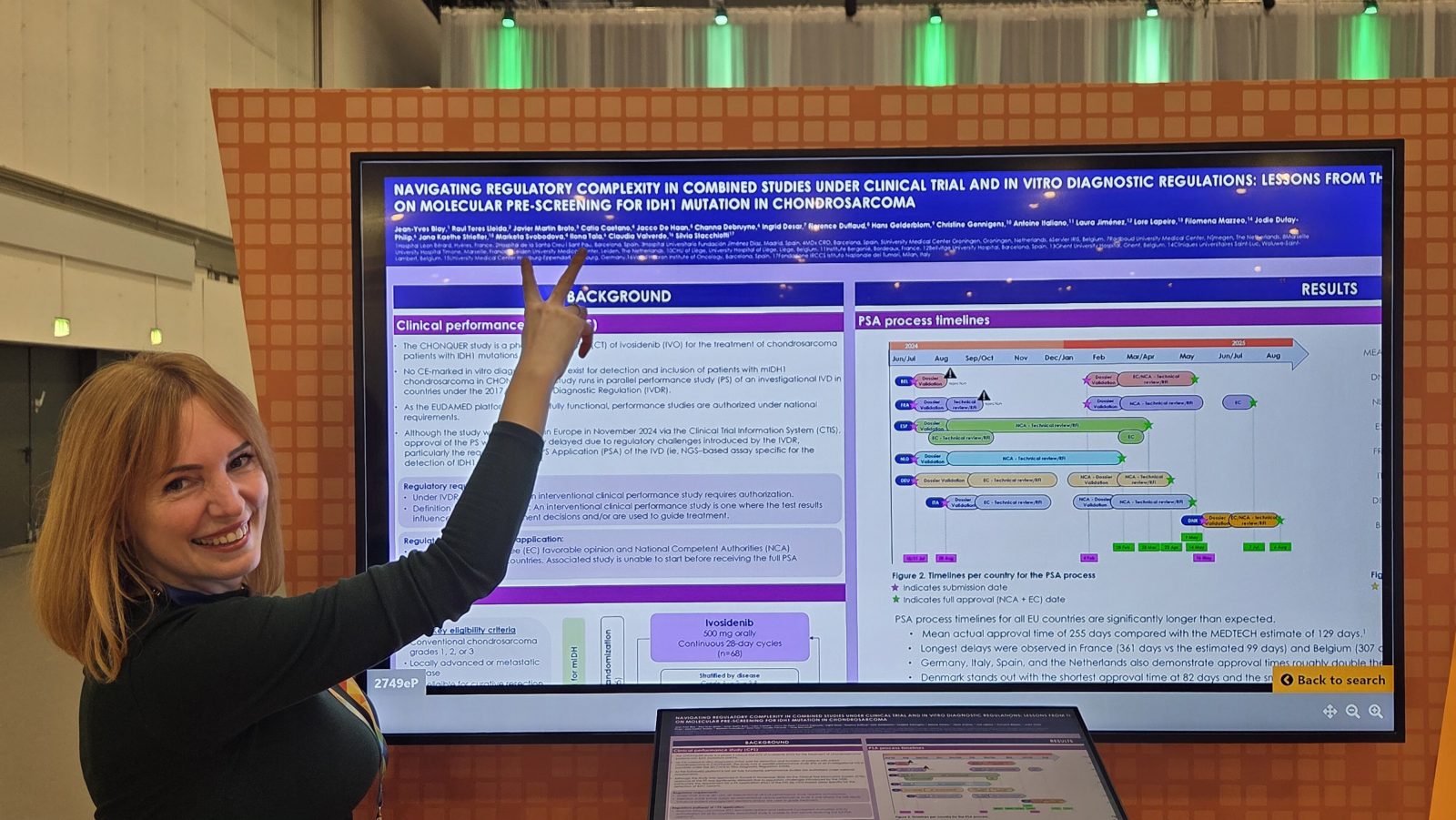
MDx CRO presented new evidence and hands‑on learnings at ESMO 2025 that reinforce our position as the partner of choice for IVDR transitions and combined clinical trials involving investigational IVDs. We were first author on a poster with Fulgent Genetics and contributors to a Servier poster—both centered on the operational and regulatory realities of bringing high‑impact oncology diagnostics into clinical practice under the EU IVDR.

Highlights from our ESMO 2025 posters

Title: IVDR Compliance Challenges in Certifying a Large‑Scale NGS Panel for Hereditary Cancer

What it covers:

  • Practical blueprint for transitioning a comprehensive, service‑based NGS hereditary cancer panel under IVDR.
  • Defining intended use and scientific validity across a large gene set; end‑to‑end technical documentation; bioinformatics validation aligned to IEC 62304/82304; and notified‑body engagement strategy.
  • Lessons on right‑sizing verification/validation and building a living evidence package to support CE‑marking.

Why it matters: Sponsors and lab developers gain an actionable path for moving complex NGS services to IVDR compliance—without slowing clinical programs.

Title: Navigating Regulatory Complexity in Combined Studies under CTR and IVDR (CHONQUER)

What it covers:

  • How combined trials (drug + investigational IVD) trigger dual oversight under CTR and IVDR and the knock‑on effects for timelines, submissions, and site activation across EU member states.
  • Operational patterns that accelerate approvals: early CPS planning, consolidated documentation, and aligned ethics/competent authority strategies.

Why it matters: Oncology sponsors can de‑risk global programs by anticipating IVDR‑specific requirements—and partnering with an IVD CRO that has worked both sides of the fence.

Key takeaways for sponsors

  • IVDR transitions—end to end. MDx CRO supports dossier strategy, clinical performance studies (ISO 20916), scientific validity, and notified‑body engagement for CE‑marking.
  • Combined trials, simplified. We design and run CPS and combined CTR + IVDR studies, harmonizing submissions across multi‑country portfolios.
  • Oncology‑ready operations. Deep experience with molecular prescreening, NGS workflows, and drug–device coordination for precision oncology.

Need a quick debrief? Contact our IVD CRO team for a walkthrough of how these findings translate to your IVDR transition or combined study plan.

FAQs

What does MDx CRO do for IVDR transitions?

We provide end‑to‑end support—from intended‑use definition and scientific validity to clinical performance studies, technical documentation, and notified‑body engagement.

How does MDx CRO support combined CTR + IVDR studies?

We plan and execute CPS and combined trials, consolidating submissions and aligning ethics/competent authority requirements to reduce delays.

Can MDx CRO help with NGS panel validation under IVDR?

Yes. We design right‑sized verification/validation programs and bioinformatics validation aligned with IEC 62304/82304.

Where can I get the ESMO 2025 posters?

Both PDFs are available at the ESMO platform; contact us for a guided readout.

Industry Insights & Regulatory Updates

MDx to Present ESMO 2025 Poster on IVDR CE Marking for Large Germline NGS Panels

Announcement

MDx will present a peer-reviewed poster at the ESMO Congress 2025 in Berlin detailing how our team helped secure IVDR CE marking for a large, service-based germline NGS solution that integrates wet-lab workflows with a validated bioinformatics pipeline. The poster distills a practical, audit-proven pathway that labs and IVD developers can apply when scaling evidence, validating software, and navigating notified-body reviews for complex NGS offerings.

What the poster covers

  • Regulatory strategy and intended use: How to right-size scope for very large panels while planning for future expansion.
  • Technical documentation: Building Annex II/III files that stand up to Stage I/II audits, including labeling/IFU for service-based models.
  • Software validation: Applying IEC 62304/82304 rigor to a bioinformatics pipeline (architecture, V&V, cybersecurity, change control).
  • Evidence at scale: A tiered approach to scientific validity and clinical performance, plus a pragmatic PMPF plan to mature low-prevalence evidence.
  • Operationalization: Supplier controls, change management, and QMS integration to sustain post-market scalability.
Fulgent and MDx ESMO 2025 poster about Certifying Large-Scale NGS panels for hereditary cancer

Why this matters

Large NGS panels pose unique IVDR hurdles: non-uniform clinical evidence across thousands of genes, evolving variant knowledge, third-party components without CE marking, and the need to validate bioinformatics as SaMD. By sharing a repeatable pathway and the pitfalls we overcame, this poster offers concrete guidance to shorten timelines without compromising quality or compliance.

When and where to find us

ESMO Congress 2025 takes place 17–21 October in Berlin, Germany. We will publish our poster board number and presentation time here as soon as the session logistics are confirmed by the organizers. If you’re attending, we’d love to meet to discuss your IVDR roadmap.

Read the background

For context on the underlying program and its market impact, explore the public write-ups:

Plan a meeting

Ready to talk IVDR CE marking for your NGS product?

Use our contact form to request a 30-minute slot with our regulatory and bioinformatics leads during ESMO 2025, or schedule a virtual follow-up the week after the congress.

Industry Insights & Regulatory Updates

IVDR CE marking NGS: MDx Case Study with Fulgent

At a glance

  • Outcome: CE mark granted by TÜV SÜD for an end-to-end Class C germline NGS solution (wet lab + bioinformatics).
  • Scope: Furthermore, panel covering 4,600+ clinically relevant genes with a validated PLM (Pipeline Manager) software component; later expanded to >7,000 genes using a new probe set.
  • What we did: Specifically, we built an ISO 13485 QMS from the ground up, prepared full Annex II + III technical documentation, validated bioinformatics under IEC 62304/82304, split documentation into two Basic UDI-DIs (wet lab vs. software), and guided Stage I/II audits.
  • Why it matters: Ultimately, this demonstrates a repeatable pathway to IVDR certification for large NGS services and software—something that had no clear precedent.

Read the announcements: For details, read the Fulgent press release and Citeline case study.

The challenge: certifying a service-based, large-scale NGS system under IVDR

To begin with, FulgentExome is a service-based NGS solution that integrates wet-lab workflows with the Fulgent PLM bioinformatics pipeline. As a result, pursuing IVDR certification meant converting a mature CLIA/CAP testing service into a CE-marked IVD system with robust evidence across scientific validity, analytical performance, and clinical performance—for thousands of genes. In particular, key hurdles included: defining intended use at scale; validating third-party components; proving scientific validity across 4,600+ genes; above all fully validating the bioinformatics pipeline under medical device software standards.

MDx approach: a playbook for complex NGS + software

1) Build the right QMS, fast

First, we performed an IVDR GAP assessment. Next, we designed and implemented an ISO 13485-compliant QMS with risk management, supplier control, document control, internal audits, and management review—migrating from a CLIA/CAP model to IVDR-ready operations.

2) Engineer a defensible intended use

Meanwhile, the intended-use statement evolved iteratively—from an initial ~300-gene scope to whole-exome, finally landing on 4,600+ genes aligned to available clinical and analytical evidence. In the end, the final language was future-proofed to support rapid updates as evidence expands.

3) Split wet lab and software into two regulated products

Afterward, following round 1 review feedback, we separated the documentation into two Basic UDI-DIs—FulgentExome (wet lab) and Fulgent PLM (software)—to align with IVDR expectations for traceability and lifecycle control. Consequently, this restructuring sharpened conformity assessment and accelerated subsequent approvals.

4) Validate the informatics stack like a medical device

In parallel, we validated PLM under IEC 62304/82304, including architecture, version control, cybersecurity, verification/validation, and integration with external databases. Therefore, the result was a fully evidence-backed bioinformatics pipeline capable of reproducible, high-confidence variant calling and reporting.

5) Make “evidence at scale” practical

  • First, Scientific validity: Three-tier strategy combining validation of exome sequencing as an approach, reliance on curated public databases, and deep exemplars for a large subset of genes.
  • Second, Clinical performance: Leveraged routine testing experience (thousands of positives) to focus clinical evidence on high-prevalence genes, and instituted a robust PMPF strategy to continuously strengthen low-prevalence areas.

6) Orchestrate TÜV SÜD audits to success

  • Initially, Stage I confirmed documentation readiness, scope, Basic UDI-DIs and integration of IVDR processes into daily practice.
  • Subsequently, Stage II verified on-the-floor implementation of SOPs, training, competence, CAPA and change control—closing findings on short cycles to hit NB timelines.

Results that move the market

  • CE mark granted for FulgentExome & Fulgent PLM—among the first end-to-end Class C germline NGS solutions under IVDR.
  • Certified scope covers 4,600+ genes, positioning Fulgent as a reference lab for comprehensive hereditary disease testing serving European patients.
  • Post-certification, the platform scaled to >7,000 genes using a new probe set—demonstrating the inherent scalability built into the certified system (process, documentation, and change control).
  • Strengthened competitive standing in the EU diagnostics market; public communications highlight the magnitude of this achievement for large NGS panels.

Read more in the Fulgent press release and Citeline’s in-depth article.

What this means for labs and IVD developers planning large NGS submissions

If you operate an LDT today: you’ll need to translate CLIA/15189 practices into an ISO 13485 framework, document design controls, and produce a full PER (PEP/PER), APR, SVR, PMS/PMPF, SSP, and labeling/IFU aligned to GSPR. Expect to validate any bioinformatics pipeline as SaMD with IEC 62304/82304 and cybersecurity controls.

If your panel is “large”: you likely won’t have uniform clinical data across every gene. A structured tiered evidence model + PMPF can satisfy Notified Bodies while keeping your roadmap scalable.

If you combine wet lab + software: plan for separate Basic UDI-DIs and documentation sets. Treat the pipeline as a product with its own requirements, verification, and risk controls.

Why MDx

  • End-to-end IVDR expertise: From regulatory strategy & classification to Annex II/III technical files, PER/SVR/APR, training, and mock NB reviews.
  • Clinical performance studies: We design, run, and report ISO 20916 studies (protocols, eTMF, monitoring, biostats, PER alignment), and we can act as delegated sponsor for multi-country submissions—100% submission success rate to date.
  • Operational scale: ISO 9001 clinical QMS, EU/US partner network, multilingual CRAs, and a repeatable process honed on 60+ performance study submissions for top IVD and pharma clients.

Project timeline

Our joint project with Fulgent spanned July 2023–July 2025, with overlapping tracks for QMS creation, technical documentation, NB review, and Stage I/II audits—a coordinated plan that allowed rapid closure of findings and post-certification scaling.

Client perspective

The program demanded evening/weekend execution across regulatory, documentation, and project management to meet Notified Body timelines—effort that, in the client’s words, made all the difference in achieving what initially “seemed almost impossible.

Planning IVDR for your NGS panel? Here’s a quick readiness checklist

  • Intended use aligned to evidence (and future updates)
  • ISO 13485 QMS with software lifecycle integration
  • PER (PEP/PER), SVR, APR mapped to gene-level strategy
  • PLM/DR pipeline validated per IEC 62304/82304 (+cybersecurity)
  • Separate documentation/UDI for wet lab vs. software (if applicable)
  • PMS/PMPF plan to mature low-prevalence evidence post-market
  • Mock NB review + Stage I/II audit readiness

(Our team can lead or co-author each artifact above.)

Talk to us

Whether you’re certifying a focused oncology panel or pushing the limits with exome-scale content, MDx brings the cross-functional regulatory, clinical, quality, and software depth to make it possible—on a timeline that keeps your business competitive.

Written by:
Carlos Galamba

Carlos Galamba

CEO

Senior regulatory leader and former BSI IVDR reviewer with deep experience in CE marking high-risk IVDs, companion diagnostics, and IVDR implementation.
Industry Insights & Regulatory Updates

IVDR Lab Readiness: Step-by-Step Transition Checklist

The IVDR Shift and What It Means for Clinical Laboratories

The in Vitro Diagnostic Regulation (IVDR) (EU) 2017/746 came into force on 26 May 2022, representing a paradigm shift for diagnostic testing in Europe. Its purpose is clear: ensure safety, traceability, and performance of all in vitro diagnostic devices (IVDs). Unlike its predecessor, the IVDD (98/79/EC), the IVDR applies far-reaching obligations not only to manufacturers but also to clinical laboratories that develop and use their own in-house IVDs (IH-IVDs).

A cornerstone of this new landscape is Article 5(5), which sets conditions under which health institutions may continue manufacturing and using in-house devices without CE marking. While this exemption acknowledges the clinical need for tailored diagnostics, it also imposes new responsibilities.

This blog provides a step-by-step readiness checklist for laboratories to guide you through the transition.

What exactly is an in-house IVD under the IVDR?

An in-house IVD (sometimes called a laboratory-developed test or LDT) is any in vitro diagnostic device manufactured and used only within a health institution, not supplied to another legal entity, and not manufactured on an industrial scale

Examples include:

  • PCR assays where the lab develops its own probes.
  • Custom-developed software tools for diagnostic interpretation.

Excluded are:

  • General laboratory supplies.
  • RUO (research use only) products – unless repurposed for diagnostic use. If an RUO product is used for diagnostic purposes (i.e., results are communicated to the patient for medical decision-making), it ceases to be RUO and must comply with IVDR Article 5(5), thereby becoming subject to the same obligations as an in-house IVD/LDT.
  • Commercially available CE-marked IVDs (which must be purchased and used as intended) – unless it is modified, combined or used outside it’s intended purpose.

You must determine whether you are using an in-house IVD. If you are modifying, combining, or using CE-marked diagnostic tests outside their intended purpose, or if you are repurposing RUO products for diagnostic use, you must ensure compliance with Article 5(5).

Who is entitled to the Article 5(5) exemption?

Only health institutions may use in-house IVDs. According to the IVDR, a health institution is an organization whose primary purpose is patient care or public health. This includes:

  • Hospitals
  • Clinical laboratories
  • Public health institutes

Importantly, the recognition of health institutions may depend on national legislation. For instance, some countries require formal registration or accreditation to benefit from Article 5(5).

Always check your national laws to confirm whether your laboratory qualifies as a “health institution” and whether additional national restrictions or obligations apply.

Should your lab buy CE-marked tests or continue with in-house ones?

Under IVDR, labs face a strategic decision:

  • Purchase CE-marked IVDs: These carry regulatory assurance but may not always exist for niche diagnostic needs, and market withdrawals could limit supply.
  • Develop and use in-house IVDs: Allowed under Article 5(5) if your lab demonstrates compliance with conditions (e.g., GSPR, QMS, technical documentation).

From 31 December 2030, labs must justify why an equivalent CE-marked device is not suitable if they want to continue using their in-house test (article 5(5)(g))

Begin analyzing your portfolio now. Which tests could be replaced by CE-IVDs, and which must remain in-house due to clinical need?

What technical documentation requirements already apply?

Since 26 May 2022, all in-house devices must comply with Annex I of the IVDR (GSPR). This includes:

  • Risk management system covering patient, user, and use error risks.
  • Performance evaluation based on scientific validity, analytical performance, and clinical performance.
  • Traceability and identification (lot numbers, production dates).
  • Appropriate instructions for use and safety information

Treat your in-house tests with the same rigor as CE-marked devices. Maintain documentation to always prove compliance with the GSPRs.

What does IVDR require for quality management when operating under article 5.5?

Since 26 May 2024, labs must manufacture and use in-house devices under an appropriate Quality Management System (QMS). For in-house IVDs, this generally means compliance with EN ISO 15189 or equivalent national provisions

However, note:

  • ISO 15189 covers quality in medical laboratories but not necessarily manufacturing processes.
  • Therefore, supplement with elements of ISO 13485 for design and production control.
  • In addition, laboratories must address the QMS requirements described in Article 10(8) IVDR, which outline the minimal aspects of a system covering risk management, manufacturing documentation, monitoring, corrective actions, and communication with authorities.

Expand your QMS to cover risk management, manufacturing documentation, monitoring, and corrective actions, and the additional QMS obligations set out in Article 10 IVDR. Note that ISO 15189 alone is not sufficient; relevant elements of design and manufacturing from ISO 13485 must also be considered, as the IVDR introduces further QMS requirements that must be fulfilled.

Do labs need to publish information about their in-house devices?

Article 5(5)(f) IVDR requires health institutions to draw up and make publicly available a declaration for each in-house device. This obligation has applied since 26 May 2024, following the end of the initial transition period.

What must the declaration contain? At minimum:

  • Name and address of the health institution manufacturing the device.
  • Details necessary to identify the device (e.g., designation, type, internal code).
  • A declaration of compliance with Annex I (GSPR), or where full compliance is not possible, a reasoned justification explaining the deviations.
  • Confirmation that the device is manufactured under an appropriate QMS.

This declaration must be kept up to date and made easily accessible, typically via the laboratory or hospital’s website This transparency ensures accountability and facilitates oversight.

Prepare standardized declarations for each in-house device. A practical tool exists: the IVDR Taskforce Guidance on LDTs (2020) provides a template (Appendix B) for the declaration that can be directly adapted by laboratories.

What role do regulators play?

Competent authorities may request documentation or even audit your lab to verify compliance. Labs must be prepared to show:

  • Design, manufacturing, and performance documentation of their in-house devices.
  • Clinical justification for developing or using the test instead of a CE-marked alternative.
  • Ongoing performance review and vigilance records, including corrective actions and monitoring of clinical use.
  • Evidence of an appropriate Quality Management System (QMS), as required since 26 May 2024.

The degree of oversight varies across Member States. For example, Belgium and Ireland already operate registration portals where laboratories must register their in-house tests. In other countries, legislation is still under development (Spain) or practices remain vague.

Anticipate audits. Keep a compliance file for each in-house IVD.

What happens in 2030?

From 31 December 2030, labs must justify why the specific needs of their target patient group cannot be met by a CE-marked device – Article 5(5)(g).

This justification may be based on:

  • Technical aspects (e.g., higher sensitivity).
  • Biological aspects (e.g., pediatric vs adult reference ranges).
  • Clinical needs (e.g., unmet diagnostic gaps).

Start now by mapping your portfolio and identifying tests likely to face challenges in proving non-equivalence.

Why are many labs struggling?

Challenges highlighted in recent analyses include:

  • Lack of dedicated regulatory staff.
  • Limited time and budget for documentation.
  • Unfamiliarity with regulatory terminology.

Seek structured support, whether through consultants, digital tools, or peer networks, to avoid non-compliance.

Step 1: Perform a GAP Assessment

  • Map your current situation: List all in-house IVDs and how they are used in your lab.
  • Check national status: Verify if your institution qualifies as a “health institution” under national law, and review whether national legislation imposes additional obligations such as mandatory QMS accreditation (e.g., ISO 15189), registration of in-house IVDs with competent authorities, or other reporting requirements that go beyond the IVDR.
  • Compare requirements vs. practice: Review the IVDR Article 5(5) obligations and identify where your lab already complies (e.g., risk management, traceability) and where gaps exist (e.g., QMS documentation, technical documentation).
  • Prioritize risks: Highlight critical areas (such as missing QMS procedures or incomplete Annex I documentation) that could block compliance in an inspection.

Step 2 – Take Action to Close the Gaps

  • Strategic choice: Decide whether to replace tests with CE-IVDs or maintain in-house versions. Document the rationale.
  • Annex I (GSPR): Ensure all in-house IVDs comply with General Safety and Performance Requirements (effective since 26 May 2022).
  • Quality Management System: Implement or update your QMS to align with ISO 15189, supplemented with elements from ISO 13485 and Article 10(8) IVDR.
  • Compliance documentation & oversight readiness: Compile and maintain a compliance file for each in-house IVD, including full technical documentation (design, manufacturing, risk management, and performance evaluation). Ensure these files are audit-read and can be provided upon request by competent authorities.
  • Vigilance & corrective actions: Set up procedures for monitoring performance, handling incidents, and implementing corrective/preventive measures.
  • Public declaration: Draft and publish a declaration for each in-house device (mandatory since 26 May 2024). Use available templates from guidance.
  • 2030 justification: Start documenting why no equivalent CE-IVD meets the needs of your patient population to support continued in-house use after 31 December 2030.

Closing Thoughts

The IVDR sets high expectations for laboratory-developed in-house IVDs, transforming informal diagnostic practices into rigorously controlled processes. While compliance requires effort, resources, and cultural change, it also strengthens quality, safety, and patient trust. For laboratories, the transition is not optional, it is an opportunity to embed regulatory excellence into daily operations and secure the future of innovative diagnostics. Are you ready for the IVDR transition? Start today with a gap analysis, QMS reinforcement, and documentation plan. The earlier you act, the smoother your path to compliance will be.

At MDx CRO, we specialize in helping clinical laboratories navigate the IVDR, from gap assessments to QMS implementation and technical documentation. We support laboratories in demonstrating compliance with Article 5(5) for in-house IVDs by assisting with:

  • Gap assessments: Mapping all in-house IVDs, comparing current practice with IVDR Article 5(5) requirements, and identifying compliance gaps.
  • QMS alignment: Extending ISO 15189-based systems with manufacturing and design elements from ISO 13485, plus additional QMS obligations under IVDR.
  • Technical documentation: Preparing complete compliance files per device.
  • Public declarations: Drafting and publishing Article 5(5)(f) declarations using recognized templates, ensuring accessibility and consistency.
  • Regulatory readiness: Preparing for competent authority oversight, including audits and requests for documentation.
  • Strategic portfolio decisions: Advising whether to replace tests with CE-IVDs or justify continued in-house use, including preparing 2030 equivalence justifications.
  • Vigilance systems: Setting up monitoring, incident reporting, and corrective/preventive actions in line with IVDR obligations.

Our team knows the pitfalls and the solutions. Let us support you in achieving full compliance. Contact us today to discuss how we can help.


Written by:
Hugo Leis, PhD

Hugo Leis, PhD

Training & Quality Manager

Quality & Training Manager and Senior IVDR consultant with expertise in CE marking, Clinical Laboratories, SaMD, Precision Medicine, Quality Assurance, and academic lecturing.
Industry Insights & Regulatory Updates

FDA Laboratory Developed Tests (LDTs) Regulation

FDA’s new LDT regulation underscores the vital role of IVD CROs in compliance and safety. Phased over four years without grandfathering, it highlights the necessity for IVD CROs’ regulatory expertise and their key role in aligning LDTs with stringent standards, marking a significant shift in the IVD landscape.

Introduction

The Food and Drug Administration (FDA) recently released a groundbreaking proposed rule on September 29, 2023, aiming to transform its existing approach toward Laboratory-Developed Tests (LDTs). This paradigm shift directly impacts In Vitro Diagnostic products (IVDs) and their regulation. The proposed rule presents a layered plan for LDTs, phasing out FDA’s longstanding policy of enforcement discretion. For stakeholders in the IVD sector, including clinical laboratories and LDT manufacturers, the implications of this proposed rule are monumental.

Key Points to Consider as the FDA regulates LDTs

  1. Modification to IVD Definition: The FDA aims to explicitly categorize LDTs as IVDs within the scope of 21 CFR Part 809.3, thus making them subject to FDA’s medical device regulations, including premarket review.
  2. Phased Implementation: The FDA proposes to gradually roll back its enforcement discretion policy for LDTs, segmenting the regulatory shifts over five distinct stages across a four-year period.
  3. No Grandfather Clause: Unlike previous considerations, the new proposal doesn’t plan to “grandfather” existing LDTs. Public commentary on this subject is invited.
  4. Test Exemptions: Specific test types, such as forensic and human leukocyte antigen tests, are marked for exemption from enhanced regulatory oversight.
  5. Comment Period: Stakeholders have until December 4, 2023, to submit their feedback on the proposed rule.

Background on FDA Regulation for LDTs and IVDs

IVDs have traditionally been subject to rigorous regulatory scrutiny under various heads:

  • 510(k) premarket notification or premarket approval (PMA)
  • Quality system regulation
  • Medical device reporting
  • Registration and listing
  • Labeling

These IVDs also fall under the Clinical Laboratory Improvement Amendments of 1988 (CLIA). LDTs, a specialized category within IVDs, have long operated under enforcement discretion, essentially receiving less stringent oversight. This approach historically aligned with the perception of LDTs as low-risk products, but the proposed rule acknowledges the evolved complexity and widespread use of LDTs in modern healthcare.

The Evolving Landscape of LDTs

Over the past 50 years, the role of LDTs has changed dramatically, making the FDA regulation of Laboratory Developed Tests increasingly crucial. Their growing prevalence and the technical sophistication involved have prompted calls for stronger regulatory oversight. These significant developments have culminated in the FDA’s renewed perspective on LDTs. Shedding its previous stance of general enforcement discretion, the FDA Laboratory Developed Tests Regulation now aims to redefine LDTs broadly, addressing potential regulatory gaps and emphasizing the need for robust public health protection.

The Road Ahead: Implications and Recommendations

The phased implementation approach impacts various aspects of medical device regulation:

  1. Medical Device Reporting: Will be the first area where enforcement discretion will cease.
  2. Quality Systems: Expected to come under scrutiny three years after the final policy is published.
  3. Premarket Review: To be phased in 3.5 to four years after the final policy, impacting high-risk IVDs first and then trickling down to moderate-risk and low-risk IVDs.

Given these imminent changes, clinical labs offering LDTs must prepare for enhanced regulatory compliance and for increased FDA regulation of Laboratory developed tests. These labs should develop protocols for both analytical and clinical validity, ensuring alignment with new regulatory expectations.

Synergies with the EU’s IVDR roll-out

In Europe, a similar regulation, the In Vitro Diagnostic Regulation (IVDR), is being phased in, emphasizing the importance of compliance for in house developed tests.  Under IVDR, laboratories must ensure that their Technical Documentation and Quality Management System are up-to-date and comply with the regulation and the national law. Failure to comply with the IVDR can result in serious consequences, including fines, loss of accreditation, and even closure of the laboratory.

Furthermore, laboratories that develop in-house IVDs will be required to comply with similar requirements for manufacturing as commercial IVD manufacturers. This means that laboratories must ensure that their IVDs meet high standards for safety and performance, which can only be achieved through rigorous testing and validation.

It is important to note that the IVDR specifically includes in-house developed tests, including LDTs and CE marked IVDs modified by laboratories. If an equivalent CE marked device is available on the market or IVD product is manufactured at an industrial scale, the laboratory cannot use exemption for LDT´s provided in the IVDR (Article 5.5) and must CE mark the IVD. MDx CRO has recently published an article assessing the impact of the IVDR on LDTs.

Conclusion: An Industry in Transition

As specialists in quality, regulatory, and clinical consultancy focused on IVDs, MDx CRO advises stakeholders to take proactive measures in anticipation of these sweeping regulatory changes. Judicial challenges and public feedback could alter the timeline for the FDA to start regulating LDTs, but there’s no doubt that enhanced regulation of LDTs is on the horizon, already in full force in Europe.

Comments on the Proposed FDA Rule should be submitted by December 4, 2023, to help shape this crucial regulatory development. It is an opportune time for the industry to engage in open dialogue and to prepare for the inevitable changes that lie ahead.

Written by:
Carlos Galamba

Carlos Galamba

CEO

Senior regulatory leader and former BSI IVDR reviewer with deep experience in CE marking high-risk IVDs, companion diagnostics, and IVDR implementation.
Industry Insights & Regulatory Updates