IVD Software Development: How to Bring IVD Software to Market in 8 Steps

The healthcare industry is undergoing a rapid transformation spurred by the advent of advanced medical diagnostic technology. IVD software development is a critical component of this revolution as it allows for testing, analysis, reporting, and communication without needing a physical laboratory or a visit to a doctor’s office.

Bringing IVD software development to the market can benefit patients and healthcare providers who can deliver quality care faster with fewer resources.

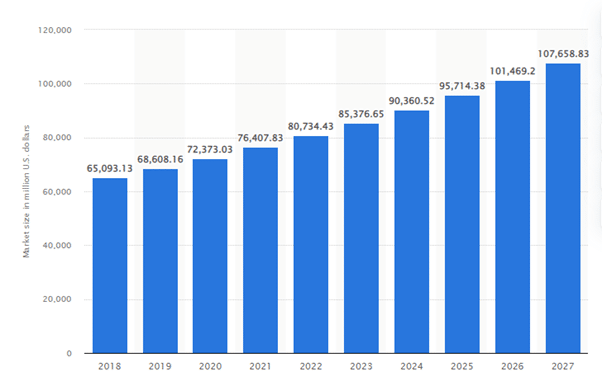
Projected size of the IVD market worldwide from 2018 to 2027 (in million U.S. dollars)
Source: Statista

The above graph shows the In-Vitro Diagnostics (IVD) market globally was estimated at 72.4 billion U.S. dollars in 2020, with a projected growth of 108 billion U.S. Dollars by 2027, showing its increased relevance in the healthcare industry today.

1. Conduct Market Research

Before starting the development process,  organizations must conduct market research and understand their target market, user needs, and potential competitors.

Market research should also help determine regulatory requirements that organizations must comply with and any current trends within the industry or technology space.

Below are some key points to consider when conducting market research for IVD software development:

  • Identify regulatory requirements: Identifying the regulatory requirements for your software is essential for bringing your product to market. They may vary depending on your target market, such as the FDA in the US or the European Union’s CE marking requirements (IVDR 746/2017).
  • Determine your target market: Identify the segments of the healthcare industry that your IVD software will serve. Consider factors such as geography, type of healthcare organization, and specialty areas.
  • Identify your competitors: Research the IVD software market to identify your competitors and their products. Analyze their strengths, weaknesses, pricing, and marketing strategies.
  • Understand your customers: Conduct surveys, interviews, and focus groups with healthcare professionals to understand their needs, preferences, and pain points. Use this information to tailor your IVD software to meet their specific needs.
  • Analyze market trends: Stay up-to-date on the latest trends and developments in the IVD software market. Monitor industry publications, attend conferences, and follow industry experts and thought leaders on social media.
  • Determine pricing strategy: Consider costs, target market & competition when determining pricing strategy, e.g., one-time fee. Subscription fee? Per-test fee?

2. IVD Software Classification

Understanding the classification of your IVD software is crucial before starting the planning and design process. Determine whether the IVD software is a standalone IVD medical device or a component of a larger system.  To be qualified as an IVD medical device software in the EU, the product must fulfil the definition of IVD according to Article 2(2) of Regulation IVDR 746/2017, as described in the Figure 1. The correct classification of IVD software should be done based on the rules described in Annex VIII of the IVDR. Relevant guidance documents, such as MDCG 2019-11 are also essentials for the qualification and classification of IVD software.
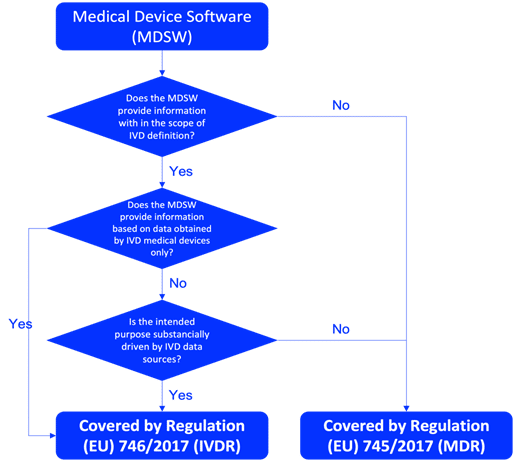
Fig. 1 – MDCG 2019-11 flowchart on qualification of Medical Device Software (MDSW)

Familiarize yourself with relevant regulatory frameworks, guidances and standards such as ISO 13485, IEC 62304, but also specific guidance documents published by regulators, which provide specifications and guidelines for developing, validating, and maintaining IVD software.

3. Plan and Design the Software

The next crucial step of a successful IVD software development is design and planning.

  • A well-documented and robust planning process can help provide a more detailed roadmap for development.
  • During this phase, design reviews, testing, and verification will ensure that the final version meets user requirements.
  • It is essential to incorporate user feedback at every stage of the design process to develop an intuitive interface that works effectively according to their needs.
  • Obtaining feedback from customers and stakeholders offers the development team opportunities to recognize potential concerns and areas for enhancement.
  • Developers can devise software solutions that fulfill customer needs and address their grievances by integrating feedback.
  • The importance of accurate documentation should not be underestimated as it helps trace back issues later on in the lifecycle of the software.
  • The development team must consider scalability and flexibility during the initial planning and design stages when creating the software.

4. Develop and Test the Software

Developing and testing the software is crucial in creating a working prototype.

  • The development phase is necessary to ensure the accuracy of the design, coding, and algorithms used in creating the software solutions.
  • Testing and quality assurance also play an essential role in ensuring the products meet all requirements before launch.
  • It is essential for companies to thoroughly assess each component of their software as part of this process. This includes ensuring they meet performance objectives concerning speed, responsiveness, scalability, security, reliability, and ease of use for their users.
  • Quality assurance checks help identify bugs or errors to release a defect-free product that meets all standards from regulatory bodies such as FDA or CE Marking.
  • When deploying IVD systems, manufacturers need to consider if their applications can be flexible enough to support new technological advances; future-proofing their products becomes increasingly necessary where customers demand longevity across upgrades or iterations over time.

5. Prepare a Regulatory Submission

Preparing a regulatory submission package is critical in bringing IVD software development to market. This step involves compiling documents to demonstrate that the software meets regulatory requirements and is safe and effective.

Here are some critical considerations for preparing a regulatory submission:

  • Gather relevant documents for the package

Understand regulations, standards, and risk classification of IVD software and the manufacturing role. Key documents to include are the device description, technical documentation, risk management file (ISO 14971), software lifecycle documentation (IEC 62304), and quality management system documentation (ISO 13485). Risk management must be applied and monitored during the IVD software development life cycle.

  • Prepare a performance evaluation report (PER)

This will require a comprehensive analysis of scientific evidence showing that the product meets user needs safely and effectively. IVD software performance evaluation should be prepared in accordance with relevant guidance documents, such as MDCG 2020-1 for the EU. Other guidance such as MedTech Europe Clinical Evidence Requirements for IVD can also be a good source of  additional information.

Clinical performance studies are aimed at providing evidence of the safety and effectiveness of a product’s intended purpose to ensure that it’s able to diagnose, monitor and predict diseases and conditions accurately.

As described in MDCG 2020-1 “Validation of the clinical performance should be considered at each change of the software to a new release. If no validation is performed, a justification should be stated in the technical documentation. With a validation of clinical performance, it is demonstrated that users can achieve clinically relevant outputs through predictable and reliable use of the MDSW”.

Adherence to relevant standards and guidelines, such as ISO 20916 (Clinical Performance Studies for In vitro diagnostics) and Good Clinical Practice (CGP), are crucial for the successful execution of clinical studies.

  • Ensure data accuracy

Ensure that that any data collected from testing is presented accurately to prove safety and efficacy before submitting your application. This includes validation and verification data, performance evaluations, and, if applicable, results from clinical studies. Carefully review all information for accuracy and completeness before submitting it.

6. Obtain Regulatory Approval

You need to obtain regulatory approval to bring IVD software development to market. Successful approval enables you to market and sell your software in compliance with local laws and regulations.

  • Familiarize yourself with the applicable regulatory frameworks and guidelines for your software. These may include ISO 13485 (quality management systems), IEC 62304 (medical device software lifecycle processes), ISO 14971 (risk management), and MDCG guidance documents such as MDCG 2019-11 (qualification and classification of software in the medical device regulations) and MDCG 2020-1 (guidance on performance evaluation for IVD software under the IVDR. You should also consider guidelines from other jurisdictions depending on your market strategy. The FDA for example has issued guidance for software as a medical device (SAMD).
  • Develop a comprehensive application package that should include all the necessary documents, data, and tests required for review. Ensure your package addresses regulatory requirements, such as conformity assessment procedures, clinical evidence, and post-market surveillance.
  • Submit the application package to the relevant regulatory authorities for review, such as the FDA in the US or notified bodies in the EU under the In Vitro Diagnostic Regulation (IVDR) 2017/746.
  • Be prepared to respond quickly and accurately to any feedback or additional information requests from regulatory agencies during the review process.
  • Make recommended changes swiftly as part of your submission to obtain approval from agencies successfully.
  • Once you receive approval from regulatory agencies, you can move forward with marketing and selling your software according to local laws & regulations, ensuring ongoing compliance with any post-market requirements.

7. Developing Marketing and Sales Strategies

Creating a successful marketing and sales strategy is essential for bringing IVD software to the market, it allows for faster positioning and gaining a competitive advantage. Make sure to develop a strong brand identity with messaging that resonates with your audience.

In addition, researching customer needs and understanding key industry trends can create a more targeted approach when it comes to the marketing of IVD software solutions, increasing your likelihood for success.

Make sure to use multiple channels such as paid advertising, email campaigns, social media and webinars to reach out to potential customers from diverse segments.

And last but not least, creating effective communication strategies to engage with customers throughout the sales cycle will also be key to promoting IVD products successfully.

8. Launch and Support the Software

Launching and supporting software is a crucial element to its success. The product can be improved over time by providing regular updates and customer service, and users can get the best experience.

Here are some points to consider when launching your IVD software development:

  • Create a comprehensive support plan that puts customer needs first. Ensure you have an efficient process for handling inquiries and technical issues as they arise.
  • Ensure that all necessary software updates are completed on schedule, so users don’t experience any delay in accessing the product’s full features or bug fixes.
  • Assess the regulatory impact of changes and bug fixes, changes to your IVD software may or may not be significant. Consider whether changes impact your regulatory approvals. MDCG 2022-6 provides additional guidance on changes to design and intended purpose in the context of the new transition timelines for IVDs in Europe.
  • Set up user feedback forms or surveys so customers can share their thoughts on the product’s performance and what improvements they want to see. This will help drive further development of the software over time.
  • Offer ongoing training opportunities for new features, so users feel confident using them once released. This will also ensure that customers know how to use their investment in your IVD software development solution fully.

Revolutionizing Healthcare With IVD Software Development

In vitro diagnostic (IVD) software development has transformed the healthcare industry by providing cost-effective testing, analysis, reporting, and communication solutions without physical laboratory equipment.

Studies indicate that healthcare providers highly prioritize in vitro diagnostic (IVD) procedures, and their optimization has the potential to enhance patient outcomes. Therefore, the development of IVD software is crucial in facilitating quicker and more accurate diagnostic results, ultimately leading to the optimization of healthcare practices.

If you need a partner in IVD software development for your business, MDx CRO is an IVD consultancy that provides end-to-end solutions to accompany you at each step of the process. Our team of highly experienced CRO strategists has extensive expertise in bringing innovative medical devices and IVD technologies to market. Request your expert consultation today.

FAQs

What are the key considerations when designing IVD software?

There are several key considerations that companies should keep in mind when designing IVD software: user requirements, regulatory requirements depending on the target geographic location, data accuracy and effective data management, the software’s ability to integrate with other systems, as well as performance and usability.

What are the regulatory requirements for IVD software development in Europe?

The regulatory requirements for IVD software development in Europe are determined by the In Vitro Diagnostic Regulation (IVDR), which became applicable on May 26, 2022. They include, but are not limited to design and development, risk management, validation and verification, as well as compliance with GDPR.

What are the most common challenges in IVD software development?

The most common challenges in IVD software development include regulatory compliance (which can be complex and challenging to navigate through), ensuring integration compatibility with other systems, effective data management, and great user experience, among others.

How do you ensure the quality and reliability of IVD software?

To ensure the quality and reliability of IVD software, it’s important that companies follow all regulatory guidelines applicable to their geographical location, and use a quality management system to ensure that the development process is well-documented. Conducting testing, validation and verification processes is another essential element of software development for in vitro diagnostics.


Industry Insights & Regulatory Updates

What to Consider When Developing an IVD Clinical Performance Study for IVDR Compliance

In vitro diagnostic (IVD) devices are essential in healthcare as they provide accurate and reliable diagnostic information to healthcare providers. The development of an IVD device involves several stages, including research and development, design and prototyping, verification and validation, regulatory approval, and commercialization.

One of the critical steps in IVD development is the conduct of an IVDR clinical performance study to generate reliable and meaningful data to support regulatory approval and the device’s commercial success. In Europe, the in-vitro diagnostic regulation (EU IVDR) is now in force and all new products to market must meet very strict requirements of clinical performance.

The role of ISO 20916 in IVDR clinical performance studies

The design and execution of an IVD clinical performance study are critical to its success, and several factors must be considered to ensure that the study generates reliable and meaningful data. The International Organization for Standardization (ISO) has developed ISO 20916, a standard that provides guidance on the design and conduct of clinical studies for IVD medical devices. The standard is intended to help manufacturers, regulators, and other stakeholders ensure that IVD clinical performance studies are designed and conducted in a consistent and scientifically rigorous manner.

ISO 20916 covers several important aspects, including study design, sample size determination, selection of appropriate endpoints, statistical analysis, and reporting of study results. The standard emphasizes the importance of designing studies that are appropriate for the intended use of the IVD device and that incorporate good clinical practice (GCP) principles.

The plan should specify the study objectives, inclusion and exclusion criteria for study participants, study endpoints, and statistical analysis plan, amongst many other requirements. It should also include procedures for data management and quality control to ensure the accuracy and reliability of the data collected.

Another important aspect of ISO 20916 is the requirement to ensure the safety and well-being of study participants. The standard emphasizes the importance of obtaining informed consent from study participants and protecting their privacy and confidentiality. The standard also requires that studies be conducted in compliance with ethical principles and regulatory requirements.

Alignment with EU IVDR

In addition to ISO 20916, the implementation of the EU IVDR has increased the importance of conducting IVD clinical performance studies as they are required for regulatory compliance. The IVDR replaced the previous In Vitro Diagnostic Directive (IVDD) and introduced more stringent requirements for IVD devices, including clinical evidence requirements. IVD manufacturers are now required to demonstrate clinical evidence that supports a device’s intended purpose and its’ safety and performance. This is particularly important, because insufficient clinical evidence could ultimately lead to a product refusal at the Notified Body resulting in additional costs and delays to bringing product to market.

Amongst many requirements, an IVDR clinical performance study is designed and conducted in compliance with GCP principles. ISO 20916 has additional requirements, and both the regulation and the standard should be considered by all diagnostic manufacturers when developing clinical performance study plans or protocols.

How can MDx CRO help?

MDx is a Medical Device & IVD Contract Research Organization (CRO) that can help IVD device manufacturers with their clinical performance studies by providing a range of services, including:

  • study design
  • site selection
  • patient recruitment
  • study monitoring
  • data management
  • statistical analysis

MDx has extensive experience in conducting clinical performance studies for IVD devices and a deep understanding of the regulatory requirements for these studies. Our team of professionals is well-trained and experienced in managing all aspects of the study, from protocol development to study execution and data analysis. We work closely with our clients to ensure that their studies are designed and conducted in compliance with applicable regulations and guidelines and that they generate reliable and meaningful data.

Conclusion

Conducting an IVD clinical performance study is a critical step in the development and commercialization of an IVD device. By following best practices, working with experienced professionals, and selecting the right CRO, IVD device manufacturers can generate reliable and meaningful data that can support regulatory approval and the device’s commercial success, ultimately benefiting patients and healthcare providers. Adherence to the IVDR and the ISO 20916 standard can help ensure that the data generated is acceptable for regulatory submission and meets the safety and performance requirements for IVDs.

Industry Insights & Regulatory Updates

Clinical Investigation Submission Spain AEMPS: What You Need to Know About the Updated Process

Understanding how to complete a clinical investigation submission in Spain with the AEMPS is essential for manufacturers and sponsors working under the EU MDR. Although the MDR brought greater harmonization across Europe, Spain maintains several national provisions that every sponsor must follow. Below is a clear, SEO‑optimized overview to help you navigate the updated process introduced on January 30, 2023.

How Clinical Investigations Are Regulated in Spain

Clinical investigations in Spain are governed by long‑standing national laws:

  • Royal Decree 1591/2009 on medical devices
  • Royal Decree 1616/2009 on active implantable devices
  • Circular Nº 07/2004, which sets out ethical and methodological requirements similar to those used for medicinal product studies

Together, these regulations define how to obtain administrative approval and what documents sponsors must provide.


Key Stakeholders in a Clinical Investigation Submission in Spain (AEMPS)

Three main stakeholders are involved in every submission:

1. AEMPS (Spanish Competent Authority)

Reviews and authorizes the clinical investigation submission in Spain.

2. CEIMs (Ethics Committees)

Issue a favorable or negative ethical opinion for studies involving human subjects.

3. Clinical Sites (“Centros de investigación”)

Conduct the Clinical Investigation Plan (CIP) according to MDR and ISO 14155.

Updated AEMPS Submission Process Under the EU MDR

Since May 26, 2021, the MDR imposed stricter rules for clinical investigations. These requirements are mainly defined in:

  • Article 70 (submission obligations for experimental devices)
  • Annex XV, Chapter II (application content and documentation)

Previously, Spain used Circular Nº 07/2004, including templates such as:

  • Annex B – application form
  • Annex 1 – manufacturer’s essential requirements declaration
  • Annex 2 – sponsor’s declaration

As of January 30, 2023, the AEMPS updated all annexes to match MDR requirements.

New AEMPS Annexes for Clinical Investigation Submissions

Annex A – MDR Submission Requirements

This annex explains all documentation needed for an MDR‑compliant clinical investigation submission in Spain AEMPS.

Annex B – Substantial Modification Requirements

Covers modifications following MDCG 2021‑28.

Annex C – Updated Application Form

Aligned with Annex XV Chapter 2.1 and includes new fields such as:

  • Clinical Evaluation Plan reference
  • Details on medicinal substances, human/animal tissues
  • Identification of the Notified Body (if applicable)
  • Confirmation of AEMPS–CEIM communication
  • Manufacturer’s declaration on GSPRs (excluding aspects under investigation)
  • Use of the term “Supervisor” instead of “Monitor”

Annex D – Updated Manufacturer GSPR Declaration

Now aligned with Annex XV Chapter 4.1.

Important Requirements for AEMPS Clinical Investigation Submissions

The updated process highlights several national expectations:

Site Director Agreement Required

In addition to AEMPS approval and CEIM opinion, the site director must sign a contract authorizing the clinical investigation.

Accepted Languages

  • English accepted: Investigator’s Brochure (IB) and Clinical Investigation Plan (CIP).
  • Spanish required: CIP summary, Patient Information Sheet, Informed Consent, Instructions for Use, labeling, and all authorization request forms.

Safety Reporting

Must follow MDCG 2020‑10/2 Rev 1 safety reporting procedures.

Submission Pathways for Clinical Investigations in Spain

Spain offers different submission pathways depending on the study type:

1. Full AEMPS Submission

Required for:

  • Premarket clinical investigations with non‑CE‑marked devices
  • CE‑marked devices used outside their intended purpose (MDR Article 74.2)

2. Notification via NEOPS

Used for PMCF studies with CE‑marked devices used within intended purpose but deviating from standard practice.

3. No Authorization or Notification

For observational PMCF studies fully aligned with CE‑marked intended use.

4. Consultation With AEMPS

For studies under MDR Article 82 involving non‑CE‑marked or off‑label CE‑marked devices, but not intended to support CE marking.

How MDx Supports Your Clinical Investigation Submission in Spain (AEMPS)

MDx CRO provides end‑to‑end support for sponsors navigating the updated Spanish submission pathway. Our services include:

  • Clinical & regulatory strategy
  • Medical writing
  • GSPR checklist creation
  • Notified Body application support
  • Design of IB and CIP aligned with MDR & ISO 14155
  • Ethics Committee submissions
  • AEMPS clinical investigation submissions
  • Site qualification, activation, monitoring & management
  • PMCF and Article 82 studies

Our experts guide you through every stage (from planning to submission to study execution) ensuring full compliance with MDR and Spanish national requirements.

Industry Insights & Regulatory Updates

The Impact of the IVDR and MDCG 2023-1 on LDTs

On May 26, 2022 the new Regulation (EU) 2017/746 on in vitro diagnostic medical devices (IVDR) has become fully applicable with major consequences not only for manufacturers of IVDs but also for all diagnostic laboratories, particularly those that manufacture in-house IVDs (often called laboratory developed tests or LDTs).

Although an exemption exists and not all requirements of the IVDR are applicable to LDT IVDs, that exemption is only applicable if several conditions are met as we will discuss later in this blog.With the implementation of the IVDR, EU laboratories, particularly those that manufacture in-house IVDs, are required to comply with EU legislation for the first time, and the workload to meet those requirements is significant.It is also important to note that the discussion of IVDR LDTs is limited to European health institutions.

LDTs manufactured outside the EU, for example, by CLIA-certified US laboratories or other non-EU commercial laboratories, are not eligible for the IVDR LDT/in-house exemption neither they can fulfil the conditions set out in article 5(5) of the IVDR. If these companies provide testing on EU patients through institutions outside of the EU, their IVD tests should be in full compliance with the IVDR by now (including conformity assessment with a Notified Body) which sees scrutiny rise to a completely different level than what they are used to.

The only exception is if there was a signed declaration of conformity for a specific test under the IVD directive (IVDD) prior to the 26th of May 2022, which could have granted that test additional transition time based on the IVDR progressive roll-out that is currently in place. This is unusual because non-EU LDTs were not covered by the previous IVDD, and most companies providing these tests in Europe should now be fully compliant with the IVDR.

Article 6 of the IVDR (distance sales) regulates such commercial activities and states that commercial laboratories operating outside of the EU but providing testing to EU citizens must fully comply with the IVDR.

The impact of IVDR, ISO 15189:2022 changes, and the publication of MDCG 2023-1

In this blog we will examine key topics such as:

  • What conditions must be met in order to continue manufacturing in-house/LDT IVDs in the EU?
  • Changes in the new ISO 15189:2022 standard
  • MDCG 2023-1 Guidance on the Health Institution Exemption under Article 5(5) of the IVDR, which was recently published.
  • What steps should IVDR LDT manufacturers take right now?
  • How can MDx assist?

Conditions for IVDR LDTs and their deadlines

Under the IVDR, IVDs can be manufactured and used within EU health institutions (in-house devices) on a non-industrial scale to address specific target patient group needs, or when there isn’t an equivalent CE-marked IVD on the market.

It is important to note that each EU member state has the right to restrict the use of such devices and therefore we are likely to see differences being applied on a EU level when it comes to restrictions on in-house devices.

However, the following main conditions must still be met for the exemption to apply:

Condition #1 – No transfer of devices [IVDR article 5(5)a]

IVDs such as reagents and control materials may not be distributed to other legal entities. Material distribution for external quality assessment is an exception (see IVDR Art. 1(3)). Documents such as protocols/standard operating procedures (SOPs) may also be distributed because they are not devices. Furthermore, there are no restrictions on testing samples obtained from external sources. As a result, reference hospitals can continue to analyse samples from hospitals that are unable to perform the test in question, as long as it is not done on an industrial scale.

Timeline: in-house IVDs cannot be transferred to other legal entities from 26 May 2022

Condition #2 –  Compliance with EN ISO 15189 [article 5(5)b, c]

Diagnostic laboratories that use in-house IVDs must comply with the EN ISO 15189 standard (recently updated to the 2022 version), which specifies quality and competence requirements in medical laboratories. Accreditation is not strictly necessary unless your member state requires it, but it is good to be aware that external audits are a solid foundation for improving a QMS. A QMS established in accordance with ISO 15189 has generally been acceptable amongst the medical laboratory community, however MDCG 2023-1 confirms that compliance to EN ISO 15189 alone is not sufficient for the manufacture of in-house IVDs. The QMS should extend to other areas that are necessary for IVDR compliance, including for example risk management and manufacturing, by making use of appropriate standards particularly if they are harmonised to the IVDR. MDCG 2023-1 suggests that elements of ISO 13485 (medical devices) and ISO 14791 (risk management) should be incorporated in the QMS. In-house test manufacturers will need to determine the best way to comply with ISO 15189 and the IVDR requirements in Annex I concurrently.

Timeline: compliance with ISO 15189 is required by 26 May 2024

What is ISO 15189:2022?

ISO 15189:2022 specifies quality and competence requirements for medical laboratories. ISO 15189 is applicable not only to medical laboratories developing management systems and assessing their competence, but also to users, regulatory authorities, and accreditation bodies confirming or recognizing the competence of medical laboratories.

ISO 15189:2022 vs 2012: main changes!

Because of the alignment with ISO/IEC 17025:2017-General Requirements For The Competence Of Testing And Calibration Laboratories, the management requirements are now at the end of the document.
– Added requirements for point-of-care testing (POCT) (based on ISO 22870:2016) which is a new addition to the standard’s scope.
– A stronger emphasis on risk management: requires laboratory managers to establish, implement and maintain risk management processes and evaluate their effectiveness; and extends risk measures by requiring safeguards that can prevent unintended adjustments of laboratory equipment.
– New terms & definitions: e.g. In vitro diagnostic medical device (IVD), external quality assessment, trueness/measurement trueness and others.

Condition #3 –  Justification of use and unmet needs [Article 5(5) d]

The use of CE-IVDs is the default option under the IVDR. Only when no equivalent CE-IVD is available, or when an equivalent CE-IVD cannot meet the specific needs of a target patient group at the appropriate level of performance, is the use of in-house IVDs permitted. This implies that IVDR LDTs can be used when they perform better, i.e. when their use benefits patient safety and health. A written statement justifying the manufacture, modification, and use of in-house IVDs should be available for review by the national competent authority, which oversees the enforcement the IVDR and judges the justification’s validity.

One of the most pressing issues is what constitutes an appropriate justification for unmet need. MDCG 2023-1 provides some further clarity that the justification can be based on technical, biological or clinical aspects of the device “e.g. different intended purpose, different clinical conditions, different patient group, different conditions of use, different principles of operation, different approved specimen materials, different critical performance characteristics or different critical technical specifications”. To establish that an equivalent CE marked device does not exist, MDCG 2023-1 recommends that medical laboratories implement a process to examine the market, for example by consulting EUDAMED, the European database on medical devices or other processes. Furthermore, the justification should be reviewed on a regular basis.

Timeline: 26 May 2028 for the justification to be fully available in the health institution documentation. Please note that the competent authority may submit requests for information already from 26 May 2024.

Condition #4 – Public declaration and GSPR compliance [article 5(5)f]

One of the other conditions to continue manufacturing in-house devices is that the health institution prepares a public declaration with the name and address of the manufacturing health institution, the details of the IVD LDT and confirmation that the device meets the GSPRs set out in Annex I of the IVDR. Where a GSPR is not met in full an appropriate justification is required. This is best addressed by means of a GSPR checklist that should be prepared for the in-house device.

Annex A of MDCG 2023-1  provides a template for this public declaration.

Timeline: public declarations will need to be available by 26 May 2024

Condition #5 – Additional requirements for class D IVDR LDTs [article 5(5) g,h]

The requirements for class D tests are more stringent than those for classes A-C tests. More information on the manufacturing, design, and performance of IVDR LDTs is needed. This means that the GSPR for class D tests should be met and documented in greater detail, largely aligned with that produced for CE-IVDs, i.e. in accordance with Annex II’s technical documentation requirements. For example, there should be documentation that demonstrates how the analytical and clinical performance data support the intended purpose of the in-house device.

Timeline: 26 May 2024

Condition #6 – Clinical experience gained [article 5(5) i]

The experience gained from clinical use of the device should be used by the health institution to review the device performance and to take all necessary corrective actions. The strategy for the evaluation of the use of the in-house IVD should be aligned with post-market surveillance requirements and a documented procedure should be in place.

Timeline: processes to review clinical experience gained should be implemented by 26 May 2024

5 actions laboratory test developers must take right now.

  1. Review the IVDR and establish the appropriate regulatory framework for your unique circumstances:
    Health institutions based in Europe can make use of article 5(5) in the IVDR to continue manufacturing IVDR LDTs under certain conditions.Laboratories that provide testing on European patients but are based outside of the EU (article 6 distance sales), are not granted an in-house exemption and therefore must meet the IVDR in full if they wish to continue to provide testing on EU specimens.
  2. Review assay portfolio and identify which are in-house IVDs vs CE-IVDs
    For health institutions based in the EU: review the possible classification of your in-house IVDs against Annex VIII (Classification rules) of the IVDR. In-house tests that fall in class D will have stricter requirements to fulfil.
  3. Ensure all conditions have been met for your laboratory to continue manufacturing in-house IVDs
    As of May 2022, devices can no longer be transferred to other legal entities. This is likely to be interpreted differently from member state of member state, depending on how healthcare systems are organised in a particular country. You may seek to clarify your circumstances with your national competent authority.Familiarise with the deadlines for each in-house test condition that applies. For example some requirements have applied in May 2022 (e.g. prohibition to transfer devices to another legal entity), whereas others will become applicable from May 2024 (e.g. ISO 15189 implementation) or May 2028 (e.g. written justification for unmet needs of specific target patient groups).Where relevant, ensure that you have documented evidence to support your obligations under article 5(5).
  4. Implement a suitable quality management system
    ISO 15189:2022 has recently been published and has introduced several changes when compared to ISO 15189:2012. However, regulators continue to believe that this standard is insufficient to address the manufacture of in-house IVDs. As a minimum, your quality management system will need to be supplemented with additional controls from other key medical device standards such as ISO 14971 and ISO 13485.
  5. Conduct a review of your IVDR LDTs against the general safety and performance requirements (GSPR) in Annex I of the IVDR
    The health institution is legally responsible for the public declaration on the in-house IVD and therefore should complete a full review of all relevant GSPRs and ensure that a justification is readily available for any GSPRs that are not met in full.

How can MDx help with your IVDR LDTs?

MDx CRO is a leading quality, regulatory and contract research consulting company dedicated to the medical device and diagnostic sectors.

With the introduction of the IVDR, the requirements for in-house devices and laboratory developed tests (LDTs) have grown significantly. Whether you are a health institution in the EU or a commercial laboratory outside of the EU, our MedTech team can assist you in developing a compliance strategy and will be with you every step of the way.

Our IVDR Laboratory services have been tailored for the needs of in-house test developers and include:

  • Regulatory strategy: includes classification review, intended purpose review, technical documentation needs assessment, and a strategic assessment of regulatory needs with a focus on reducing the compliance burden.
  • Creation of QMS procedures to meet the requirements of the in-house test environment whilst meeting EU IVDR requirements.
  • Assessment of all conditions in article 5(5)
  • Gap assessment of your QMS system
  • Medical writing
  • Creation of technical documentation to support Class D in-house IVDs
  • Creation and completion of GSPR checklists
  • Support with notified body applications
  • Support with competent authority requests
  • ISO 14971:2019 gap analysis and implementation
  • ISO 13485:2016 gap analysis and implementation
  • ISO 15189:2022 gap analysis and implementation

Please reach out today for a consultation with our team of IVDR LDTs experts.

Written by:
Carlos Galamba

Carlos Galamba

CEO

Senior regulatory leader and former BSI IVDR reviewer with deep experience in CE marking high-risk IVDs, companion diagnostics, and IVDR implementation.
Industry Insights & Regulatory Updates

WHO Guidance for Digital Health (Nov 2022): Monitoring the Implementation of Digital Health

Digital health shifted from a “nice‑to‑have” to a system imperative during COVID‑19. The World Health Organization (WHO) responded with a global strategy to help countries scale digital health safely and equitably, and in November 2022 it published “Monitoring the implementation of digital health: an overview of selected national and international methodologies.” For product leaders and regulatory teams in digital health, this document is not a “how to regulate” playbook; it is a measurement playbook that shows what to track, how to compare progress across countries, and where the evidence gaps still are. The report underpins the WHO Global Strategy on Digital Health 2020–2025, which calls for consistent monitoring so decisions are driven by comparable, high‑quality data. See the WHO monitoring overview and strategy documents for scope and context. (WHO Europe, 2022; WHO Global Strategy 2020–2025).

What the WHO November 2022 guidance actually covers

The guidance reviews national and international indicator frameworks used to monitor digital health maturity—spanning governance, adoption, use, data infrastructure and re‑use—and explains why internationally agreed indicators are still limited. It also synthesizes lessons from country case studies to show how monitoring feeds into policy and investment choices. In short, it tells decision‑makers what to measure so they can assess whether digital health is improving access, quality, safety and system performance. (WHO Europe, 2022).

What it does not cover: medical‑device regulatory pathways

Manufacturers should note the distinction: the WHO monitoring overview does not set device‑specific regulatory expectations for Software as a Medical Device (SaMD) or AI/ML devices. For those, regulators align through IMDRF documents such as SaMD Key Definitions and the Good Machine Learning Practice (GMLP) guiding principles, which inform how agencies approach AI/ML medical devices across the product lifecycle. (IMDRF SaMD Key Definitions; IMDRF GMLP N88:2025).

Why monitoring matters to digital health manufacturers

For companies planning EU or multi‑country scale‑up, what gets measured gets adopted. Payers and ministries increasingly look for comparable indicators to benchmark telehealth, citizen EHR access, data interoperability and equity. WHO’s analysis highlights that while monitoring has improved since the pandemic, evidence systems still struggle to keep pace with rapid innovation—especially around governance, health‑data reuse and system‑wide interoperability. (WHO Europe, 2022).

Four monitoring domains manufacturers should build into their go‑to‑market plans

Telehealth effectiveness and sustainability. Post‑pandemic, OECD countries expanded telemedicine at speed, but sustainability requires data on quality, access, outcomes and financial impact. OECD’s work outlines leading practices and shows where countries are meeting the mark—and where they are not—providing a lens manufacturers can use to frame clinical and economic value arguments. (OECD, 2024; see also OECD Working Paper 116).

Citizen access to health data. The European Commission’s Digital Decade monitoring includes a composite eHealth indicator tracking citizens’ online access to electronic health records—what data are accessible, through which technologies, and with what population coverage—helping companies anticipate variability in user activation and integration demands. (European Commission, 2024).

Equity and digital‑health literacy. WHO’s European Health Information Gateway now hosts indicators and country profiles covering telehealth, mHealth, literacy and big‑data analytics. If your product depends on remote access or self‑management, plan for measurable equity outcomes and the ability to disaggregate performance across priority groups. (WHO/Europe indicators).

Interoperability and data reuse. WHO stresses that monitoring must capture technical and operational readiness to share and reuse health data, not just app counts or user numbers. Local integration, standardized vocabularies, and data‑provenance controls are increasingly pre‑conditions for public procurement and reimbursement. (WHO Europe, 2022).

Regional benchmarks you can leverage in evidence plans

The Nordic eHealth Research Network, backed by the Nordic Council of Ministers, maintains one of the world’s most mature indicator sets for digital health—useful as a benchmark for adoption, service quality and outcomes when planning pilots in Europe’s most advanced markets. The latest 2025 benchmarking report and earlier methodology publications show how indicators evolved to support policy and procurement decisions. (Nordic Council of Ministers, 2025; background methodology: DiVA portal).

What this means for your product, evidence and market access strategy

Manufacturers that align product telemetry and study designs with the indicators policymakers actually track shorten the distance from pilot to scaled deployment. WHO’s monitoring agenda and the EU’s digital‑policy metrics translate directly into product requirements: demonstrable quality and safety at scale, equitable reach across populations, integration into national data spaces, and transparent reporting on usage and outcomes. If your solution overlaps with regulated functions (decision support, diagnosis, triage), pair this monitoring strategy with IMDRF and local regulatory guidance for SaMD/AI so that clinical evidence, change control and post‑market monitoring satisfy both policy and regulatory expectations.

How MDx CRO helps digital health manufacturers turn monitoring into market traction

MDx CRO works with digital health and SaMD teams to translate monitoring frameworks into actionable study endpoints, KPIs and regulatory‑ready evidence. We map your product to WHO and EU indicator sets, design real‑world evaluation that demonstrates equitable access and clinical impact, and align your documentation with IMDRF principles when your software meets the definition of a medical device. Explore our support for Clinical Research and Regulatory Affairs, or contact us to scope a country‑by‑country expansion plan.

Industry Insights & Regulatory Updates

Understanding MDCG 2020-10 Rev 1: Safety Reporting in Medical Device

In light of the forthcoming Medical Device Regulation (MDR) and the delay in the complete functionality of the electronic system referenced in Article 73 (EUDAMED), the MDCG 2020-10 Rev 1 provides essential guidance. With Eudamed not being ready on the MDR’s effective date, the guidelines under MDCG 2020-10 Rev 1 become instrumental in outlining the processes for safety reporting in clinical research.

Key Points from MDCG 2020-10 Rev 1:

  • Safety Reporting Modalities: The document thoroughly describes the reporting modalities for Serious Adverse Events (SAEs) and offers a summary tabulation reporting format.
  • Adherence to Regulations: It emphasizes that medical device safety reporting during clinical studies must be consistent with the guidelines in Article 80 of Regulation (EU) 2017/745, also known as the Medical Device Regulation (MDR).

For a clinical investigation involving medical technology, utilizing the electronic system as stipulated in MDR Article 73 means the sponsor must promptly share the following with every Member State involved:

  • Any SAE that can be directly or potentially linked to the investigational device, comparator, or the procedure.
  • Any device defect that could have escalated to a serious adverse event under different circumstances.
  • Further details on any aforementioned event.

The timeframe set for reporting these adverse events varies based on the severity of the incident. While the clinical trial sponsor might initially provide an incomplete report, it’s crucial to follow up with a detailed one to maintain timely reporting.

The guidance not only covers the basic safety reporting protocols but also delves deeper into the post-market clinical follow-up (PMCF) investigations for CE-marked MedTech products. Here, the guidelines laid out in MDR Articles 87 to 90 play a pivotal role.

Safety Reporting in PMCF Clinical Investigations

It’s noteworthy that while the vigilance measures outlined in the aforementioned articles are applicable to PMCF clinical studies, the MDCG 2020-10 Revision 1 remains relevant. This is primarily because the reporting of significant adverse events linked to previous investigational devices should align with the reporting prerequisites mentioned in EU MDR 2017/745 Article 80.

The guidance document provides an essential roadmap for Safety reporting SOPs, Safety reporting plans, and Clinical Investigation plans. This is invaluable for MedTech Manufacturers, sponsors, and CROs involved in clinical research activities with medical devices.

FAQs about MDCG 2020-10 Rev 1

  • What events need reporting? Report all SAEs and suspected unexpected serious adverse device effects (SUSADEs).
  • What’s the reporting timeframe? Report SAEs within 15 days and SUSADEs within 7 days post the sponsor’s awareness.
  • What should a safety report include? Details about the sponsor, investigator, device, event date, event description, outcome, and other pertinent data.

For more comprehensive insights on safety reporting for medical devices, delve into the MDCG 2020-10 Rev 1 guidance document.

Industry Insights & Regulatory Updates