IVDR Annex XIV Performance Studies for Companion Diagnostics: A Step-by-Step Guide 2026

This IVDR Annex XIV clinical performance study guide explains how you can plan and obtain authorisation for performance studies under Annex XIV of the IVDR when it involves a companion diagnostic. It aims to be practical and aligned with current expectations of ethics committees and competent authorities in the European Union.

If you require a structured checklist, you can download the Annex XIV Performance Study Authorisation (PSA) Toolkit, including an ISO 20916 monitoring checklist, templates, and a pre-submission workplan.


IVDR Annex XIV Clinical Performance Study: When PSA vs PSN Applies for Companion Diagnostics

Companion diagnostics (CDx) often require an IVDR Annex XIV clinical performance study because these tests directly influence patient management. Therefore, understanding when a Performance Study Authorisation (PSA) or a Performance Study Notification (PSN) applies is critical for effective regulatory planning and avoiding unnecessary delays.

Why Companion Diagnostics Often Fall Under Annex XIV

Companion diagnostics frequently fall under Annex XIV of the IVDR because the test result guides key treatment decisions, including:

  • Patient selection
  • Treatment allocation
  • Therapy continuation or discontinuation

If the study design allows test results to influence clinical decisions, regulators consider the study interventional, and this classification triggers the need for a Performance Study Authorisation (PSA). In addition, if you use the device outside its intended purpose as defined in the Instructions for Use (IFU), the IVDR framework also requires a PSA.

When Does a PSA Apply Under Article 58(1)?

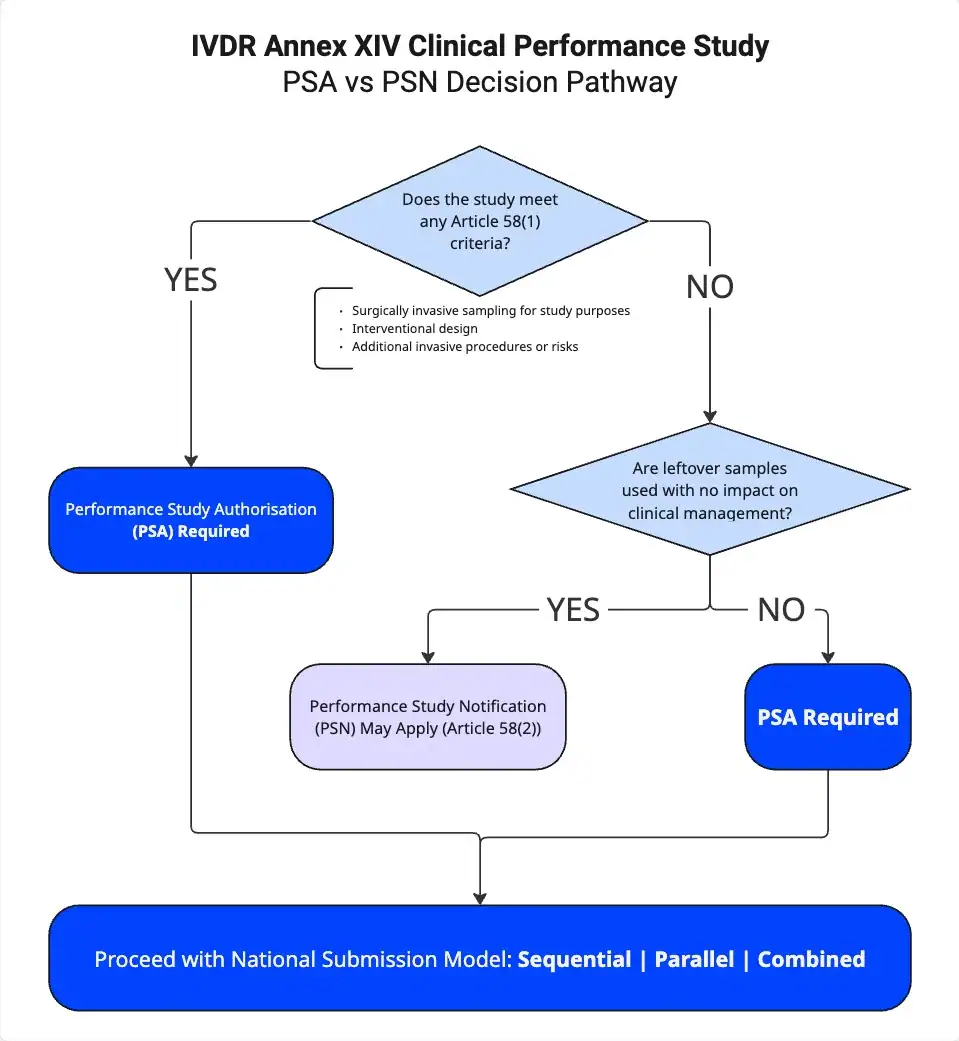
For any IVDR Annex XIV clinical performance study, Article 58(1) serves as the key provision to determine whether a PSA is required. A PSA becomes mandatory if you meet any of the following three criteria:

  • You perform surgically invasive sample collection specifically for the clinical performance study (CPS).
  • You design the study as interventional in nature.
  • You introduce additional invasive procedures or other risks for participants.

If even one of these criteria applies, you must obtain a Performance Study Authorisation before starting the study.

When Does a PSN Apply Under Article 58(2)?

If you do not meet any of the Article 58(1) criteria, Article 58(2) may apply instead. In that case, you may submit a Performance Study Notification (PSN) when:

  • The study uses leftover samples only
  • The study includes no additional invasive procedures
  • Test results do not influence patient management
  • The design remains strictly non-interventional

However, even when these conditions apply, you must carefully evaluate national requirements and specific study design details to confirm that a PSN remains appropriate.

Combined Medicinal Product and Diagnostic Studies

An IVDR Annex XIV clinical performance study that involves both a companion diagnostic and a medicinal product requires structured coordination from the outset. When both regulatory frameworks apply, the Clinical Trials Regulation (CTR) governs the medicinal product, while the IVDR governs the diagnostic. Consequently, you must align timelines, documentation, and regulatory strategy under both frameworks to avoid inconsistencies and delays.

Step-by-Step: from planning to PSA approval

1. IB and CPSP Essentials, and the Link Between Endpoints, Intended Use, and Cut-off Strategy

Begin with a coherent Investigator’s Brochure (IB) and Clinical Performance Study Plan (CPSP). Every claim in the CPSP should trace to the intended purpose of the device and to analytical and clinical evidence that is sufficient for that claim. Endpoints must align with the intended clinical decision.

Based on our experience with more than 100 projects, the following two review findings occur repeatedly:

  • Analytical cut-off and validation. Authorities closely examine how the assay cut-off has been defined and supported. Sensitivity, precision, and accuracy should demonstrate that the device performs in a way that supports safe clinical decisions. Weak justification invites questions about patient misclassification risk, which frequently leads to requests for information.
  • Endpoints not aligned with intended use. Reviewers frequently question primary endpoints that are not clearly tied to clinical performance or to the intended use of the device. The endpoint should map directly to the decision being made for the patient.

Practical measures we have implemented in more than 100 projects:

  • Draft the statistical analysis plan early and show a clear line from intended use to endpoint to success criteria.
  • Map each analytical study (limit of detection, limit of quantitation, precision, interference, cut-off justification) to the clinical claim it supports.

2. Country Submissions: ethics committees, competent authorities, portals, translations, and fees

Plan both the ethics and competent authority pathways, including accounts for national portals, translation policies, and fee payments. Country-specific requirements can change timelines and logistics.

Some examples of country-specific requirements:

  • France requires an IDRCB registration code. The protocol, informed consent form, and insurance certificate must display this code. Missing or inconsistent use of the code commonly triggers requests for information.
  • Poland may require a physical submission package rather than a fully electronic file. Plan accordingly all documents that require original signatures. Courier time, notarised copies where applicable, and signature sequencing should also be built into the schedule.

A brief pre-submission checklist:

  • Identification of country EC-NCA submission approach (sequential, parallel, combined) and EC meeting schedules
  • Portal access verified and roles assigned for both ethics committees and competent authorities.
  • National identifiers obtained and propagated consistently across documents.
  • Translation scope defined and quality-controlled, particularly for patient-facing materials.
  • Insurance certificates aligned with the study footprint and national expectations.
  • Fee tables confirmed and purchase orders in place.

3. Timelines, Clock-Stops, and Expert Consultations

Validation and assessment phases of review often include clock-stops for clarification, where the reviewing authority can ask for further information, known as Request for Informations (RFIs). You should define internal service levels for responses in advance, and topic ownership should be clear across analytical, clinical, and biostatistics contributors. A master cross-reference that links CPSP, IB, risk management, and statistical sections reduces the risk of inconsistent responses. In Pickett’s assessment, assigning topic ownership for analytical, clinical, and statistical responses before submission helps keep clock-stops short and prevents inconsistent answers across documents.

IVDR Annex XIV Clinical Performance Study: How to Build a Robust Dossier?

A strong IVDR Annex XIV clinical performance study dossier reduces the risk of Requests for Information (RFIs), clock-stops, and approval delays.

Analytical Validation and Cut-Off Justification

For an IVDR Annex XIV clinical performance study, cut-off justification must go beyond presenting a single threshold value or ROC curve.

A robust dossier should:

  • Explain the clinical consequences of the selected cut-off
  • Describe how sensitivity and specificity change if the threshold shifts
  • Address false positives and false negatives at clinically relevant prevalence
  • Link analytical performance directly to the primary endpoint
  • Demonstrate how the device supports a safe clinical decision

Authorities frequently focus on misclassification risk. If the cut-off rationale does not clearly support safe decision-making, this section becomes a major driver of RFIs.

Best practice according to Callum Pickett Clinical Alliance Lead at MDx
Treat cut-off justification with the same rigor as a safety argument. Provide both statistical evidence and a clear clinical narrative.

Informed Consent Strategy Aligned With the CPSP

Misalignment between the Clinical Performance Study Plan (CPSP) and the informed consent form is a common cause of delay in an IVDR Annex XIV clinical performance study.

To reduce risk:

  1. Finalize the CPSP first.
  2. Draft the informed consent to mirror procedures, visit schedules, and risks.
  3. Use clear, plain language that accurately reflects the protocol.

Reviewers assess whether participants are properly informed. If the consent document does not reflect the study design, an RFI is likely.

We recommend to include the following in the Informed Consent:

  • Clear summary of procedures and assessment schedule
  • Device-specific risks, including sample handling and possible retesting
  • Explanation of invalid or indeterminate results and participant implications

Consistency between the CPSP and consent documentation strengthens credibility during assessment.

Cross-Referencing: CPSP, IB, GSPR, and Study Reports

A cross-reference matrix improves both internal quality control and external review efficiency.

Your matrix should demonstrate:

  • Where each General Safety and Performance Requirement (GSPR) is addressed
  • How CPSP procedures are monitored and documented
  • Where statistical commitments are supported by analysis
  • How risk management links to study controls

For a successful IVDR Annex XIV clinical performance study submission, document traceability is critical.

Frequent RFI Drivers in IVDR Annex XIV Clinical Performance Studies

Below are common deficiencies and practical mitigation strategies:

RFI DriverHow to Address It
Primary endpoint not aligned with intended useRedefine or restate the endpoint so it directly supports the clinical decision
Cut-off justification insufficientProvide complete analytical data and explain clinical impact
Sample representativeness unclearJustify matrix type, disease stage, prior therapy, and relevant variables
Misclassification of study type (leftover samples)Clarify whether the design remains non-interventional and whether PSN is appropriate
Monitoring plan not aligned with ISO 20916Define adverse event categories, roles, and timelines
Informed consent inconsistent with CPSPAlign language and procedural details precisely
Statistical assumptions not clinically justifiedLink alpha and power to meaningful clinical differences
Device deficiency reporting unclearDefine detection, escalation, and reporting mechanisms
Risk management not connected to study controlsTrace risks to mitigation and monitoring activities
Combined CTR–IVDR governance unclearDefine roles, responsibilities, and decision pathways
Incomplete or low-quality translationsPlan professional review and back-translation
National identifiers or insurance mismatchedEnsure consistent codes and appropriate coverage limits

Country Playbook: How to plan Performance Study Applications to EU Member States

1. Identify the PSA submission approach adopted by the EU member state.

There are three models adopted by EU countries which will impact your submission strategy:

  • Sequential – the EC is submitted to first and NCA submission can only occur once an EC approval has been issued.
  • Parallel – the EC and NCA submissions can be submitted around or at the same time allowing for a “parallel” review process. However, the NCA will only approve the study once a positive EC opinion has been granted
  • Combined – a single PSA submission is sent to one authority which serves as the EC and NCA, a single positive opinion will be issued.

2. Choose your Ethics Committee:

  • It is highly recommended to submit the PSA to the same EC reviewing the associated Clinical Trial Application
  • Identify any EC specific templates, this may include EC-specific application forms and site document templates
  • Identify the EC meeting schedule and the deadlines for PSA submission to achieve review at the EC meeting date
  • Use the EC meeting schedule to inform your submission strategy, different ECs will meet at different frequencies.

3. Identify any specific requirements set by the National Competent Authority:

  • Are there any NCA specific templates to be filed with the PSA?
  • Is there anything that can gate submission to this country? For example, does the NCA mandate that the final Clinical Trial protocol is submitted with the submission.

4. Identify any specific laws and requirements for the EU member state being submitted to:

  • The EU is governed by GDPR laws, but national laws on data protection add an additional layer of requirements. Ensure that your study is developed with the national data protection requirements in mind.
  • EU member states have different requirements for the insurance documentation, this may include reference to national laws, inclusion of national study codes, and extra details on the number of participants.

5. Use all these points to create your submission strategy, informed by the following:

  • Submission approach: countries with sequential review approaches take longer on average than countries with parallel and combined review approaches.
  • Clinical Priority: what countries are priority for enrolment? Which countries will have the most sites and therefore need to be activated earlier? 
    • How often do the chosen ECs meet according to their meeting schedule?
    • Are there any NCA or EC document requirements which aren’t yet available, and might delay submission?

Monitoring in Line with ISO 20916

ISO 20916 introduces additional classification categories for adverse events compared with the base IVDR text. Sites need clear training on event taxonomy, responsibilities for classification, and reporting timelines.

Content to include in the monitoring plan and site training:

  • Definitions and examples for adverse events and serious adverse events as used in the study.
  • Roles for initial classification, medical review, and final assessment.
  • Specific clocks for reporting from site to sponsor and from sponsor to authorities.
  • How to capture assess and report device deficiencies.

As our clinical team has observed under Annex XIV submissions, early training on adverse event taxonomy and reporting timelines is essential. Misclassification in the first reported case often leads to corrective actions and schedule impact.

IVDR Annex XIV clinical performance study Advanced MedTech Performance Study Workflow.

Scientific Validity within Annex XIV Performance Evaluation

From PSA to Market: coordination with the notified body and medicines regulators

For a true companion diagnostic approval, align analytical validity, clinical performance, and scientific validity with post-market plans. Label language and evidence expectations should be coordinated with the Notified Body and, where applicable, medicines regulators. Plan the handover from study evidence to post-market performance follow-up.

According to Callum Pickett, maintaining a single evidence map that links analytical validity, clinical performance, and scientific validity to the eventual label language streamlines Notified Body review and reduces post-submission clarification rounds.

Resources

  • Guidance from the Medical Device Coordination Group (MDCG) and the European Commission on performance studies, including Q&A on Article 58 pathways.
  • National guidance such as the Belgian Federal Agency for Medicines and Health Products (FAMHP) on dossier structure, timelines, and fees for performance studies.
  • Consultancy overviews such as DLRC Group (DLRC Group) for pan-EU context.
  • Standards published by the International Organization for Standardization (ISO), notably ISO 20916 for clinical performance studies of in vitro diagnostic medical devices.

Expert insight by Callum Pickett

Success with Annex XIV studies for companion diagnostics depends on alignment. Intended use, endpoints, analytical validation and cut-off, consent, and monitoring must be consistent and mutually supportive. Careful attention to country-specific requirements and early planning for CTR-IVDR coordination reduces the likelihood of clock-stops and requests for information. A structured checklist and disciplined cross-referencing improve dossier quality and assessment efficiency.

Frequently Asked Questions (FAQ)

Performance Study Authorisation (PSA) is required for an IVDR Annex XIV clinical performance study?

A PSA is required under Article 58(1) if the study includes surgically invasive sample collection specifically for the study, uses an interventional design where test results influence patient management, or introduces additional invasive procedures or risks. In practice, companion diagnostics often trigger a PSA because their results guide treatment decisions. Therefore, as soon as one of these criteria applies, you must obtain a PSA before starting the study. For broader context on running studies under IVDR, read the following article on Running Clinical Studies Under IVDR

When can a Performance Study Notification (PSN) be used instead of a PSA?

You can use a PSN under Article 58(2) when the study remains strictly non-interventional. For example, the study may rely only on leftover samples, avoid additional invasive procedures, and ensure that test results do not influence clinical decisions. However, you must assess the design carefully, because misclassifying a study as non-interventional frequently leads to delays and reclassification requests.

How do IVDR and the Clinical Trials Regulation (CTR) interact in combined CDx–medicinal product studies?

In combined studies, you must comply with both frameworks simultaneously: the CTR governs the medicinal product, while the IVDR governs the companion diagnostic. As a result, you should align endpoints, intended use, and patient population across both submissions from the outset. Otherwise, inconsistencies between the CTR and IVDR dossiers often trigger Requests for Information and clock-stops. A structured gap analysis can help you identify and resolve these risks early. Read the article about pre submission assessment here.

What are the most common reasons authorities issue RFIs in Annex XIV studies?

Authorities typically issue RFIs when sponsors fail to align primary endpoints with the intended use, provide insufficient analytical validation or cut-off justification, or clearly explain misclassification risk. In addition, inconsistencies between the CPSP and informed consent, or weak traceability between risk management and statistical assumptions, often raise concerns. Therefore, you should build a clear cross-reference structure across all documents to reduce review friction.
For more detail on documentation expectations, read IVD technical documentation.

How can sponsors reduce approval timelines for IVDR Annex XIV performance studies?

To reduce timelines, you should define endpoints early and link them directly to intended use, justify analytical cut-offs with both statistical evidence and clinical rationale, and align the informed consent precisely with the CPSP. At the same time, confirm national submission models, ethics committee schedules, translation scope, and insurance requirements before submission. By assigning clear internal ownership for analytical, clinical, and statistical responses, you can also shorten clock-stops and maintain consistency during review.

Written by:
Callum Pickett

Callum Pickett

Clinical Alliance Lead

Experienced clinical affairs professional specialising in performance study submissions and management under IVDR, with a focus on CDx and Precision Medicine.
Industry Insights & Regulatory Updates

MDR and IVDR Targeted Revision

What EU Manufacturers Need to Know in 2026

If you build, launch, or maintain medical devices or IVDs in the EU, the MDR/IVDR targeted revision is the most consequential regulatory update since 2017. On 16 December 2025, the European Commission unveiled a proposal to simplify and streamline MDR and IVDR, cutting administrative drag while keeping safety standards intact.

From our side, 40+ consultants supporting manufacturers across the UK, US, Spain, Belgium, Portugal and the wider EU, we’ve already mapped the practical impact by role, class, and portfolio. Our team of experts analyzed the revision and wrote this article, with action steps you can start this quarter.

The Big Picture: why the EU proposed a targeted revision

The Commission’s objective is simple: reduce burden, improve predictability, and protect innovation, without lowering safety or performance requirements. The move responds to structural bottlenecks (NB capacity, uneven practices, and certification timelines) that have strained SMEs and constrained product availability.

Team insight
In recent NB projects for UK and US manufacturers seeking EU CE, we’ve observed that early, structured NB engagement eliminates avoidable review loops and reduces time-to-decisionespecially for complex portfolios.

What actually changes (and what doesn’t)

The proposal retains MDR/IVDR safety foundations but changes how processes are applied, more proportionate and digital by default. Key areas:

PRRC, certificate validity and risk-based reviews

  • PRRC: Simplifies qualification requirements; SMEs using an external PRRC no longer need them “permanently and continuously” available—just available.
  • Certificate validity: The fixed 5-year cycle is removed. Expect risk-based periodic reviews rather than hard recertification clocks.

PSUR & SSCP/SSP: lighter, risk-driven reporting

  • PSUR: Class IIb/III (update in Year 1 and every 2 years after; Class IIa) only when necessary based on PMS. NB reviews PSURs for high-risk classes during surveillance.
  • SSCP/SSP: Scope limited to devices under systematic TD assessment; no separate NB validation.

Classification tweaks: software, reusable instruments & more

Expect targeted rule adjustments that lower risk class for certain categories (e.g., some reusable surgical instruments, accessories to active implantables, software) with proportional evidence expectations-details to crystallise via the legislative process.

IVDR Focus: In-house Devices, Studies and Class C/D Impacts

  • In-house devices (Article 5(5)): More flexibility, including the ability to transfer in-house devices where public health justifies it; removal of the “no equivalent on the market” condition; central labs for clinical trials fall under the in-house exemption.
  • Performance studies: Routine blood draws no longer need prior authorisation; leftover-specimen companion diagnostic studies drop notification requirements.

Faster, Clearer Market Access

Structured dialogue with Notified Bodies (and change control plans)

The proposal creates a formal legal basis for structured dialogue pre and post-submission, plus pre-agreed change control plans to reduce surprises. It also distinguishes changes needing notification, approval, or none.

Breakthrough & orphan devices: priority and rolling reviews

New articles define breakthrough and orphan criteria with priority/rolling conformity assessment and expert access; legacy orphan devices may continue beyond transition under conditions.

Regulatory sandboxes for emerging tech

EU or MS-level sandboxes will enable supervised testing and data-generation for novel tech—accelerating de-risking while maintaining safeguards.

Going Digital: EUDAMED, UDI and e-Labelling

The revision pushes digital-by-default:

  • Digital DoC, electronic submissions, NB-manufacturer digital TD, and eIFU for near-patient tests.
  • Online sales: essential ID and IFU must be available to users.
  • UDI: Basic UDI-DI reinforced (assign before NB submission where applicable), more public UDI data, proportionality for small volumes/individualised devices, and preferential conditions for SMEs.

Separately, the Commission has signalled the EUDAMED clock and mandatory use in 2026, which amplifies the value of getting your UDI and EUDAMED data house in order now.

The MDR/IVDR targeted revision is a course correction: proportionate requirements, predictable reviews, and a digital backbone—without compromising safety. Manufacturers that act early—codifying structured NB engagement, recalibrating PSURs, and industrialising UDI/EUDAMED—will convert complexity into speed and resilience. Start with the 90-day plan; the rest gets easier.

FAQ

Does this lower safety standards?

No. The proposal keeps safety intact while simplifying process steps and aligning evidence with risk.

What’s the new PSUR rhythm?

For IIb/III: update in Year 1 then every 2 years; IIa: update when necessary per PMS. NBs review PSURs for certain high-risk classes during surveillance.

What’s “structured dialogue” in practice?

A formal framework to engage NBs before/after submission, with change-control plans and clear differentiation of changes needing notification/approval/none.

What changes for in-house IVDs?

More flexibility, including transfer options and inclusion of central labs for clinical trials within the exemption; removal of the “no equivalent device” clause.

Where does EUDAMED/UDI fit?

Digital submissions, Basic UDI-DI before NB submission (where applicable), and broader public UDI data access; plan for 2026 EUDAMED milestones now.

Ready to transform regulatory complexity into competitive advantage?

Contact MDx today and let us support your journey through the next chapter of MDR and IVDR.

Written by:
Andre Moreira

Andre Moreira

Regulatory Director, Medtech

Senior quality & regulatory expert, ISO 13485/MDR/IVDR auditor with expertise in CE marking MDs/IVDs, incl. dental, implantables, drug delivery, genomic tests, & MDR/IVDR implementation.
Industry Insights & Regulatory Updates

Impact of the Health Services Pack on IVD manufacturers, labs/health institutions and sponsors of combined studies

In this article, we analyze the Health Services Pack IVDR impact and its role in shaping future health regulations.

On 16 December 2025, the European Commission published a proposal to amend the EU Medical Devices Regulation (MDR) and the In Vitro Diagnostic Regulation (IVDR) with targeted measures intended to reduce regulatory complexity, cost, and unpredictability while maintaining high safety standards.

This article focuses on IVDs under IVDR and the combined-study interface (drug–diagnostic and multi-legislation studies). It explains what the proposal says today, what it could change in practice, and how different stakeholders can prepare. It also recognizes that the text is still a proposal and may change during the ordinary legislative procedure in the European Parliament and Council.


Executive summary

What matters most for IVDR stakeholders.

If adopted largely as proposed, the package could materially affect how IVD stakeholders plan certification lifecycles, evidence generation, post-market obligations, in-house testing, and combined-study authorisations:

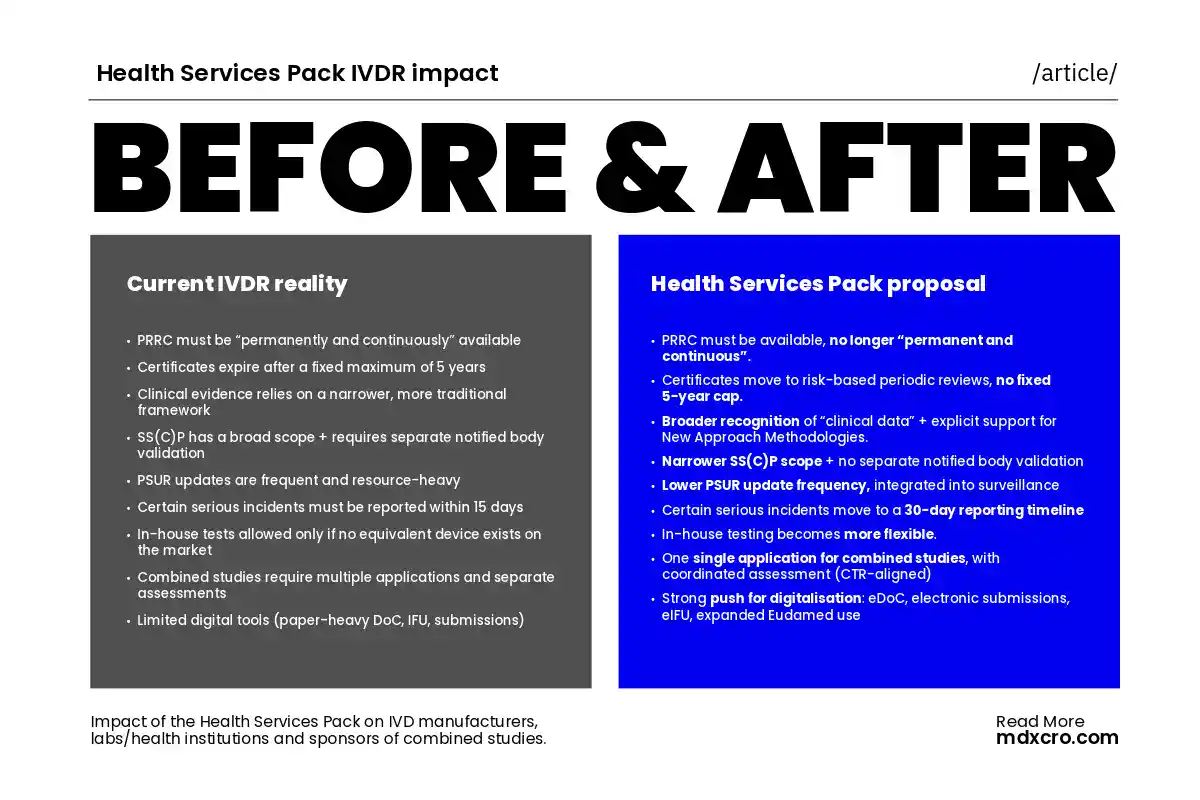
  • PRRC organisational burden would ease for SMEs relying on external PRRC support (availability requirement would soften; detailed qualification rules would be removed).
  • Certificate validity would shift from a fixed 5-year maximum to risk-based periodic reviews during the certificate lifecycle.
  • The proposal would support a broader evidence toolbox, including wider “clinical data” recognition and explicit promotion of New Approach Methodologies (including in silico testing).
  • Administrative burden would reduce via a narrower scope for summary documents and lower PSUR update frequency, plus longer timelines for certain vigilance reporting.
  • In-house testing under IVDR Article 5(5) would become more flexible, including (under IVDR) removing the “no equivalent device on the market” condition and explicitly bringing certain central laboratories supporting clinical trials into scope.
  • For combined studies, sponsors could submit a single application triggering a coordinated assessment aligned with the Clinical Trials Regulation framework.
  • Digitalisation would expand: digital EU Declarations of Conformity, more electronic submission, and electronic IFU for near-patient tests (among other measures).

The Commission frames these changes as a way to keep safety standards high while improving predictability, competitiveness, and innovation support; it cites €3–5 billion/year in cost savings at conservative estimates.

1) Context: why the Commission proposed a targeted IVDR/MDR revision

The Commission’s Q&A states that evaluation work identified shortcomings that negatively affect competitiveness, innovation, and patient care—pointing to inefficient coordinationdivergent application of requirements, and procedures that are overly complex and costly.

The Commission describes the reform’s core objectives as:

  • Reduced administrative burden and stronger coordination
  • More proportionate requirements, especially for lower/medium risk devices and small patient populations
  • Support for innovation, including early expert advice and regulatory sandboxes
  • Greater predictability and cost-efficiency of certification, including enabling real-world evidence
  • Increased digitalisation across compliance tools and conformity assessment procedures

For IVDR stakeholders, the significance is not only the “what” but also the “how”: the proposal aims to make the system more predictable and less duplicative while leveraging EU-level expertise (including expert panels and EMA support).

2) Understanding Health Services Pack IVDR Impact: what it means for IVD manufacturers 

2.1 PRRC: reduced organisational friction (especially for SMEs)

The proposal would:

Remove detailed qualification requirements for the Person Responsible for Regulatory Compliance (PRRC), and

Remove the requirement that SMEs using an external PRRC must have the PRRC “permanently and continuously” available; the PRRC would need to be available (without the “permanently and continuously” standard).

Why it matters: This could reduce structural overhead for smaller IVD manufacturers and for non-EU manufacturers using EU-based regulatory operating models. It may also reshape how manufacturers design PRRC coverage (internal vs external, shared services, outsourcing structures).

2.2 Certificates: from 5-year re-certification to risk-based periodic review

The proposal would remove the current maximum 5-year certificate validity and replace it with periodic reviews proportionate to device risk during the certificate’s validity period.

In addition, the proposal’s summary of certification changes includes:

  • Reduced systematic technical documentation assessment during surveillance activities (as summarised for certain IVD classes),
  • The ability for notified bodies to replace on-site audits with remote audits, and
  • Surveillance audits “only every two years” where justified by the absence of safety issues, plus unannounced audits “for-cause”.

Why it matters:
This is a structural shift in compliance planning—from a calendar-driven re-certification event to an ongoing lifecycle model that could be more data-driven. IVD manufacturers will likely need stronger “always audit-ready” systems and clearer change-control strategies.

Before and after comparison of IVDR requirements versus the Health Services Pack proposal, highlighting changes in PRRC availability, certificate validity, clinical evidence, PSUR, vigilance timelines, in-house testing, combined studies, and digitalisation.

2.3 Evidence toolbox: broader clinical data concepts and explicit support for in silico approaches

The proposal summarises multiple evidence-related changes, including:

  • A wider range of data qualifying as clinical data,
  • More flexible conditions for relying on clinical data from an equivalent device, and
  • Promotion of New Approach Methodologies such as in silico testing.

Why it matters for IVDs:
IVDR evidence expectations are often the pacing item for certification and market access—particularly for novel biomarkers, decentralised testing, and CDx. A broader toolbox could let manufacturers structure performance evaluation more efficiently, but it also puts more emphasis on robust justification: the proposal supports flexibility, not a “free pass.”

2.4 Summary documents and PSUR: targeted burden reduction

The proposal would:

  • Reduce the scope of devices that must have a summary of safety and (clinical) performance (SS(C)P) to those where the notified body must conduct technical documentation assessment—and remove the need for separate notified body validation of the draft summary.
  • Reduce the required PSUR update frequency, with notified body PSUR review integrated into surveillance.

For IVDR specifically, the proposal text also states that:

  • Manufacturers of class C and D devices would update the PSUR in the first year after the certificate is issued and every two years thereafter (or earlier in defined change situations).

Why it matters:
This change could reduce recurring workload—yet it will likely increase expectations that PSUR content is meaningful, well-argued, and operationally integrated into surveillance interactions.

2.5 Vigilance and cybersecurity: longer timelines for certain incidents, plus cyber reporting alignment

The proposal would extend the reporting timeline for certain serious incidents (those not linked to public health threats, death, or serious deterioration) to 30 days instead of 15.

It would also introduce a cybersecurity linkage:

  • Certain MDR/IVDR vigilance reports that also qualify as actively exploited vulnerabilities or severe incidents under the cyberresilience framework would be made available to national CSIRTs and ENISA; and
  • Manufacturers would have to report actively exploited vulnerabilities and severe incidents that do not qualify as “serious incidents” under MDR/IVDR to CSIRTs and ENISA through Eudamed;
  • Cybersecurity would be explicitly mentioned in Annex I general safety and performance requirements.

Why it matters for IVD manufacturers:
Cybersecurity is not only an “IT topic.” It increasingly affects performance, safety, vigilance, and field actions—especially for connected IVD instruments, software-driven diagnostics, and laboratory information system integration.

2.6 Digitalisation: eDoC, electronic submissions, eIFU for near-patient tests, and online sales information

The proposal includes:

  • Digital EU Declarations of Conformity,
  • More electronic submission of MDR/IVDR information,
  • Economic operators providing digital contacts in Eudamed,
  • Digital technical documentation and conformity assessment documentation, and
  • For IVDs, the ability for manufacturers of near-patient tests to provide electronic instructions for use.

It also introduces online-sales transparency requirements: essential device identification information and IFU information must be provided for online sales.

Why it matters:
This points toward a compliance ecosystem where document control, traceability, and market surveillance become more data-centric. Manufacturers will need disciplined digital governance to prevent inconsistency across channels.

3) What the proposal could change for labs and health institutions (IVDR Article 5(5) in-house)

The proposal would make in-house conditions more flexible, including:

  • Allowing the transfer of in-house devices when justified by patient safety or public health interests, and
  • Under IVDR, removing the condition that no equivalent device exists on the market.

It also explicitly adds central laboratories manufacturing and using tests exclusively for clinical trials into the scope of the in-house device exemption.

Why Health Services Pack IVDR matters
If adopted, this could significantly affect:

  • The role of hospital laboratories in innovation and continuity-of-care testing,
  • How health systems respond to unmet needs, niche populations, and rapidly evolving clinical practice, and
  • The operational models used to support clinical trials (including biomarker-driven trials and decentralised sample workflows).

What labs should plan
Recognising the proposal may change

  • Governance and documentation systems that can withstand scrutiny as “in-house” use expands in scope and visibility.
  • Contracting and quality interfaces between health institutions, trial sponsors, and central labs—especially where a lab’s “in-house” position interacts with trial requirements and sponsor expectations.

4) What the proposal could change for sponsors of combined studies (drug–diagnostic interface)

4.1 A single application with coordinated assessment (CTR-aligned pathway)

For combined studies involving medicinal products, medical devices, and/or IVDs, the proposal states that a sponsor may submit a single application triggering a coordinated assessment in accordance with the Clinical Trials Regulation (CTR), noting alignment with amendments anticipated via the Biotech Act.

Why it matters:
Sponsors running biomarker-driven programmes often experience friction at the interface between medicinal product trial authorisation processes and IVDR performance study requirements. A coordinated model—if implemented in a practical, predictable way—could materially improve planning across Member States.

4.2 Performance study burden reduction in defined scenarios

The proposal also states that:

  • Performance studies involving only routine blood draws would not require prior authorisation; and
  • Notification of performance studies on companion diagnostics using left-over specimens would be removed.

Why it matters:
This could affect study-start timelines, especially in multi-country settings where administrative sequencing often drives critical path. For sponsors, it may also change how they design sample strategies, feasibility, and site activation planning.

5) Practical implications of Health Services Pack IVDR Impact: how stakeholders can prepare while the text remains a proposal

Because the proposal may change during negotiations, stakeholders should avoid “over-implementing” assumptions. At the same time, most organisations can act now in ways that remain valuable under multiple legislative outcomes.

5.1 For IVD manufacturers (RA/QA and clinical/performance teams)

Focus now on “no-regret” preparedness:

  • Map your portfolio to where the proposal signals the biggest change: certificate lifecycle management, audit model (remote/on-site), and surveillance cadence.
  • Re-evaluate your evidence strategy so it can flex across clinical studies, literature, equivalence, and (where applicable) in silico methodologies—while keeping scientific validity and traceability strong.
  • Strengthen change control to align with the proposal’s intent to distinguish changes that require different levels of notified body interaction (including predetermined change control planning).
  • Upgrade vigilance and cybersecurity workflows so reporting pathways align with both vigilance obligations and the proposed cyber reporting linkages (CSIRTs/ENISA/Eudamed).
  • Digitise with discipline: ensure eDoC, digital IFU strategies, and online-sales content controls remain consistent and auditable.

5.2 For labs and health institutions

  • Review how in-house governance could evolve if the “no equivalent device” condition disappears and trial-supporting central labs fall clearly within scope.
  • Align in-house test lifecycle controls with quality expectations likely to increase as in-house scope expands in visibility and operational relevance.

5.3 For sponsors of combined studies

  • Build study-start strategies around the proposal’s direction of travel: a coordinated route for combined studies and reduced administrative hurdles for defined performance study scenarios.
  • Stress-test protocols for evidence coherence: regulators will still expect sponsor claims and IVD performance claims to align, even if administrative routes simplify.

6) Health Services Pack IVDR Impact and its potential global reach: what this could mean outside Europe

The Commission positions the EU as a global leader in medical device regulation and indicates the reform aims to make the sector more competitive globally.
It also explicitly links the proposal to reinforcing international cooperation, including participation in high-standard international cooperation and information-sharing mechanisms with reliable partners and strengthened uptake of international guidance.

For global manufacturers, that matters because EU compliance strategies often influence:

  • Global clinical evidence planning and dossier structuring, and
  • How manufacturers operationalise post-market surveillance and cybersecurity controls across regions.

(How much convergence happens in practice will depend on implementation and on how reliance mechanisms are used over time.)

FAQs

Is the Health Services Pack already law?

No. The Commission published a proposal on 16 December 2025. The text must go through the ordinary legislative procedure in the European Parliament and Council before any final legal changes take effect.

Will the proposal change IVDR certificate validity?

The proposal would remove the maximum 5-year certificate validity and replace it with risk-based periodic reviews while the certificate remains valid.

Does the proposal reduce PSUR update frequency under IVDR?

Yes. The proposal would reduce PSUR update frequency and integrate notified body PSUR review into surveillance. It also states class C and D PSUR updates would occur in the first year after certification and every two years thereafter (or earlier in defined cases).

Does the proposal change serious incident reporting timelines under IVDR?

Yes. For serious incidents not related to public health threats, death, or serious deterioration, the proposal would extend reporting timelines to 30 days instead of 15.

Does the proposal change IVDR in-house testing rules?

Yes. The proposal would make in-house conditions more flexible and, under IVDR, would remove the condition requiring “no equivalent device on the market.” It would also add certain central laboratories supporting clinical trials into scope.

How would the proposal affect combined studies?

The proposal states that sponsors could submit a single application for combined studies, triggering a coordinated assessment aligned with the Clinical Trials Regulation framework.

How can MDx CRO help you navigate Health Services Pack IVDR Impact effectively?

If you manufacture IVDs, run laboratory services, or sponsor combined studies, you will likely need to translate the proposal into:

  • A portfolio-level impact assessment (technical documentation, evidence strategy, and certification lifecycle planning), and
  • An operational plan for performance studies and combined-study submissions that remains robust even if the final text changes.

MDx CRO supports IVD manufacturers and sponsors across IVDR technical documentationperformance evaluation strategy, and combined study operational delivery (clinical operations + RA/QA alignment). The most effective next step is usually a short, structured gap-and-opportunity review tied to your portfolio and pipeline.

Need support?

We can assist you translating the Health Services Pack proposal into practical IVDR actions for your portfolio, studies, or lab activities.

Written by:
Carlos Galamba

Carlos Galamba

CEO

Senior regulatory leader and former BSI IVDR reviewer with deep experience in CE marking high-risk IVDs, companion diagnostics, and IVDR implementation.
Industry Insights & Regulatory Updates

MDx CRO at MPP 2025: Aligning Companion Diagnostics and Drug Development under IVDR

Precision medicine needs alignment, not lighter rules

Europe’s precision medicine ecosystem advances when diagnostics and medicines move in lockstep. The real bottleneck is not regulation itself; it is the structural divergence between the Clinical Trials Regulation and the IVDR. In our work across oncology and rare disease programmes, we repeatedly see how separate clocks, committees, documentation and reporting streams create avoidable friction. Our message at MPP 2025 was simple: bring both tracks together from the start and design one plan that satisfies clinical utility and regulatory rigor at the same time.

CDx and drug trials: bridging IVDR and CTR

When a biomarker guides enrolment or treatment and the assay is not CE-marked for that purpose, Article 58 triggers a performance study alongside the medicinal trial. That study’s endpoints, analytical validation and risk–benefit narrative must be coherent with the drug protocol, because outcomes like PFS, OS and ORR depend on the test defining the right population. Misalignment costs time; EFPIA’s 2023 evidence shows many sponsors facing six to twelve-month delays linked to IVDR requirements, which ultimately pushes patient access further out.

What MDx CRO presented at MPP 2025 and how it will affect 2026

At the Medtech & Pharma Platform Annual Conference on 16 September 2025 at the Novartis Campus in Basel, Carlos Galamba, CEO at MDx CRO, joined the session “IVDs, CDx & Personalized Medicine: Moving from Compliance to Innovation,” chaired by Fatima Bennai-Sanfourche of Bayer and Andreas Emmendoerffer of Roche. The panel brought together Antonella Baron from the European Medicines Agency, Heike Möhlig-Zuttermeister of TÜV SÜD, and patient advocate David Haerry of Positive Council Switzerland, alongside MDx.

Evidence on delays and the impact on patients

The data are unambiguous: EFPIA’s survey indicates 43 percent of companies estimated six to twelve-month delays due to IVDR, with downstream consequences for trial starts and patient inclusion across major disease areas. Every month lost to mis-sequenced processes or unclear governance is a month patients wait for targeted therapies.

Signals from regulators, notified bodies, and patient advocates

The discussion reflected a clear appetite for convergence. EMA perspectives on embedding companion diagnostics under IVDR, TÜV SÜD’s insights on conformity assessment for CDx, and the patient community’s call for earlier access all point in the same direction: coordinated planning and earlier dialogue across agencies, notified bodies and sponsors.

Key insights for 2026 from the MPP panel and fellow presenters

Compliance versus innovation is the wrong debate. The practical path forward is compliance and innovation together: a single evidence plan, shared endpoints, and a unified risk–benefit narrative that treats the diagnostic and the drug as interdependent elements of one therapy journey. That is how companion diagnostics under IVDR accelerate, rather than delay, precision medicine.

How MDx CRO accelerates CDx from design to approval

MDx builds one cross-functional plan from day one, aligning clinical and device protocols, mapping Article 58 triggers, and sequencing submissions so site start-up and “first sample tested” are not held back by documentation gaps. Our teams scrutinise analytical validation, prepare CPSPs and Annex XIV packages aligned to ISO 20916, and train investigators on device-specific safety reporting and sample flows across multilingual EU sites. This integrated approach has delivered a consistent approval track record for CDx submissions.

Operational playbook for combined studies in Europe

Effective combined studies require clear governance between drug and device sponsors, modular and wave submissions across Member States, separate informed consents for the CDx component where appropriate, and proactive scientific advice with EMA or NCAs for borderline cases. With local regulatory intelligence and language capability across Europe, we coordinate roles and documentation so CTR and IVDR remain synchronised throughout the study lifecycle.

Acknowledgment to MPP and our co-presenters

Our thanks to the Medtech & Pharma Platform Association for convening this timely discussion and to the session chairs and speakers who brought regulatory, conformity assessment and patient perspectives to the same table: Fatima Bennai-Sanfourche, Andreas Emmendoerffer, Antonella Baron, Heike Möhlig-Zuttermeister and David Haerry.

Partner with MDx CRO to make CDx work under IVDR

If your programme depends on biomarker-driven enrolment or treatment decisions, partner with a team that speaks CTR and IVDR fluently. MDx CRO compresses timelines, de-risks submissions and delivers companion diagnostics that make precision medicine real for the patients who need it most

Industry Insights & Regulatory Updates

MDx CRO at ESMO 2025 (Berlin): Advancing IVDR Transitions & Combined Clinical Trials

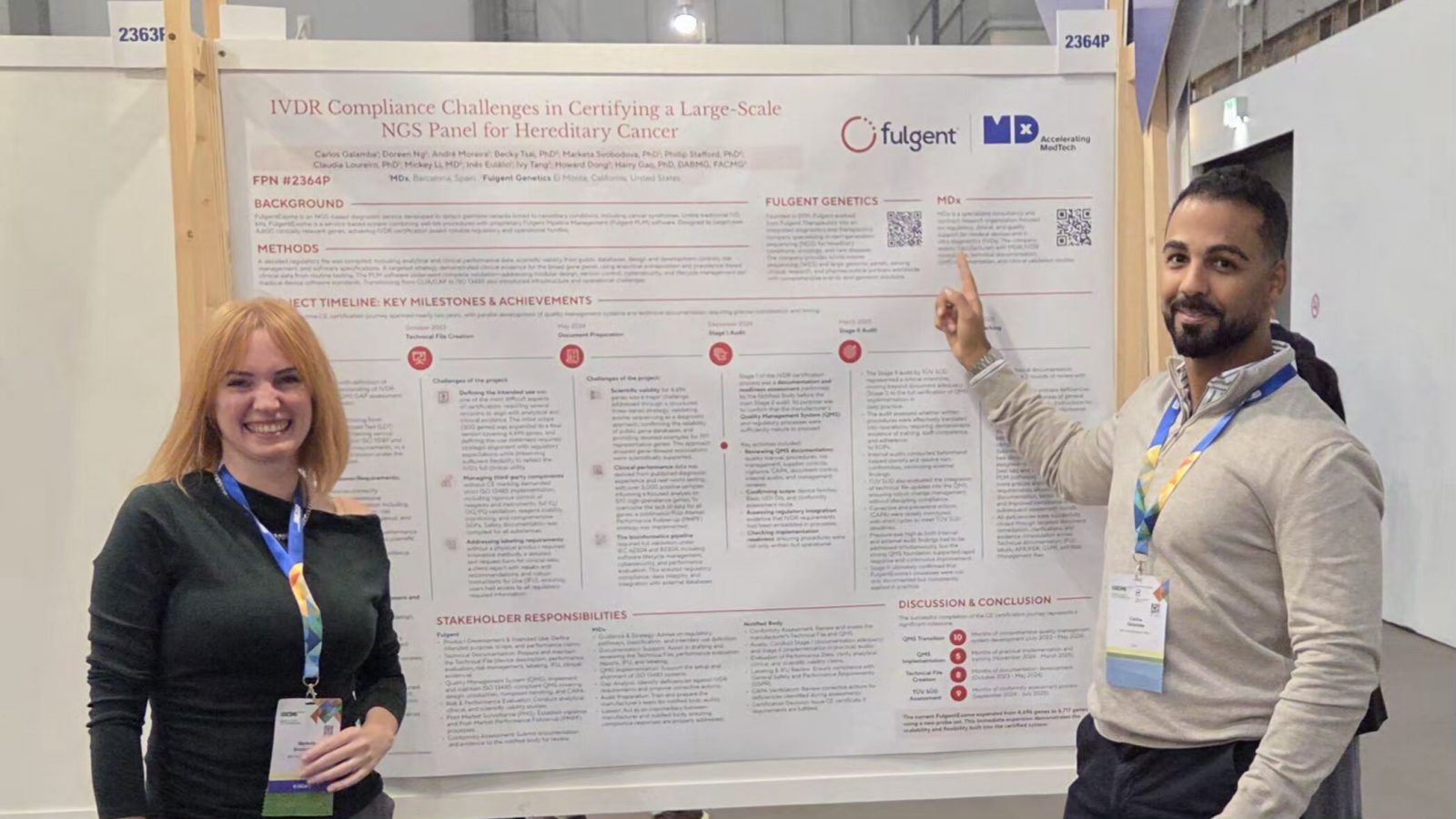
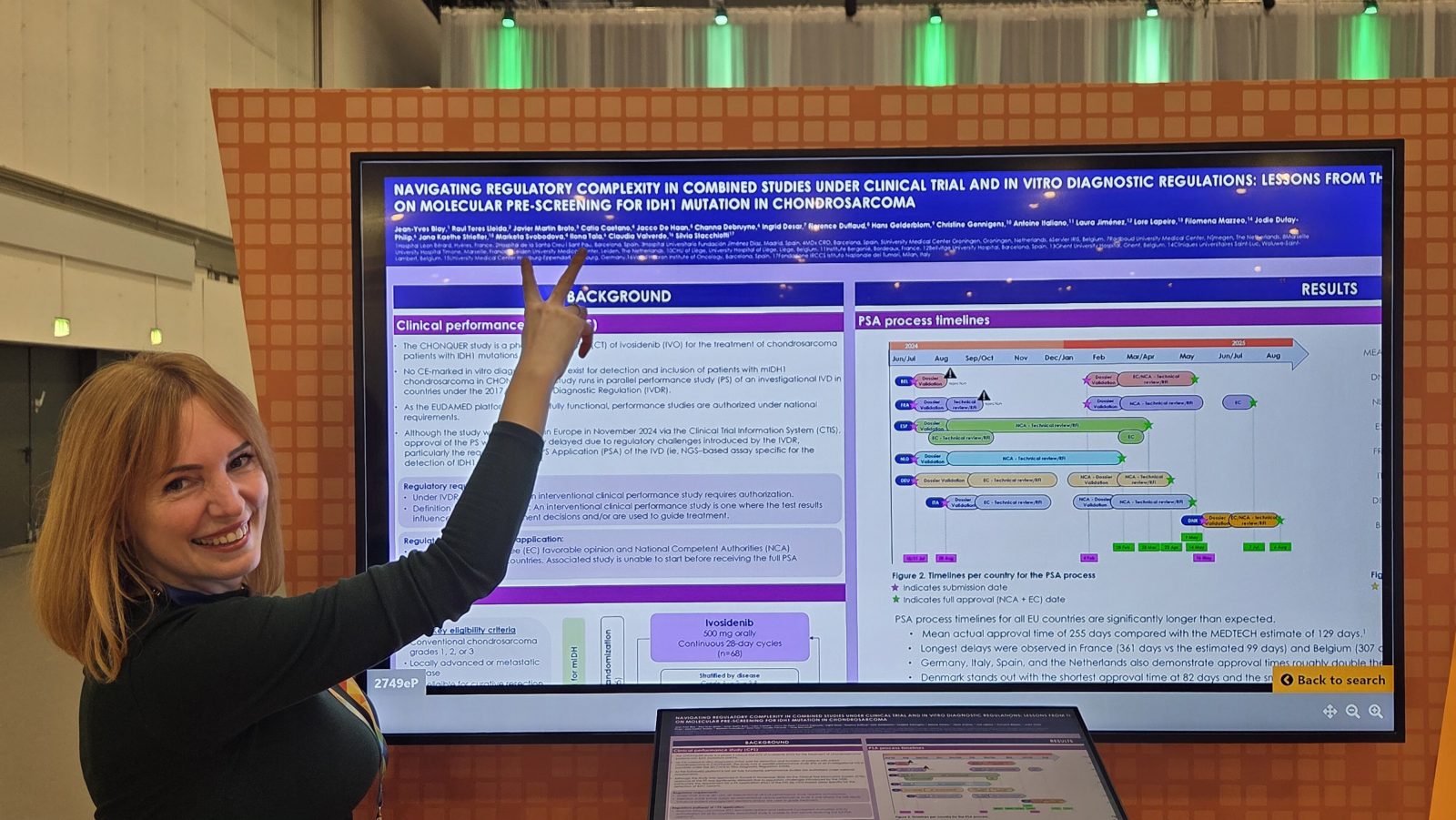
MDx CRO presented new evidence and hands‑on learnings at ESMO 2025 that reinforce our position as the partner of choice for IVDR transitions and combined clinical trials involving investigational IVDs. We were first author on a poster with Fulgent Genetics and contributors to a Servier poster—both centered on the operational and regulatory realities of bringing high‑impact oncology diagnostics into clinical practice under the EU IVDR.

Highlights from our ESMO 2025 posters

Title: IVDR Compliance Challenges in Certifying a Large‑Scale NGS Panel for Hereditary Cancer

What it covers:

  • Practical blueprint for transitioning a comprehensive, service‑based NGS hereditary cancer panel under IVDR.
  • Defining intended use and scientific validity across a large gene set; end‑to‑end technical documentation; bioinformatics validation aligned to IEC 62304/82304; and notified‑body engagement strategy.
  • Lessons on right‑sizing verification/validation and building a living evidence package to support CE‑marking.

Why it matters: Sponsors and lab developers gain an actionable path for moving complex NGS services to IVDR compliance—without slowing clinical programs.

Title: Navigating Regulatory Complexity in Combined Studies under CTR and IVDR (CHONQUER)

What it covers:

  • How combined trials (drug + investigational IVD) trigger dual oversight under CTR and IVDR and the knock‑on effects for timelines, submissions, and site activation across EU member states.
  • Operational patterns that accelerate approvals: early CPS planning, consolidated documentation, and aligned ethics/competent authority strategies.

Why it matters: Oncology sponsors can de‑risk global programs by anticipating IVDR‑specific requirements—and partnering with an IVD CRO that has worked both sides of the fence.

Key takeaways for sponsors

  • IVDR transitions—end to end. MDx CRO supports dossier strategy, clinical performance studies (ISO 20916), scientific validity, and notified‑body engagement for CE‑marking.
  • Combined trials, simplified. We design and run CPS and combined CTR + IVDR studies, harmonizing submissions across multi‑country portfolios.
  • Oncology‑ready operations. Deep experience with molecular prescreening, NGS workflows, and drug–device coordination for precision oncology.

Need a quick debrief? Contact our IVD CRO team for a walkthrough of how these findings translate to your IVDR transition or combined study plan.

FAQs

What does MDx CRO do for IVDR transitions?

We provide end‑to‑end support—from intended‑use definition and scientific validity to clinical performance studies, technical documentation, and notified‑body engagement.

How does MDx CRO support combined CTR + IVDR studies?

We plan and execute CPS and combined trials, consolidating submissions and aligning ethics/competent authority requirements to reduce delays.

Can MDx CRO help with NGS panel validation under IVDR?

Yes. We design right‑sized verification/validation programs and bioinformatics validation aligned with IEC 62304/82304.

Where can I get the ESMO 2025 posters?

Both PDFs are available at the ESMO platform; contact us for a guided readout.

Industry Insights & Regulatory Updates

Companion Diagnostic Clinical Trial Case Study

Regulatory Turnaround for a Phase 3 Global CDx Clinical Trial (Annex XIV)

A global biopharma company faced a critical delay in a phase 3 clinical trial in oncology. The study required an NGS-based companion diagnostic (CDx) assay to detect a specific mutation and pre-screen patients for eligibility. Several EU authorities initially rejected or stalled the Clinical Performance Study (CPS/PSA) due to assay validation concerns and fragmented IVDR processes. MDx CRO mobilized a specialized cross-functional team, redesigned the documentation package, and re-submitted in six EU countries within three months, clearing all RFIs and enabling on-time trial initiation. This case study has been accepted for presentation at ESMO 2025 in Berlin.

The Challenge

  • Early rejection and major RFIs: EU bodies questioned assay validation and risk management, threatening the trial start.
  • Dual-regulation complexity: The trial combined CT and IVDR CPS submissions with different national portals, templates, and timelines.
  • Harmonization gaps: With EUDAMED not fully operational, CPS authorizations varied widely by Member State, creating long and unpredictable timelines.

What was at stake: lost recruitment windows, protocol amendments, cost escalation, and missed milestones tied to major scientific congresses.

MDx CRO Approach

1) Rapid diagnostic and plan

  • Completed a 48-hour gap analysis across the submission: CDx protocol, analytical performance package, CER/PER linkages, IFU, training, and risk files.
  • Mapped country-specific expectations (EC vs NCA) to pre-empt common RFIs: informed consent, site/PI suitability, device training, and performance datasets.

2) Targeted re-engineering

  • Revised the clinical performance study protocol (CPSP) for the CDx assay to clarify endpoints, eligibility flows, and pre-screening logistics.
  • Overhauled analytical performance evidence (accuracy, precision, LoD, reproducibility) and tightened traceability to risk controls.
  • Redeveloped risk management documentation to align hazards, mitigations, and verification with Annex I GSPRs.
  • Strengthened usability & training to address EC concerns on user competence and patient protection.

3) Country-by-country execution

  • Sequenced six EU CPS submissions to match national review modalities (combined, parallel, or sequential EC/NCA), reducing idle time between waves.
  • Built a rapid RFI response playbook so sponsors and sites could respond in days, not weeks.

Results & Impact

  • All RFIs resolved: Delivered clear, evidence-backed answers across EC and NCA questions, including consent, site suitability, training, and performance data.
  • Approvals secured quickly: The re-submission strategy compressed timelines and returned the program to the original start path despite EU-wide CPS delays.
  • Trial initiation preserved: Sites opened on schedule, enabling screening with the NGS CDx pre-screen.
  • Scientific visibility: Study learnings and regulatory insights are accepted for presentation at ESMO 2025, showcasing efficient navigation of combined CT/IVDR frameworks.

Why It Matters

The IVDR raised the bar for pre-market CDx and investigational IVDs used in drug trials. Sponsors now need diagnostic-grade evidence, strong risk-benefit narratives, and country-aware submission execution. MDx CRO bridges those gaps with integrated clinical, regulatory, and diagnostics expertise so drug–diagnostic programs stay on track.

What We Delivered

  • Regulatory rescue for a phase 3 global CDx trial in oncology (Annex XIV).
  • Six-country CPS re-submission under IVDR with country-specific strategies.
  • Protocol refinement for CDx use, analytical performance reinforcement, and risk-file re-mapping to GSPRs.
  • RFI playbook & rapid responses covering EC and NCA priorities (consent, training, site suitability; analytical/clinical evidence, CPS plan).
  • On-time site activation and screening with an NGS CDx assay.

Client Outcome

“MDx CRO restored regulatory confidence and protected our timelines. Their team aligned clinical, diagnostic, and regulatory workstreams and cleared every RFI with precision.”

Ready to Accelerate Your CDx Trial?

Running an EU drug–diagnostic study under IVDR? We can accelerate CPS authorizations, clear RFIs fast, and keep your trial on schedule.

Industry Insights & Regulatory Updates