Navigating the IVDR CDx Certification Pathway

The evolving landscape of Companion Diagnostics (CDx) introduces complexities in regulatory and certification processes. Engaging in IVDR Companion Diagnostic Consulting is essential to ensure a streamlined and compliant journey.

Deciphering Regulatory Nuances: US vs. EU

Historically, CDx devices in the EU were self-certified under the IVDD. A CDx manufacturer may have had experience with the FDA but the regulatory process in the EU is only now emerging.

The EU IVDR defines a CDx as a device which is essential for the safe and effective use of a corresponding medicinal product to identify, before and/or during treatment:

  • Patients who are most likely to benefit from the corresponding medicinal product
  • Patients likely to be at increased risk of serious adverse reaction as a result of treatment with a corresponding medicinal product

The FDA’s definition is similar but extends to devices used for “monitoring treatment responses with a particular therapeutic product”. Unlike in the US such devices are not considered companion diagnostics in the EU. Furthermore, the FDA acknowledges a category of devices termed complementary diagnostics. These diagnostics are characterized as tests that pinpoint a group of patients, identified by specific biomarkers, who respond well to a drug. While they assist in evaluating the risk-benefit ratio for individual patients, they aren’t mandatory for drug administration. Within the IVDR framework, complementary diagnostics aren’t explicitly detailed, nor do they have specific prerequisites for CE certification

These nuances are key for any CDx regulatory strategy and for the planning of CDx clinical trials. A specialized IVDR CDx consulting company like MDx CRO can help diagnostic companies and their pharma partners navigate global differences and ensure CDx regulatory compliance.

The EMA Consultation Process

EMA’s guidance stands as a pivotal component in IVDR Companion Diagnostic Consulting. The EMA CDx Assessment Report Template, publicly available, provides a comprehensive blueprint. It is a great source of information for the expectations in CDx submission content, particularly useful for when drafting SSPs and IFUs.

MDx CRO published a comprehensive guide to the CDx consultation process.

The process encompasses:

  • Declaration of intent.
  • EMA Rapporteur appointment.
  • Optional, but highly recommended, pre-submission meeting.
  • Application submission.
  • Interactive Q&A phases.
  • EMA’s final verdict.

Crafting of SSP & IFU with Detail

For successful IVDR CDx certification, the SSP and IFU documents should be meticulously detailed as they are the 2 key documents used during the EMA consultation process.

Diagnostic manufacturers should ensure they include:

  • Emphasis on scientific validity of the biomarker
  • Comprehensive detail on performance evaluation, study design descriptions, encompassing both analytical and clinical performance.
  • Insight into clinical data, detail on device modifications during or after the clinical performance study, and associated impacts, rationale for cut-off point selection and more.

A deep dive into the risk-benefit analysis is pivotal, concentrating on major residual risks and device limitations.

Time Considerations for IVDR CDx Certification

The certification process for CDx under IVDR is extensive. From the initial 3-month EMA notification to the concluding recommendation, the timeline can span 8-18 months. Such extended durations underline the criticality of early preparations. Engaging early with a specialized CDx consulting company can help avoid surprises and streamline the CDx certification journey.

The expertise offered by the notified body can significantly enrich IVDR Companion Diagnostic certification. Early engagements, prior to document submissions, can provide clarity, ensuring alignment with EMA requirements.

Selecting your IVDR CDx Consulting partner

MDx CRO has published a deep dive into the crucial factors to bear in mind when picking an IVD consultant.

In the dynamic realm of CDx, efficient navigation is paramount. If you’re seeking specialized insights into IVDR certification, explore our IVD services. At MDx CRO, our experts offers tailored IVDR Companion Diagnostic Consulting, ensuring optimal integration of CDx within the regulatory framework.

Contact our team today to discuss your CDx product needs!

Written by:
Carlos Galamba

Carlos Galamba

CEO

Senior regulatory leader and former BSI IVDR reviewer with deep experience in CE marking high-risk IVDs, companion diagnostics, and IVDR implementation.
Industry Insights & Regulatory Updates

Regulatory Compliance for Dental Products

A Practical Guide for Medical Device Manufacturers

Regulatory compliance for dental products has become far more complex over the past decade. What was once a relatively straightforward pathway is now a demanding, lifecycle‑driven process that requires robust technical and clinical evidence, structured post‑market surveillance, and ongoing regulatory oversight.

For manufacturers bringing dental products to market, especially under the EU Medical Device Regulation (MDR), compliance is no longer a single milestone. It is a continuous obligation that influences product design, technical documentation, clinical evidence, and post‑market performance activities throughout the entire lifecycle.

From our experience as a consulting company supporting medical device manufacturers, dental products often lie at the crossroads of material science, clinical performance, and stringent regulatory requirements. This combination makes regulatory compliance both critical and increasingly challenging for manufacturers aiming to achieve and maintain market access.


What Regulatory Compliance Means for Dental Products

Dental products as dental medical devices

Many dental products are legally classified as medical devices, even when they are commonly perceived as materials or components. Items such as dental alloys, implantable components, restorative materials, and certain software‑driven solutions fall under medical device regulations when intended for a medical purpose.


This classification carries specific regulatory obligations for manufacturers, whether the product is used directly by clinicians or indirectly through dental laboratories.

Responsibility across the dental product lifecycle

Regulatory compliance extends far beyond initial approval. As is the case for other medical device manufacturers, dental manufacturers remain responsible for:

  • Defining and maintaining the intended purpose
  • Ensuring ongoing safety and performance
  • Monitoring post-market data
  • Updating documentation as evidence evolves

Importantly, many compliance failures do not arise from missing documents, but from misalignments and inconsistencies across lifecycle activities. Maintaining clear linkage between purpose, evidence, and post-market insights is essential for demonstrating a coherent and compliant lifecycle strategy. When these key elements stay aligned, manufacturers strengthen regulatory trust, reduce risk, and support smoother long-term market access. This principle applies equally to dental medical devices and to all other medical devices, as it is transversal across the sector.

Why dental products face increased scrutiny

Dental devices frequently involve:

  • Implantable or long-term contact materials
  • Complex alloy compositions
  • Large legacy portfolios originally certified under previous regulations

These features introduce specific regulatory expectations. Implantable and long-term contact materials require robust biocompatibility assessments and long-term safety evaluations. Additionally, complex alloys may require chemical and toxicological evaluations to ensure that all constituent materials meet biological safety standards. Finally, legacy products, previously certified under less stringent requirements, must now be re-evaluated using updated evidence to demonstrate continued safety and performance under current frameworks.

Together, these factors increase expectations for clinical evidence, biological safety, and post-market surveillance, leading to closer regulatory scrutiny and more rigorous conformity assessment processes.

Which Regulations Apply to Dental Medical Devices?

European Union: EU MDR

In the European Union (EU), medical devices are governed by Regulation (EU) 2017/745 (MDR). Compared to the former Medical Device Directives (MDD/AIMDD), MDR introduces:

  1. Stronger clinical evidence requirements
  2. Enhanced post-market surveillance obligations
  3. Increased scrutiny from Notified Bodies
  4. Clearer expectations for technical documentation consistency

Manufacturers of dental devices are therefore required to fulfil these additional requirements to ensure the device is compliant with EU market requirements.

United Kingdom: UK MDR and UKCA Marking

In the United Kingdom (UK), medical devices are regulated under the UK Medical Devices Regulations 2002 (as amended), with oversight by the Medicines and Healthcare products Regulatory Agency (MHRA). Following Brexit, the UK has established an independent regulatory framework, while maintaining transitional recognition of CE marking in Great Britain.

Compared with the EU MDR, the UK framework introduces a parallel but distinct pathway, characterized by:

  1. The progressive transition from CE marking to UKCA marking for Great Britain
  2. UK-specific registration requirements with the MHRA
  3. Potential divergence in timelines, conformity assessment routes, and regulatory interactions
  4. The need to monitor evolving UK legislation as the framework continues to develop

Manufacturers of dental devices must therefore define a clear UK regulatory strategy, ensuring that UKCA requirements (and transitional CE provisions, where applicable) are properly addressed, while maintaining alignment with EU documentation and lifecycle activities to the extent possible.

United States of America: FDA

The United States can also be an attractive market for dental devices. For manufacturers wishing to operate beyond Europe, dental product compliance must align with FDA expectations or other international frameworks. While this article focuses on EU MDR, a global regulatory strategy should aim for evidence reuse and lifecycle consistency across jurisdictions.

Maintaining a broad perspective on regulatory expectations in different markets enables more efficient submissions at various time points, minimizing duplicated effort and ensuring smoother pathways to global market access.

Regulatory Classification of Dental Products in EU

How to determine classification

Under MDR, dental devices are classified based on:

  • Intended purpose
  • Duration of contact
  • Invasiveness
  • Implantable status

Many dental materials and alloys are classified as higher risk than expected, particularly for implantable or long-term applications. Understanding these rules early helps ensure accurate classification.

Why classification drives EU regulatory strategy

Classification decisions affect:

  • Conformity assessment routes
  • Clinical evidence depth
  • Post-market obligations
  • Notified Body involvement

Misclassification early in development often leads to costly rework later, particularly once technical documentation has been developed or regulatory submissions have begun. Manufacturers must also avoid making changes to the product or its intended purpose after commercialization that could alter its classification and trigger additional regulatory requirements. Establishing the correct classification from the outset and maintaining alignment throughout the lifecycle are essential to a smooth, predictable regulatory pathway.

Core Regulatory Requirements for MDR Compliance of Dental Products

Technical documentation and conformity assessment

Regulatory compliance for dental products starts with technical documentation that clearly and consistently supports the device’s safety and performance. Under MDR, this documentation is reviewed as a single, connected system rather than as separate files.

Manufacturers must demonstrate that the device is well defined, risks are properly controlled, and clinical and biological evidence support the intended use. In practice, regulatory findings often arise not because documents are missing, but because different parts of the technical file are not fully aligned.

Clinical evaluation

Clinical evaluation must show that the dental device performs as intended and remains safe throughout its lifecycle. This assessment is typically based on a combination of clinical data, relevant scientific literature, and post-market evidence where available.

For dental devices, regulators closely scrutinize whether clinical claims align with the intended purpose and the conclusions from risk management activities. Any inconsistency between these elements is one of the most frequent causes of Notified Body questions during technical documentation review. Ensuring consistency across intended purpose, clinical evidence and risk conclusions is essential for a smooth clinical evaluation process.

Biological evaluation and material safety

Biological evaluation is particularly important for dental materials that come into prolonged or permanent contact with the body. Manufacturers are expected to follow a structured, risk-based approach that justifies testing, addresses worst-case configurations, and integrates toxicological considerations where relevant.

Weak biological rationales or conclusions that are not reflected in risk management and labelling are frequent sources of non-conformities. A coherent and well documented evaluation is therefore essential to demonstrate material safety and regulatory compliance.

Risk management and traceability

Risk management under MDR is a continuous process, not a one-time activity. Regulators increasingly expect clear traceability between identified hazards, risk control measures, supporting clinical and biological evidence, and the information provided to users.

Consistency over time is critical. Risk management conclusions must remain aligned with clinical evaluation updates and post-market data as new information becomes available.

Labelling and instructions for use (IFUs)

Labelling and IFUs must accurately reflect the device’s intended use, residual risks, contraindications, and safety-related information. Inconsistencies between labelling and technical documentation are a common reason for regulatory findings.

Under MDR, labelling is assessed as a direct extension of the manufacturer’s risk and clinical conclusions, not as a standalone deliverable. Correct and well-structure labelling and IFU is particularly important because it is often the only information the end user will directly interact with. Clear and accurate instructions reduce the likelihood of misuse, improve clinical outcomes, and contribute to patient safety.

Post-Market Obligations for Dental Medical Devices under MDR

Post-Market Surveillance (PMS)

PMS systems must actively collect and analyse real-world data to ensure devices continue to perform safely and effectively once in clinical use. This includes:

  • Complaint handling
  • Trend analysis and early detection of potential risks
  • Vigilance reporting
  • Periodic safety updates

For dental devices, many of which are used repeatedly and placed in the oral cavity for long durations, post-market provides essential insight into performance across different clinical environments and users.

PMCF and PSUR

Depending on classification and associated risk, manufacturers may be required to implement:

  • Post-Market Clinical Follow-up (PMCF)
  • Periodic Safety Update Reports (PSUR)

PMCF is especially relevant in dentistry, where varied patient populations and technique-sensitive procedures can impact long-term outcomes. PSURs ensure that these insights are systemically gathered, assessed and fed back into the technical documentation.

Why Post-Market Data matters beyond compliance

Post-market activities are not simply regulatory obligations. They play a strategic and clinical role, helping manufacturers:

  • Identify how products perform in diverse real-world dental practices
  • Detect early signs of wear, degradation or unexpected biological responses
  • Refine IFUs, contraindications or warnings based on real-use scenarios
  • Support claims of durability, reliability, and biocompatibility with ongoing evidence
  • Strengthen competitiveness by demonstrating proven, long-term performance

Post-market data is therefore not optional and is central to demonstrating ongoing compliance and to maintaining clinical confidence, improving product quality, and supporting future innovation.

Common MDR Regulatory Compliance Challenges for Dental Products

Legacy devices and MDR transitions

Many dental products on the market today were originally certified decades ago, under earlier regulatory frameworks. Although the MDR entered into full application in 2021, transition periods extend to 2028 (depending on device classification). For legacy devices, a structured gap assessment is essential to identify missing requirements or outdated evidence. Transitioning these products to MDR often reveals gaps in:

  • Clinical evidence
  • PMS systems
  • Biological evaluation rationale
  • Consistency and traceability across technical documentation

Because many legacy dental products were introduced before modern evidence expectations existed, manufacturers often face significant redevelopment of foundational documentation. Early planning is critical to avoid bottlenecks as MDR deadlines approach.

Portfolio-level complexity

Manufacturers of dental devices typically manage large and diverse portfolios, often with hundreds of variants differing in materials, shade, formulation, packaging or indications. This scale creates a substantial challenge when aligning all products with MDR requirements. To maintain control and ensure all technical documentation is complete and updated, manufacturers require:

  • Structured regulatory frameworks that define consistent expectations
  • Harmonised documentation strategies that minimise duplication of work across similar devices
  • Scalable and robust post-market systems capable of handling extensive product families

Without a systematic, portfolio-level approach, MDR compliance efforts can become fragmented and inefficient. In many cases, non-conformities arise from a lack of strategic coordination across product lines.

Notified Body expectations

Notified Bodies evaluate more than simply the existence of documentation. They assess how effectively manufacturers control their devices throughout the entire lifecycle. Depending on the classification of the dental device, the involvement of a Notified Body can be required for its initial certification, ongoing surveillance, and continued market access. As such, manufacturers must therefore be prepared for both announced and unannounced audits. Maintaining an “audit-ready” state requires:

  • Evidence coherence, ensuring clinical, biological, risk and labelling conclusions fully align
  • Lifecycle thinking, with post-market data and risk updates continuously feeding into the technical file
  • Demonstrated control, not just document availability, meaning systems, processes and records clearly show that compliance is maintained

Ultimately, maintaining this level of operational readiness demonstrates that the manufacturer is in continuous control of product quality and regulatory compliance. This proactive posture not only supports smoother audits but also builds long-term confidence with Notified Bodies. It signals that the manufacturer can reliably uphold MDR expectations throughout the entire lifecycle, ensuring stable and sustained market access.

The Role of MDx in Dental Product Regulatory Compliance

MDx supporting Manufacturers

Manufacturers typically engage MDx when:

  • Internal teams need execution support
  • Portfolios are large or complex
  • Timelines are constrained
  • Notified Body interactions intensify

MDx provides specialized regulatory expertise and operational capacity, helping manufacturers manage high workloads, accelerate progress, and confidently navigate regulatory expectations.

Execution vs. advisory support

For many manufacturers, advisory guidance alone is not sufficient to move projects forward efficiently. Effective MDx support combines strategic insight with hands-on execution, ensuring:

  • Development of compliant and high-quality documentation
  • Evidence generation and alignment across clinical, regulatory and quality domains
  • Practical experience navigating audits and regulatory reviews

This integrated approach strengthens submissions, accelerates timelines, and reduces pressure on internal teams. As a result, manufacturers can focus on additional projects, key milestones, and ongoing product development without compromising regulatory progress.

Supporting market access

Through close collaboration between MDx and manufacturers, companies can more effectively:

  • Reduce regulatory risk, by ensuring requirements are met with robust and compliant evidence
  • Accelerate conformity assessment through well-prepared documentation and proactive regulatory strategy
  • Maintain long-term compliance across the product lifecycle, from initial submission to post-market activities

Key Takeaways: Placing Dental Medical Devices on the Market

Manufacturers that treat compliance as a strategic function (supported by the right expertise) are better positioned to place and maintain their products on the market without unnecessary delays or regulatory setbacks.

Regulatory compliance for dental products is:

  • A lifecycle commitment, not a one-off project
  • Heavily dependent on consistency and traceability
  • Increasingly scrutinised under MDR

If you are preparing to bring a dental or medical device to market and require execution‑level MDx support, our team partners directly with manufacturers to provide comprehensive, end‑to‑end regulatory compliance services.

Written by:
Andre Moreira

Andre Moreira

Regulatory Director, Medtech

Senior quality & regulatory expert, ISO 13485/MDR/IVDR auditor with expertise in CE marking MDs/IVDs, incl. dental, implantables, drug delivery, genomic tests, & MDR/IVDR implementation.
Industry Insights & Regulatory Updates

IVDR Lab Readiness: Step-by-Step Transition Checklist

The IVDR Shift and What It Means for Clinical Laboratories

The in Vitro Diagnostic Regulation (IVDR) (EU) 2017/746 came into force on 26 May 2022, representing a paradigm shift for diagnostic testing in Europe. Its purpose is clear: ensure safety, traceability, and performance of all in vitro diagnostic devices (IVDs). Unlike its predecessor, the IVDD (98/79/EC), the IVDR applies far-reaching obligations not only to manufacturers but also to clinical laboratories that develop and use their own in-house IVDs (IH-IVDs).

A cornerstone of this new landscape is Article 5(5), which sets conditions under which health institutions may continue manufacturing and using in-house devices without CE marking. While this exemption acknowledges the clinical need for tailored diagnostics, it also imposes new responsibilities.

This blog provides a step-by-step readiness checklist for laboratories to guide you through the transition.

What exactly is an in-house IVD under the IVDR?

An in-house IVD (sometimes called a laboratory-developed test or LDT) is any in vitro diagnostic device manufactured and used only within a health institution, not supplied to another legal entity, and not manufactured on an industrial scale

Examples include:

  • PCR assays where the lab develops its own probes.
  • Custom-developed software tools for diagnostic interpretation.

Excluded are:

  • General laboratory supplies.
  • RUO (research use only) products – unless repurposed for diagnostic use. If an RUO product is used for diagnostic purposes (i.e., results are communicated to the patient for medical decision-making), it ceases to be RUO and must comply with IVDR Article 5(5), thereby becoming subject to the same obligations as an in-house IVD/LDT.
  • Commercially available CE-marked IVDs (which must be purchased and used as intended) – unless it is modified, combined or used outside it’s intended purpose.

You must determine whether you are using an in-house IVD. If you are modifying, combining, or using CE-marked diagnostic tests outside their intended purpose, or if you are repurposing RUO products for diagnostic use, you must ensure compliance with Article 5(5).

Who is entitled to the Article 5(5) exemption?

Only health institutions may use in-house IVDs. According to the IVDR, a health institution is an organization whose primary purpose is patient care or public health. This includes:

  • Hospitals
  • Clinical laboratories
  • Public health institutes

Importantly, the recognition of health institutions may depend on national legislation. For instance, some countries require formal registration or accreditation to benefit from Article 5(5).

Always check your national laws to confirm whether your laboratory qualifies as a “health institution” and whether additional national restrictions or obligations apply.

Should your lab buy CE-marked tests or continue with in-house ones?

Under IVDR, labs face a strategic decision:

  • Purchase CE-marked IVDs: These carry regulatory assurance but may not always exist for niche diagnostic needs, and market withdrawals could limit supply.
  • Develop and use in-house IVDs: Allowed under Article 5(5) if your lab demonstrates compliance with conditions (e.g., GSPR, QMS, technical documentation).

From 31 December 2030, labs must justify why an equivalent CE-marked device is not suitable if they want to continue using their in-house test (article 5(5)(g))

Begin analyzing your portfolio now. Which tests could be replaced by CE-IVDs, and which must remain in-house due to clinical need?

What technical documentation requirements already apply?

Since 26 May 2022, all in-house devices must comply with Annex I of the IVDR (GSPR). This includes:

  • Risk management system covering patient, user, and use error risks.
  • Performance evaluation based on scientific validity, analytical performance, and clinical performance.
  • Traceability and identification (lot numbers, production dates).
  • Appropriate instructions for use and safety information

Treat your in-house tests with the same rigor as CE-marked devices. Maintain documentation to always prove compliance with the GSPRs.

What does IVDR require for quality management when operating under article 5.5?

Since 26 May 2024, labs must manufacture and use in-house devices under an appropriate Quality Management System (QMS). For in-house IVDs, this generally means compliance with EN ISO 15189 or equivalent national provisions

However, note:

  • ISO 15189 covers quality in medical laboratories but not necessarily manufacturing processes.
  • Therefore, supplement with elements of ISO 13485 for design and production control.
  • In addition, laboratories must address the QMS requirements described in Article 10(8) IVDR, which outline the minimal aspects of a system covering risk management, manufacturing documentation, monitoring, corrective actions, and communication with authorities.

Expand your QMS to cover risk management, manufacturing documentation, monitoring, and corrective actions, and the additional QMS obligations set out in Article 10 IVDR. Note that ISO 15189 alone is not sufficient; relevant elements of design and manufacturing from ISO 13485 must also be considered, as the IVDR introduces further QMS requirements that must be fulfilled.

Do labs need to publish information about their in-house devices?

Article 5(5)(f) IVDR requires health institutions to draw up and make publicly available a declaration for each in-house device. This obligation has applied since 26 May 2024, following the end of the initial transition period.

What must the declaration contain? At minimum:

  • Name and address of the health institution manufacturing the device.
  • Details necessary to identify the device (e.g., designation, type, internal code).
  • A declaration of compliance with Annex I (GSPR), or where full compliance is not possible, a reasoned justification explaining the deviations.
  • Confirmation that the device is manufactured under an appropriate QMS.

This declaration must be kept up to date and made easily accessible, typically via the laboratory or hospital’s website This transparency ensures accountability and facilitates oversight.

Prepare standardized declarations for each in-house device. A practical tool exists: the IVDR Taskforce Guidance on LDTs (2020) provides a template (Appendix B) for the declaration that can be directly adapted by laboratories.

What role do regulators play?

Competent authorities may request documentation or even audit your lab to verify compliance. Labs must be prepared to show:

  • Design, manufacturing, and performance documentation of their in-house devices.
  • Clinical justification for developing or using the test instead of a CE-marked alternative.
  • Ongoing performance review and vigilance records, including corrective actions and monitoring of clinical use.
  • Evidence of an appropriate Quality Management System (QMS), as required since 26 May 2024.

The degree of oversight varies across Member States. For example, Belgium and Ireland already operate registration portals where laboratories must register their in-house tests. In other countries, legislation is still under development (Spain) or practices remain vague.

Anticipate audits. Keep a compliance file for each in-house IVD.

What happens in 2030?

From 31 December 2030, labs must justify why the specific needs of their target patient group cannot be met by a CE-marked device – Article 5(5)(g).

This justification may be based on:

  • Technical aspects (e.g., higher sensitivity).
  • Biological aspects (e.g., pediatric vs adult reference ranges).
  • Clinical needs (e.g., unmet diagnostic gaps).

Start now by mapping your portfolio and identifying tests likely to face challenges in proving non-equivalence.

Why are many labs struggling?

Challenges highlighted in recent analyses include:

  • Lack of dedicated regulatory staff.
  • Limited time and budget for documentation.
  • Unfamiliarity with regulatory terminology.

Seek structured support, whether through consultants, digital tools, or peer networks, to avoid non-compliance.

Step 1: Perform a GAP Assessment

  • Map your current situation: List all in-house IVDs and how they are used in your lab.
  • Check national status: Verify if your institution qualifies as a “health institution” under national law, and review whether national legislation imposes additional obligations such as mandatory QMS accreditation (e.g., ISO 15189), registration of in-house IVDs with competent authorities, or other reporting requirements that go beyond the IVDR.
  • Compare requirements vs. practice: Review the IVDR Article 5(5) obligations and identify where your lab already complies (e.g., risk management, traceability) and where gaps exist (e.g., QMS documentation, technical documentation).
  • Prioritize risks: Highlight critical areas (such as missing QMS procedures or incomplete Annex I documentation) that could block compliance in an inspection.

Step 2 – Take Action to Close the Gaps

  • Strategic choice: Decide whether to replace tests with CE-IVDs or maintain in-house versions. Document the rationale.
  • Annex I (GSPR): Ensure all in-house IVDs comply with General Safety and Performance Requirements (effective since 26 May 2022).
  • Quality Management System: Implement or update your QMS to align with ISO 15189, supplemented with elements from ISO 13485 and Article 10(8) IVDR.
  • Compliance documentation & oversight readiness: Compile and maintain a compliance file for each in-house IVD, including full technical documentation (design, manufacturing, risk management, and performance evaluation). Ensure these files are audit-read and can be provided upon request by competent authorities.
  • Vigilance & corrective actions: Set up procedures for monitoring performance, handling incidents, and implementing corrective/preventive measures.
  • Public declaration: Draft and publish a declaration for each in-house device (mandatory since 26 May 2024). Use available templates from guidance.
  • 2030 justification: Start documenting why no equivalent CE-IVD meets the needs of your patient population to support continued in-house use after 31 December 2030.

Closing Thoughts

The IVDR sets high expectations for laboratory-developed in-house IVDs, transforming informal diagnostic practices into rigorously controlled processes. While compliance requires effort, resources, and cultural change, it also strengthens quality, safety, and patient trust. For laboratories, the transition is not optional, it is an opportunity to embed regulatory excellence into daily operations and secure the future of innovative diagnostics. Are you ready for the IVDR transition? Start today with a gap analysis, QMS reinforcement, and documentation plan. The earlier you act, the smoother your path to compliance will be.

At MDx CRO, we specialize in helping clinical laboratories navigate the IVDR, from gap assessments to QMS implementation and technical documentation. We support laboratories in demonstrating compliance with Article 5(5) for in-house IVDs by assisting with:

  • Gap assessments: Mapping all in-house IVDs, comparing current practice with IVDR Article 5(5) requirements, and identifying compliance gaps.
  • QMS alignment: Extending ISO 15189-based systems with manufacturing and design elements from ISO 13485, plus additional QMS obligations under IVDR.
  • Technical documentation: Preparing complete compliance files per device.
  • Public declarations: Drafting and publishing Article 5(5)(f) declarations using recognized templates, ensuring accessibility and consistency.
  • Regulatory readiness: Preparing for competent authority oversight, including audits and requests for documentation.
  • Strategic portfolio decisions: Advising whether to replace tests with CE-IVDs or justify continued in-house use, including preparing 2030 equivalence justifications.
  • Vigilance systems: Setting up monitoring, incident reporting, and corrective/preventive actions in line with IVDR obligations.

Our team knows the pitfalls and the solutions. Let us support you in achieving full compliance. Contact us today to discuss how we can help.

Written by:
Hugo Leis, PhD

Hugo Leis, PhD

Training & Quality Manager

Quality & Training Manager and Senior IVDR consultant with expertise in CE marking, Clinical Laboratories, SaMD, Precision Medicine, Quality Assurance, and academic lecturing.
Industry Insights & Regulatory Updates

IVD Clinical Trials: The Do’s and Don’ts (2026 IVDR Update)

What separates a successful IVD clinical performance study from one that gets rejected by a Notified Body? With the IVDR now fully in force, MDCG 2025-5 reshaping how performance studies are planned, and the proposed IVDR targeted revision on the table, the rules have changed significantly since our original article. This 2026 update covers everything IVD manufacturers and sponsors need to know to design, conduct, and report performance studies that meet current regulatory expectations, and avoid the most common pitfalls we see in the field.

Why This Article Needed a 2026 Rewrite

When we first published this guide, the IVD landscape looked very different. Since then, several regulatory milestones have fundamentally changed how IVD clinical performance studies must be planned and executed:

  • MDCG 2025-5 In June 2025, the Medical Device Coordination Group published 54 Q&A clarifying performance study requirements under IVDR Articles 57–77. This document addresses when studies require competent authority authorisation versus notification, how to handle companion diagnostics, and what constitutes a substantial modification. It has become the go-to reference for sponsors planning studies in the EU.
  • ISO 20916:2024 with Annex ZA The revised standard now formally maps its clauses to IVDR requirements, creating a single harmonised pathway for clinical performance study conduct. While official recognition as an IVDR harmonised standard in the EU Official Journal is still pending, Notified Bodies are already referencing Annex ZA during reviews.
  • The proposed IVDR targeted revision (COM(2025) 1023) Published in December 2025, this European Commission proposal includes direct changes to performance study requirements. Among them: performance studies involving only routine blood draws would no longer require prior authorisation, and the mandatory notification for CDx studies using exclusively leftover samples would be removed. This is still a legislative proposal, it must pass through Parliament and Council, but it signals the direction of travel.
  • IVDR transition milestones for 2026 Under Regulation (EU) 2024/1860, Class C legacy devices must submit a formal IVDR certification application to a Notified Body by 26 May 2026. This means many manufacturers are running performance studies under significant time pressure right now.

These developments make the difference between planning a study that sails through regulatory review and one that stalls at the first checkpoint.

Read our in-depth IVDR clinical study guide to learn more.

A note on terminology: Under the EU IVDR 2017/746, what was traditionally called an “IVD clinical trial” is formally a clinical performance study. This article uses both terms, as many professionals still search for “IVD clinical trials,” but the regulatory-correct term is clinical performance study. Understanding this distinction matters, using incorrect terminology in submissions has been flagged as a cause of delays by competent authorities.

Understanding the IVDR Performance Study Framework

Before diving into the do’s and don’ts, it is essential to understand the regulatory architecture that governs these studies. Under the IVDR, the performance evaluation of an IVD device rests on three pillars:

  1. Scientific validity — The documented association between an analyte and a clinical condition or physiological state (IVDR Article 2(37)).
  2. Analytical performance — The ability of the device to correctly detect or measure a particular analyte. This is evaluated through bench studies covering parameters like sensitivity, specificity, accuracy, precision, and reproducibility (Annex I, Section 9.1).
  3. Clinical performance — The ability of the device to yield results that are correlated with a particular clinical condition or pathological process, as relevant for the target population and intended user (IVDR Article 2(40)).

Clinical performance studies address the third pillar. They are required by default under IVDR Article 56(4), unless the manufacturer can provide due justification for relying on other sources of clinical performance data such as published literature, routine diagnostic data, or results from previous studies.

MDCG 2025-5 clarifies an important nuance: it is not always required to perform both analytical and clinical performance studies. However, analytical performance must always be demonstrated through study data, while clinical performance may draw on a combination of study results, peer-reviewed literature, and data from routine diagnostics.

The results of all three pillars feed into the Performance Evaluation Report (PER), a mandatory component of IVDR technical documentation reviewed by Notified Bodies during the conformity assessment process.

IVD Clinical Performance Studies: The Do’s

1. Start with a Robust Clinical Performance Study Plan

The Clinical Performance Study Plan (CPSP) is the backbone of your study. Under IVDR Annex XIII, Section 2, and ISO 20916:2024, the plan must define:

  • Study objectives and clearly formulated endpoints
  • Target population and specimen types
  • Inclusion and exclusion criteria
  • Study design type (observational vs. interventional, this distinction has regulatory consequences for authorisation requirements)
  • Statistical methodology, including sample size justification
  • Comparator or reference method selection
  • Data management procedures
  • Ethical considerations and informed consent procedures
  • Risk assessment for study participants

A common mistake is treating the CPSP as a formality. In practice, the CPSP is the first document a competent authority and ethics committee will scrutinise. A weak plan creates downstream problems that are expensive to fix once the study is underway.

2026 consideration: MDCG 2025-5 makes clear that the study design must be aligned with the device’s intended purpose as defined by the manufacturer. The intended purpose drives the scope of the required performance evidence, so any ambiguity in intended purpose will cascade into problems with the study plan, the submission, and ultimately the CE marking process.

2. Determine Your Regulatory Pathway Early

Not all performance studies follow the same regulatory route. Under the IVDR:

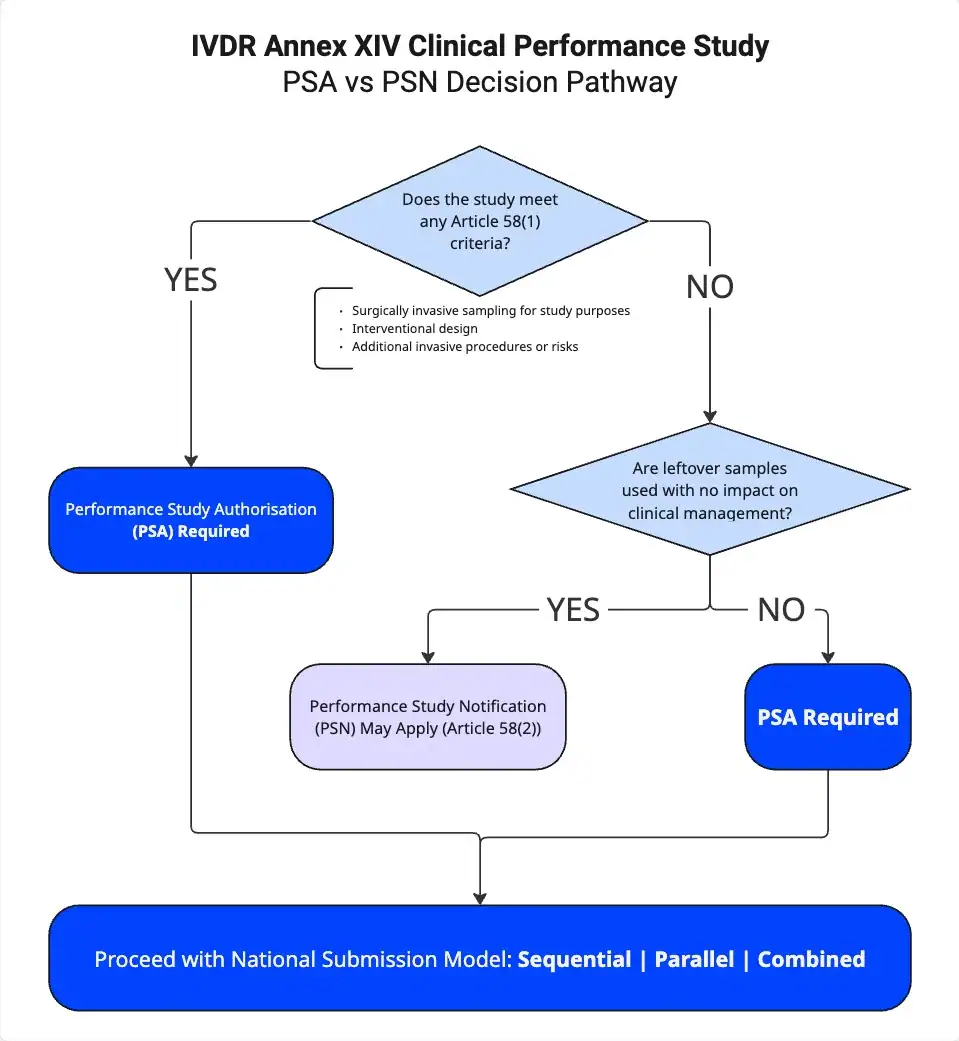
  • Article 58(1) studies require application for authorisation to the competent authority. These include interventional clinical performance studies where the study procedure involves additional invasive specimen collection, or where the results are used to guide patient management.
  • Article 58(2) studies specifically cover companion diagnostics, which always require authorisation when the CDx is investigational and specimens are prospectively collected.
  • Article 70 studies involve post-market performance studies using CE-marked devices used within their intended purpose, these generally require notification rather than full authorisation.
  • Other performance studies, such as those using exclusively leftover samples with no additional invasive procedures, may only need notification or, in some cases, fall outside the scope of Articles 58 and 70.

MDCG 2025-5 includes a decision flowchart (Appendix I) that helps sponsors determine which regulatory route applies to their specific study. Use it.

2026 consideration: The proposed IVDR revision (COM(2025) 1023) would simplify this landscape further, removing the authorisation requirement for studies involving only routine blood draws, and eliminating mandatory notification for CDx studies using exclusively leftover samples. However, these changes are not yet in force.

3. Account for National Variations Across EU Member States

The IVDR provides the regulatory framework, but ethics review requirements are set at the national level. MDCG 2025-5 explicitly reminds sponsors that it is necessary to check national requirements in each Member State where specimen collection occurs.

This means that a multi-country study can face different timelines, documentation requirements, and approval processes depending on the jurisdictions involved. Some Member States have well-established procedures for IVD performance study applications; others are still developing their processes under the IVDR.

Practical tips:

  • The specimen collection site (not the analysis site) determines which Member State’s regulatory requirements apply (MDCG 2025-5, Q20).
  • Plan for at least 38 days after notification before implementing any substantial modifications (this can be longer if expert consultation is triggered).
  • Language requirements for patient-facing documents vary by country.
  • Some Member States require parallel ethics committee and competent authority submissions; others accept sequential approaches.

4. Invest in Biostatistics from Day One

Biostatistics is not an afterthought, it is a design input. A qualified biostatistician should be involved from protocol development through final analysis. Key contributions include:

  • Sample size calculation An undersized study produces inconclusive results; an oversized study wastes time and resources. Both are avoidable with proper statistical planning.
  • Endpoint definition Clinical performance endpoints (sensitivity, specificity, predictive values, diagnostic accuracy) must be precisely defined and measurable.
  • Bias control Randomisation, blinding, and confounding factor management must be built into the design, not retrofitted.
  • Statistical analysis plan (SAP) This should be finalised before data collection begins. Post-hoc analysis adjustments are a red flag for Notified Bodies.

Under IVDR Annex XIII, Section 2.3.2, the competent authority may assess the statistical approach, study design, sample size, selected comparators, and choice of endpoints as part of the review process.

5. Use Validated Assays That Represent the Final Product

The IVDs used in clinical performance studies must accurately represent the final product as intended for commercial distribution. This means the device version used in the study should be equivalent, in terms of reagents, protocols, software, and hardware, to what will be placed on the market.

If the device undergoes changes between the study and CE marking, the manufacturer must justify that those changes do not invalidate the clinical performance data. Notified Bodies scrutinise this carefully.

IVDR Annex XIII also requires that analytical performance be established before or in parallel with the clinical performance study. There is no point in demonstrating that a device correlates with a clinical condition if the underlying analytical performance has not been characterised.

6. Follow Good Study Practice, Not GCP

This is a critical distinction that MDCG 2025-5 and industry experts have repeatedly emphasised. IVD performance studies are governed by Good Study Practice (GSP) as defined in ISO 20916, not Good Clinical Practice (GCP) as defined in ICH E6.

GCP was developed for pharmaceutical clinical trials and is referenced in ISO 14155 for medical device clinical investigations. While some principles overlap, the frameworks are different. Submitting a performance study designed under GCP rather than GSP can raise concerns during review and may even lead to rejection.

ISO 20916:2024, with its new Annex ZA, provides the direct link between GSP requirements and IVDR regulatory expectations. Sponsors should design their quality systems and study procedures around this standard.

7. Maintain Rigorous Data Management and Documentation

Data integrity is a central requirement under IVDR and ISO 20916. Your data management plan should cover:

  • How data will be collected, entered, and verified
  • Electronic data capture systems and their validation status
  • Source data verification procedures
  • Audit trail requirements
  • GDPR compliance for personal and health data across all participating countries
  • Data monitoring procedures and triggers for quality review

The Clinical Performance Study Report (CPSR) the final output of the study, feeds directly into the Performance Evaluation Report (PER). Any data integrity issues in the CPSR will compromise the entire PER and, by extension, the CE marking application.

8. Plan for Post-Market Performance Follow-Up from the Start

Under IVDR, clinical evidence is not a one-time exercise. The regulation requires a Post-Market Performance Follow-up (PMPF) plan that describes how the manufacturer will proactively collect and evaluate clinical performance data after the device is on the market.

For Class C and D devices, the PMPF Evaluation Report must be updated annually. Planning the PMPF in parallel with the pre-market study ensures continuity of evidence and avoids gaps that could jeopardise continued market access.

9. Incorporate User Feedback, Especially for Near-Patient and Self-Testing IVDs

Usability and user comprehension data are increasingly important, particularly for IVDs intended for lay users, point-of-care settings, or self-testing. Evidence of appropriate use, comprehension of instructions for use, and error rates should be captured during or alongside the clinical performance study.

This evidence supports compliance with the IVDR General Safety and Performance Requirements (GSPRs) and is expected in the technical documentation reviewed by the Notified Body. MDx’s usability engineering services can help integrate these requirements into your study design.

IVD Clinical Performance Studies: The Don’ts

1. Don’t Confuse Terminology or Regulatory Frameworks

As noted above, using GCP where GSP is required, or referring to your study as a “clinical trial” in regulatory submissions when the IVDR uses “clinical performance study,” can create unnecessary confusion and delays.

Similarly, do not conflate the FDA’s Investigational Device Exemption (IDE) framework with IVDR requirements. While both regulate clinical evidence generation for IVDs, the legal basis, study classifications, submission requirements, and oversight bodies are fundamentally different. An article on running clinical studies under IVDR versus the FDA pathway can help clarify these differences.

2. Don’t Neglect the Application or Notification Step

Depending on the study type (see Article 58(1), 58(2), or 70), your performance study may require formal authorisation from, or notification to, the competent authority in each Member State where specimens are collected. Failing to submit the correct application, or submitting under the wrong article, is a common cause of regulatory delays.

MDCG 2025-5 Appendix I provides a decision tree for determining your obligations. Use it systematically. When in doubt, apply for authorisation rather than merely notifying, it is easier to downgrade than to discover mid-study that you should have applied.

3. Don’t Underestimate Sample Size or Population Selection

A sample size that is too small produces inconclusive results. A sample size that is too large wastes time, budget, and participant goodwill. But more importantly, the study population must be representative of the device’s intended use population.

Under IVDR Annex XIII, the clinical performance study must include participants that reflect the diversity of the real-world target population, including age, gender, disease stage, and comorbidity profiles as relevant. A study conducted exclusively on one demographic may not satisfy Notified Body expectations for generalisability.

4. Don’t Treat Substantial Modifications Lightly

Once a study is authorised or notified, any significant change to the protocol, device, endpoints, or study design may constitute a substantial modification under IVDR Article 71.

MDCG 2025-5 Appendix II provides a non-exhaustive list of changes that may be considered substantial, including:

  • Changes to the primary endpoint measurement method
  • Modifications to the device under study (e.g., reagent formulation, software version)
  • Changes to testing modalities or procedures
  • Changes to the investigator or study sites
  • Changes to the statistical analysis plan

Substantial modifications must be notified to the relevant competent authority, and sponsors must typically wait at least 38 days before implementation. Ignoring this requirement can invalidate study data.

5. Don’t Skip the Ethics Review

While the IVDR itself does not impose ethics committee review requirements (these are set nationally), MDCG 2025-5 explicitly reminds sponsors that national ethics requirements must be checked and followed. In most EU Member States, ethics committee approval is required for studies involving human participants, even when leftover samples are used.

Beyond regulatory compliance, ethical oversight protects participants, strengthens the credibility of the study data, and is expected by Notified Bodies reviewing the clinical evidence package.

6. Don’t Rush the Study to Meet Transition Deadlines

With 2026 IVDR transition milestones creating urgency, particularly the 26 May 2026 deadline for Class C Notified Body applications under Regulation (EU) 2024/1860, there is a temptation to cut corners on study design, shorten timelines, or accept suboptimal data quality.

This is counterproductive. A poorly designed or hastily executed study is more likely to result in Notified Body queries, additional evidence requests, or outright rejection, all of which cost more time than doing it right the first time.

7. Don’t Ignore Companion Diagnostic Complexity

Companion diagnostics (CDx) occupy a unique regulatory position. Under the IVDR, CDx performance studies are always subject to Article 58(2) when the CDx is investigational. The regulatory requirements, study design considerations, and evidence expectations are more demanding than for standard IVDs.

For CDx co-development programmes, where the diagnostic is developed in parallel with a therapeutic product, sponsors may also need to coordinate with the European Medicines Agency (EMA) through a pre-submission meeting to align timelines and evidence requirements.

MDCG 2025-5 addresses CDx-specific questions (Q28-Q29), including when a CDx study qualifies as interventional and how leftover samples are handled.

8. Don’t Overpromise the Device’s Performance

Title tags, promotional materials, and even study endpoints sometimes reflect aspirational rather than evidence-based performance claims. The IVDR requires that all performance claims be supported by the clinical evidence package. Overpromising leads to either failed endpoints, misleading data, or post-market compliance issues.

Be transparent about the device’s limitations. Define realistic performance targets based on the state of the art, and design the study to demonstrate what the device actually achieves.

Key Regulatory Updates That Affect Performance Studies in 2026

MDCG 2025-5: What Sponsors Must Know

Published in June 2025, this 54-question guidance document is now essential reading for anyone planning or conducting IVD performance studies. The most impactful clarifications include:

  • Not all studies need both analytical and clinical components, but analytical performance must always be demonstrated via study data.
  • Leftover samples can be used in many study types, but the regulatory obligations vary depending on whether the study is analytical or clinical, and whether the IVD is CE-marked.
  • Specimen collection site determines jurisdiction, not the laboratory analysis site.
  • “Research Use Only” (RUO) products used with a medical purpose in a performance study become IVDs under the IVDR and must meet all applicable requirements.
  • Combined studies (medicinal product clinical trial + IVD performance study) are addressed, with specific guidance on sponsor responsibilities.

The Proposed IVDR Targeted Revision

The European Commission’s proposal (COM(2025) 1023), published in December 2025, includes changes that would directly impact performance studies if adopted:

  • Routine blood draw studies would no longer require prior authorisation, a significant simplification for many analytical and clinical performance studies.
  • CDx studies using exclusively leftover samples would no longer require mandatory notification.
  • Combined studies would benefit from a streamlined single-application process aligned with the Clinical Trials Regulation (EU) No 536/2014.

This proposal is still in the legislative process. The European Commission opened a feedback period until March 2026, and final adoption is not expected before late 2026 or 2027. Manufacturers should plan under current rules but stay informed of developments.

IVDR Transition Deadlines

For manufacturers relying on transitional provisions:

  • Class C devices: Notified Body application due by 26 May 2026.
  • Written agreement with Notified Body: Required by 26 September 2026 for Class C.
  • Legacy devices: Must continue to meet post-market surveillance and vigilance obligations under the IVDR, regardless of transitional status.

These deadlines are not flexible. Missing a milestone can mean loss of legal market access.

Summary: Performance Study Checklist for 2026

Before launching your IVD clinical performance study, confirm that you have addressed:

Planning phase:

  • Intended purpose clearly defined (manufacturer’s responsibility)
  • Regulatory pathway determined (Article 58(1), 58(2), 70, or other)
  • MDCG 2025-5 flowchart consulted
  • Clinical Performance Study Plan aligned with IVDR Annex XIII and ISO 20916:2024
  • Biostatistician engaged for sample size, endpoints, and SAP
  • National requirements checked for each Member State involved
  • Ethics committee submissions prepared

Execution phase:

  • Device version matches intended commercial product
  • Analytical performance established before or in parallel with clinical performance study
  • Data management plan in place with GDPR compliance
  • Good Study Practice (GSP) followed, not GCP
  • Substantial modification procedures defined
  • Safety reporting aligned with IVDR Article 76 and MDCG 2024-4

Reporting phase:

  • Clinical Performance Study Report (CPSR) prepared
  • Results integrated into Performance Evaluation Report (PER)
  • Post-Market Performance Follow-up (PMPF) plan developed
  • Documentation ready for Notified Body review

Frequently Asked Questions about IVD Clinical Trials

What is IVDR and how does it affect IVD clinical trials?

IVDR (In Vitro Diagnostic Regulation) is the EU regulatory framework that mandates clinical performance studies for IVDs. It requires documented evidence of analytical and clinical performance before market approval.

What are the main do’s for IVD clinical trial design?

Do establish clear study protocols aligned with IVDR guidelines, conduct ethical reviews early, use appropriate reference comparators, implement ISO 20916 standards, and document all decisions with traceability.

What are the critical don’ts in IVDR clinical studies?

Don’t skip ethics submissions, don’t underestimate sample size calculations, don’t use outdated reference materials, don’t ignore ISO 20916 requirements, and don’t delay documentation—regulators expect complete records.

Is ISO 20916 mandatory for IVD clinical performance studies?

ISO 20916 is the standard for clinical performance studies of in vitro devices. While referenced in IVDR, implementation depends on device class and intended use, but compliance significantly strengthens regulatory submissions.

How long does an IVD clinical trial typically take under IVDR?

Timeline varies by device complexity, study design, and patient availability—typically 6-18 months. Proper planning, early regulatory consultation, and avoiding common mistakes can accelerate approval timelines.

How MDx Can Help

Planning and executing an IVD clinical performance study under the current IVDR framework requires regulatory expertise, operational capability, and deep understanding of the evolving guidance landscape.

As a dedicated MedTech and IVD Contract Research Organisation (CRO), MDx supports manufacturers across the full study lifecycle, from protocol design and competent authority submissions to study conduct, monitoring, and reporting. Our team has hands-on experience with CDx companion diagnostics, NGS panels, and IVDs across Class B, C, and D classifications.

Whether you are launching your first IVDR performance study or managing a portfolio of legacy devices under transition pressure, we provide the expertise to navigate the process efficiently and avoid costly delays.

Explore our IVD clinical performance study services

Contact us to discuss your study

Planning your first IVD study?

Related Resources

This article was last updated in March 2026. The regulatory landscape for IVD clinical performance studies continues to evolve. For the latest information on IVDR requirements and how they affect your product, contact us.

Written by:
Carlos Galamba

Carlos Galamba

CEO

Senior regulatory leader and former BSI IVDR reviewer with deep experience in CE marking high-risk IVDs, companion diagnostics, and IVDR implementation.
You might also like

MDR Clinical Evaluation Report: How MEDDEV and MDCG Guidance Shape Compliance Under the EU MDR

Preparing an MDR Clinical Evaluation Report is one of the most challenging but essential steps in demonstrating the safety and performance of a medical device under the EU Medical Device Regulation (MDR). The process requires manufacturers to integrate multiple regulatory guidances, MDCG 2020‑6, MDCG 2020‑5, MDCG 2020‑13, MEDDEV 2.7/1 rev.4, and MDR Annex XIV, into a single, structured, and evidence‑driven CER.

This article breaks down how these documents support a compliant MDR Clinical Evaluation Report and what manufacturers must focus on to meet Notified Body expectations.

Key MDR Clinical Evaluation Report Requirements in Annex XIV

Building a Strong Clinical Evaluation Plan (CEP)

Annex XIV requires manufacturers to create a Clinical Evaluation Plan outlining:

  • Objectives and methodology
  • Data sources
  • Appraisal criteria
  • Update frequency across the device lifecycle

The CEP must remain a living document that evolves with device changes, PMS findings, and state‑of‑the‑art updates.

Demonstrating Safety and Performance

Your MDR Clinical Evaluation Report must show that the device meets GSPRs based on methodologically sound, relevant, and sufficient clinical data. Evidence may include:

  • Literature
  • Clinical investigations
  • PMS and PMCF data
  • Real‑world evidence

Benefit–Risk Determination

The CER must contain a transparent benefit–risk assessment based on:

  • Intended purpose
  • Clinical outcomes
  • Residual risks
  • Available alternatives and state of the art

How MEDDEV 2.7/1 rev.4 Supports MDR Clinical Evaluation Reports

Although created for the MDD, MEDDEV 2.7/1 rev.4 still provides the methodological foundation used by notified bodies.

Stage‑Based Clinical Evaluation Framework

MEDDEV outlines a structured, reproducible approach that aligns well with MDR expectations:

  1. CEP creation
  2. Identification of clinical data
  3. Appraisal of data quality and scientific validity
  4. Analysis and risk‑benefit assessment
  5. CER production and ongoing updates

Its systematic approach remains essential for building an MDR‑compliant CER.

How MDCG 2020‑6 Supports Legacy Devices in the MDR CER

MDCG 2020‑6 explains how to demonstrate sufficient clinical evidence for legacy devices.

When Clinical Investigations Are Necessary

Additional clinical studies may be required if:

  • Existing data is insufficient
  • The device has undergone significant changes
  • The device is high risk (e.g., implants, Class III)

PMCF as an Ongoing Requirement

Manufacturers must implement a PMCF plan to:

  • Confirm continued safety and performance
  • Collect real‑world evidence
  • Update the CER regularly

MDCG 2020‑6 reinforces that legacy devices need a full reevaluation—not a simple MDD carryover.

Using MDCG 2020‑5 for Equivalence in the MDR Clinical Evaluation Report

MDCG 2020‑5 clarifies how to establish equivalence, which is critical if you plan to use clinical data from an existing device.

Three Required Equivalence Dimensions

To claim equivalence, manufacturers must show alignment in:

  • Technical characteristics
  • Biological characteristics
  • Clinical characteristics

Robust documentation and legitimate access to clinical data from the equivalent device are mandatory.

Risk Considerations

Manufacturers must also show:

  • Differences do not impact clinical safety or performance
  • Risks are identified and mitigated
  • Claims remain scientifically justified

How MDCG 2020‑13 Aligns CERs With Notified Body Review

MDCG 2020‑13 provides the Clinical Evaluation Assessment (CEA) report template used by Notified Bodies. Understanding this structure helps manufacturers prepare CERs that meet reviewer expectations.

Key Focus Areas for Notified Bodies

  • Device description and intended purpose
  • Definition of state of the art
  • GSPR alignment
  • CEP adequacy and methodology
  • Data sources and appraisal quality
  • Clinical evidence strength and conclusions
  • PMCF requirements

Manufacturers who align their CER to this structure often experience smoother reviews and fewer NB questions.

Ensuring Regulatory Compliance in Your MDR Clinical Evaluation Report

To achieve a defensible, audit‑ready CER, manufacturers must integrate:

  • MDR Annex XIV clinical evaluation requirements
  • MEDDEV methodology and appraisal principles
  • MDCG 2020‑6 for legacy device evidence
  • MDCG 2020‑5 for equivalence justification
  • MDCG 2020‑13 for NB review expectations

A compliant MDR Clinical Evaluation Report demonstrates:

  • Scientific validity
  • Clinical performance
  • Clinical safety
  • A documented, robust benefit–risk profile

How MDx CRO Supports Your MDR Clinical Evaluation Report

MDx CRO specializes in supporting manufacturers through the full MDR CER process. Our services include:

  • Regulatory strategy and intended purpose definition
  • Customized MDR Clinical Evaluation Report templates
  • Clinical Evaluation Plan (CEP) development
  • Systematic literature reviews
  • CER and CEP medical writing
  • Gap analyses for clinical evidence and QMS alignment
  • Equivalence assessments
  • PMCF plan development
  • Technical documentation for MDR compliance
  • Support with Notified Body interactions

Our experts ensure that your CER is complete, consistent, and aligned with the latest MDR and MDCG expectations.

Request regulatory documentation services.

Industry Insights & Regulatory Updates

MDR and IVDR Targeted Revision

What EU Manufacturers Need to Know in 2026

If you build, launch, or maintain medical devices or IVDs in the EU, the MDR/IVDR targeted revision is the most consequential regulatory update since 2017. On 16 December 2025, the European Commission unveiled a proposal to simplify and streamline MDR and IVDR, cutting administrative drag while keeping safety standards intact.

From our side, 40+ consultants supporting manufacturers across the UK, US, Spain, Belgium, Portugal and the wider EU, we’ve already mapped the practical impact by role, class, and portfolio. Our team of experts analyzed the revision and wrote this article, with action steps you can start this quarter.

The Big Picture: why the EU proposed a targeted revision

The Commission’s objective is simple: reduce burden, improve predictability, and protect innovation, without lowering safety or performance requirements. The move responds to structural bottlenecks (NB capacity, uneven practices, and certification timelines) that have strained SMEs and constrained product availability.

Team insight
In recent NB projects for UK and US manufacturers seeking EU CE, we’ve observed that early, structured NB engagement eliminates avoidable review loops and reduces time-to-decisionespecially for complex portfolios.

What actually changes (and what doesn’t)

The proposal retains MDR/IVDR safety foundations but changes how processes are applied, more proportionate and digital by default. Key areas:

PRRC, certificate validity and risk-based reviews

  • PRRC: Simplifies qualification requirements; SMEs using an external PRRC no longer need them “permanently and continuously” available—just available.
  • Certificate validity: The fixed 5-year cycle is removed. Expect risk-based periodic reviews rather than hard recertification clocks.

PSUR & SSCP/SSP: lighter, risk-driven reporting

  • PSUR: Class IIb/III (update in Year 1 and every 2 years after; Class IIa) only when necessary based on PMS. NB reviews PSURs for high-risk classes during surveillance.
  • SSCP/SSP: Scope limited to devices under systematic TD assessment; no separate NB validation.

Classification tweaks: software, reusable instruments & more

Expect targeted rule adjustments that lower risk class for certain categories (e.g., some reusable surgical instruments, accessories to active implantables, software) with proportional evidence expectations-details to crystallise via the legislative process.

IVDR Focus: In-house Devices, Studies and Class C/D Impacts

  • In-house devices (Article 5(5)): More flexibility, including the ability to transfer in-house devices where public health justifies it; removal of the “no equivalent on the market” condition; central labs for clinical trials fall under the in-house exemption.
  • Performance studies: Routine blood draws no longer need prior authorisation; leftover-specimen companion diagnostic studies drop notification requirements.

Faster, Clearer Market Access

Structured dialogue with Notified Bodies (and change control plans)

The proposal creates a formal legal basis for structured dialogue pre and post-submission, plus pre-agreed change control plans to reduce surprises. It also distinguishes changes needing notification, approval, or none.

Breakthrough & orphan devices: priority and rolling reviews

New articles define breakthrough and orphan criteria with priority/rolling conformity assessment and expert access; legacy orphan devices may continue beyond transition under conditions.

Regulatory sandboxes for emerging tech

EU or MS-level sandboxes will enable supervised testing and data-generation for novel tech—accelerating de-risking while maintaining safeguards.

Going Digital: EUDAMED, UDI and e-Labelling

The revision pushes digital-by-default:

  • Digital DoC, electronic submissions, NB-manufacturer digital TD, and eIFU for near-patient tests.
  • Online sales: essential ID and IFU must be available to users.
  • UDI: Basic UDI-DI reinforced (assign before NB submission where applicable), more public UDI data, proportionality for small volumes/individualised devices, and preferential conditions for SMEs.

Separately, the Commission has signalled the EUDAMED clock and mandatory use in 2026, which amplifies the value of getting your UDI and EUDAMED data house in order now.

The MDR/IVDR targeted revision is a course correction: proportionate requirements, predictable reviews, and a digital backbone—without compromising safety. Manufacturers that act early—codifying structured NB engagement, recalibrating PSURs, and industrialising UDI/EUDAMED—will convert complexity into speed and resilience. Start with the 90-day plan; the rest gets easier.

FAQ

Does this lower safety standards?

No. The proposal keeps safety intact while simplifying process steps and aligning evidence with risk.

What’s the new PSUR rhythm?

For IIb/III: update in Year 1 then every 2 years; IIa: update when necessary per PMS. NBs review PSURs for certain high-risk classes during surveillance.

What’s “structured dialogue” in practice?

A formal framework to engage NBs before/after submission, with change-control plans and clear differentiation of changes needing notification/approval/none.

What changes for in-house IVDs?

More flexibility, including transfer options and inclusion of central labs for clinical trials within the exemption; removal of the “no equivalent device” clause.

Where does EUDAMED/UDI fit?

Digital submissions, Basic UDI-DI before NB submission (where applicable), and broader public UDI data access; plan for 2026 EUDAMED milestones now.

Ready to transform regulatory complexity into competitive advantage?

Contact MDx today and let us support your journey through the next chapter of MDR and IVDR.

Written by:
Andre Moreira

Andre Moreira

Regulatory Director, Medtech

Senior quality & regulatory expert, ISO 13485/MDR/IVDR auditor with expertise in CE marking MDs/IVDs, incl. dental, implantables, drug delivery, genomic tests, & MDR/IVDR implementation.
Industry Insights & Regulatory Updates

SaMD Compliance Guide: Navigating Regulations for Software as a Medical Device

Software as a Medical Device (SaMD) occupies a unique position in the regulatory landscape. Unlike physical devices, software can be updated continuously, deployed across borders instantly, and embedded into clinical workflows in ways that are difficult to audit or reverse. These characteristics make it one of the most complex categories to bring to market under the EU Medical Device Regulation (MDR, Regulation (EU) 2017/745).

This guide covers what SaMD developers, digital health companies, and regulatory teams need to understand to achieve and maintain CE marking under EU MDR, from initial classification through to post-market surveillance.

For companies developing AI-powered SaMD, see our companion guide: EU AI Act and Medical Devices: What SaMD Developers Need to Know

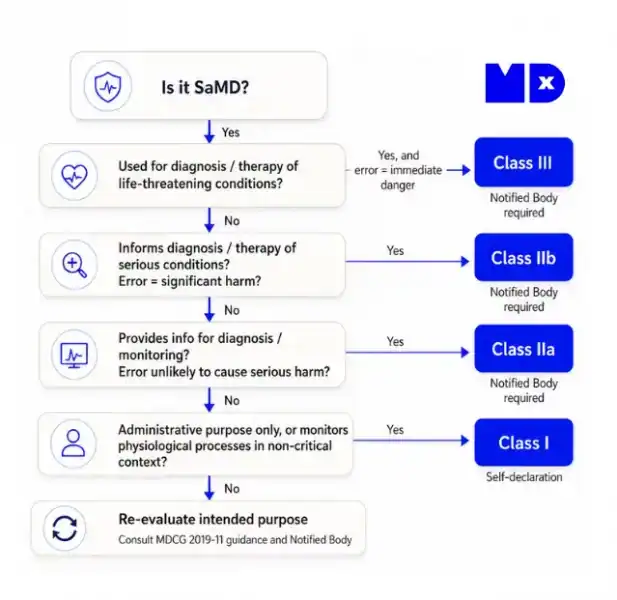
Flowchart illustrating SaMD classification process for medical device compliance and regulatory navigation.

SaMD compliance in 60 seconds
Software used for medical purposes must meet EU MDR requirements before CE marking.

  • Classify the software risk and intended use
  • Build clinical, technical, and quality evidence
  • Maintain continuous post-market monitoring

Software as a Medical Device (SaMD) sits in a distinct regulatory space. Unlike hardware, software can change frequently, scale globally in seconds, and integrate deeply into clinical workflows in ways that are harder to trace or roll back. These factors make SaMD one of the most challenging product categories to launch under the EU Medical Device Regulation (MDR, Regulation (EU) 2017/745).

This guide explains what SaMD developers, digital health companies, and regulatory teams need to know to obtain and maintain CE marking under EU MDR—from initial classification to post-market surveillance.

1. Does Your Software Qualify as SaMD?

Not all medical software is a medical device. The first and most important step is determining whether your software falls within the MDR’s scope.

The International Medical Device Regulators Forum (IMDRF) defines SaMD as:
“Software intended to be used for one or more medical purposes that perform these purposes without being part of a hardware medical device.”

Under MDCG 2019-11 the EU guidance document on software qualification and classification, software qualifies as a medical device when the manufacturer’s intended purpose includes one or more of the following: diagnosis, prevention, monitoring, prediction, prognosis, treatment, or alleviation of disease or injury in individual patients.

The key word is intended. It is not the capability of the software that determines its regulatory status, it is how the manufacturer positions, labels, and markets it.

Software that qualifies as SaMD:

  • An AI-based image analysis tool that assists radiologists in detecting tumours
  • A mobile app that predicts hypoglycaemic events for diabetic patients
  • A cloud algorithm that classifies ECG signals to detect arrhythmias
  • A clinical decision support tool that recommends treatment options based on patient data

Software that does not qualify as SaMD:

  • Scheduling, billing, or administrative healthcare software
  • General wellness or fitness apps not marketed for disease diagnosis or monitoring
  • General-purpose image viewers used in clinical settings but not intended for diagnosis
  • Software that drives or controls a hardware medical device (classified as software in a device, not as a device)

If there is genuine uncertainty about whether your software qualifies, document the reasoning explicitly. This is one of the first things a Notified Body will look for.

2. Classification Under MDR Rule 11

Once software is confirmed to be a medical device, it must be classified according to Annex VIII, Rule 11 of the MDR. This is the rule specifically designed for software, and it determines whether you need a Notified Body and which conformity assessment route applies.

Rule 11 classification depends on the intended purpose and the consequences of error:

Class III — Software intended to provide information used to make decisions for diagnosis or therapy of life-threatening conditions, where an error could cause immediate deterioration or irreversible harm. Examples: software diagnosing acute MI from ECG, cancer detection algorithms used in surgical planning.

Class IIb — Software intended to provide information for diagnosis or therapy of serious conditions where an error could cause significant deterioration. Examples: software classifying radiology images for treatment planning, AI tools supporting oncology staging.

Class IIa — Software intended to provide information for diagnosis or monitoring, where errors are unlikely to cause serious harm. Examples: chronic disease monitoring apps, software flagging abnormal lab values for clinical review.

Class I — Software intended only for administrative purposes, or software that monitors physiological processes in non-critical contexts. Class I requires no Notified Body involvement (unless sterile, with a measurement function, or reusable surgical).

The critical implication: the majority of clinically meaningful SaMD — any tool that informs a clinical decision, will land in Class IIa or above, requiring Notified Body review. Plan for this from the start of development.

3. The MDR Compliance Roadmap for SaMD

Achieving CE marking for SaMD under MDR requires a structured process across multiple technical and quality domains. These are not sequential checkboxes — they must be built in parallel and integrated throughout the software development lifecycle.

Intended Purpose and Use Context

Define the intended medical purpose with precision: who the users are, in what environment the software will be used, what inputs it processes, and what outputs or decisions it supports. This definition drives classification, clinical evidence requirements, labelling, and risk management. Changes to intended purpose late in development are expensive and disruptive.

Risk Management (ISO 14971)

Software-specific hazards go beyond physical failure. For SaMD, risk management must address algorithm drift (model performance changing over time on real-world data), cybersecurity vulnerabilities, data input errors, interoperability failures, and the consequences of false positives and false negatives in different clinical scenarios. Risk management is a lifecycle activity — it does not end at submission.

Quality Management System (ISO 13485)

A QMS certified to ISO 13485 is mandatory. For software, the QMS must specifically address design control, configuration management, version control, change control, software validation, and CAPA processes for software defects. Many software organisations transitioning from commercial development processes (Agile, DevOps) find that adapting these to ISO 13485 requirements is one of the most significant operational challenges.

Software Lifecycle (IEC 62304 and IEC 82304-1)

IEC 62304 is the harmonised standard for medical device software lifecycle processes. It requires software safety classification (Class A, B, or C based on the severity of harm if the software fails), and mandates specific documentation, verification, and validation activities proportionate to that class. IEC 82304-1 extends this to standalone health software. Compliance with these standards, evidenced in the technical documentation, significantly streamlines Notified Body review.

Clinical Evaluation (MDCG 2020-1)

SaMD must demonstrate clinical benefit not just technical performance. Under MDCG 2020-1, clinical evaluation for software must include a systematic literature review, analysis of clinical data from studies or real-world evidence, and a clear demonstration that the software’s outputs lead to measurable benefit in the intended patient population. “The algorithm is accurate” is not sufficient. The evaluation must show that clinical accuracy translates to clinical benefit.

Cybersecurity

Cybersecurity is a GSPR requirement (Annex I, section 13.6) and is assessed as part of conformity. Requirements include: ensuring confidentiality, integrity, and availability of data throughout the lifecycle; defining minimum IT requirements and secure configurations; implementing and validating security controls; providing clear IFU guidance on data protection, updates, and decommissioning; and maintaining a post-market security plan that tracks vulnerabilities and manages patches. The MDCG 2019-16 guidance and the IMDRF cybersecurity framework are the primary references.

Technical Documentation (Annex II and III)

SaMD technical documentation must include software architecture documentation, the software development plan and lifecycle records, risk management file, usability engineering file (IEC 62366), verification and validation records, clinical evaluation report, and labelling. For AI-based SaMD, documentation of training data, model validation methodology, and performance across demographic subgroups is increasingly expected by Notified Bodies.

Conformity Assessment and CE Marking

For Class IIa and above, a Notified Body must review the QMS and technical documentation. Once conformity is demonstrated, the manufacturer issues a Declaration of Conformity and applies the CE mark. Post-CE marking, the technical documentation must be kept current and the Notified Body must conduct periodic surveillance audits.

Post-Market Surveillance and Software Updates

PMS for SaMD is not passive. Manufacturers must actively monitor real-world performance data, including clinical outcomes where available, algorithm performance metrics, user feedback, and incident reports. Critically, every software update must be assessed to determine whether it constitutes a significant change requiring re-assessment or Notified Body notification. Changes to the algorithm, training data, intended use, or clinical claims are most likely to trigger this requirement.

4. Common Pitfalls and How to Avoid Them

Underestimating classification. Many developers initially classify their software as Class I, expecting to self-certify, only to discover during technical documentation preparation that the intended purpose clearly falls under Rule 11 Class IIa or above. Classification should be confirmed with regulatory input before development begins, not after.

Clinical evidence left to the end. Clinical evidence for SaMD takes time prospective studies, real-world performance evaluations, and literature reviews cannot be conducted in parallel with Notified Body submission. Build the clinical evidence strategy into the development plan from the start.

Treating the QMS as a documentation exercise. Notified Bodies now conduct in-depth QMS audits that test whether processes are genuinely embedded in the organisation. A QMS that exists only in documentation will not survive an audit.

Ignoring post-market obligations. The MDR’s post-market surveillance requirements for software are active and ongoing. Failure to establish functioning PMS processes before launch is a common finding in post-certification audits.

5. How is SaMD classified under EU MDR?

If the software is intended to process data from in vitro diagnostic tests for example, software that interprets NGS data for clinical decision-making, or a companion diagnostic algorithm, it may be regulated under IVDR (2017/746) rather than MDR. The classification rules differ (IVDR uses Annex VIII Rules 1–7), and the clinical evidence requirements under IVDR are in some ways more stringent, requiring performance evaluation under ISO 20916 and, for Class D IVD software, EMA consultation. Read more about NGS bioinformatics validation.

If your software sits at the boundary of MDR and IVDR, an early regulatory opinion is essential. Getting the regulatory framework wrong at the start can require complete rework of technical documentation.

Challenges, Risks & Strategic Recommendations for SaMD

ChallengeMitigation / Best Practice
Unclear intended purpose or software classificationDefine the medical purpose at project initiation. Align IFU, labeling, marketing, and technical files with intended use and Rule 11 logic.
Insufficient clinical/performance evidenceUse prospective studies or robust real-world performance evaluations aligned with MDR Annex XIV and, where applicable, AI Act testing provisions.
Data quality and representativenessImplement data governance for acquisition, preprocessing, and validation. Ensure datasets represent the intended patient population and use context.
Transparency and user comprehensionProvide clinically interpretable outputs. Explain functionality, limitations, and user responsibilities in the IFU and training materials.
Traceability gaps between requirements, risks, and testsMaintain a requirements-to-verification traceability matrix that links requirements, risk controls, verification results, and clinical claims.
Software updates and regulatory impactEstablish change management to evaluate whether updates are significant and require re-assessment. Integrate these controls into the QMS.
Regulatory and Notified Body capacity constraintsEngage early with a qualified Notified Body. Provide clear, harmonized documentation to streamline assessments.
Evolving standards and regulatory guidanceMonitor new EU and MDCG guidance and standards (ISO 14971, ISO 13485, IEC 62304, IEC 81001-5-1) and the EU AI Act. Review QMS procedures periodically to stay aligned.

FAQ

What is Rule 11 for software?

Rule 11 is the main classification rule used to determine the risk class of medical software under EU MDR. In practice, most SaMD falls into Class IIa, IIb, or III because software often influences diagnosis or treatment decisions. The higher the clinical impact and risk to patients, the higher the classification and regulatory requirements.

When does my SaMD need a Notified Body?

Most SaMD requires involvement from a Notified Body because it is rarely classified as Class I under MDR. If your software supports clinical decisions, drives treatment, or monitors patients, third-party conformity assessment is typically mandatory before you can obtain CE marking.

Is software a medical device under EU MDR?

Yes, software qualifies as a medical device when it is intended by the manufacturer to perform a medical purpose, such as diagnosis, prevention, monitoring, prediction, prognosis, treatment, or alleviation of disease. The intended use defined in your documentation is what determines whether MDR applies.

Does SaMD need CE marking?

Yes. Any Software as a Medical Device placed on the EU market must obtain CE marking before it can be sold or used clinically. This confirms the software meets MDR requirements for safety, performance, risk management, and ongoing post-market monitoring.

What is IEC 62304?

IEC 62304 is the international standard that defines lifecycle requirements for medical device software. It sets expectations for development, testing, risk management, maintenance, and documentation, and is widely used to demonstrate compliance with MDR software requirements.

When does SaMD become Class IIa or higher?

Under MDR Rule 11, software moves to Class IIa or above when it influences clinical decisions, drives treatment, or monitors patient health in a way that could lead to harm if the software fails or provides incorrect information. In practice, most SaMD falls into Class IIa, IIb, or III rather than Class I.

Where to Start: step-by-step for SaMD Manufacturers

Delivering safe and compliant Software as a Medical Device (SaMD) requires a structured approach that integrates regulatory, technical, and quality considerations across the lifecycle. Compliance with the EU MDR ensures that safety, performance, and clinical benefit remain clear and consistently supported.

Advanced technologies, including AI, can enhance SaMD functionality; however, they should not overshadow the core principles of safety, effectiveness, and human oversight. The same regulatory rigor and lifecycle management practices apply to all SaMD, regardless of the underlying technology.

Manufacturers should:

  • Define a clear intended purpose aligned with clinical benefit
  • Maintain a QMS that addresses MDR and, where relevant, AI Act obligations
  • Engage early with Notified Bodies and keep documentation, risk, and cybersecurity controls consistent
  • Treat post-market surveillance and maintenance as continuous improvement

By embedding these principles, manufacturers can reach compliance efficiently and deliver trustworthy, clinically valuable SaMD solutions.

Further Reading

Written by:
Diego Rodríguez Muñoz, PhD

Diego Rodríguez Muñoz, PhD

RA Specialist

Regulatory affairs specialist with expertise in EU MDR/IVDR, CE marking, SaMD & AI for MDs & IVDs.
Industry Insights & Regulatory Updates

Performance studies in gene therapy trials: from assay cut-offs to clinical impact

In gene therapy, your in-vitro diagnostic (IVD) doesn’t sit on the sidelines—it drives clinical decisions. If a result screens a participant in/out, times dosing, or informs safety management, you’re in IVDR performance study territory with ISO 20916 as the operational backbone. Treat the IVD like a product under evaluation, not a lab tool, and design a study that proves it’s fit for the exact decision your trial needs.

What actually triggers a performance study in gene therapy?

Use the simplest rule of thumb: does the assay influence patient management? If yes, plan for an IVDR Article 58 performance study in parallel with your clinical trial authorization. Typical triggers:

  • Eligibility/stratification: AAV neutralizing antibody (NAb) or total-antibody (ELISA) results that gate inclusion/exclusion or set a dosing window.
  • Patient monitoring: Assays that guide timing or continuation (e.g., changes in humoral markers relevant to vector readiness).
  • CDx trajectory: When the test is essential for safe and effective use, your evidence should be built to scale toward CDx—even if you’re not filing as CDx yet.

Treat these as combined trials (IMP + IVD). Align the performance study application with the drug CTA so approvals move together.

Build the right “assay stack” for AAV programs

Design your assay plan around the decisions your trial must make. In combined trials (IMP + IVD), that usually means separating screening, decision-making, and context/supporting activities—and documenting exactly which assay output drives which action in the CPSP and APR.

1) Screening assays

  • Purpose: Identify participants who may be eligible for dosing or further evaluation.
  • Typical methods: Total antibody (ELISA) and/or neutralizing antibody (NAb) assays.
  • Predefine: intended purpose, the output used for screening, cut-off, QC/controls, and invalid/repeat handling.
  • Regulatory note: If screening impacts enrollment/timing, it’s within IVDR performance study scope—reflect this in the protocol and dossier.

2) Decision-making assays

  • Purpose: Provide the result that directly guides patient management (e.g., eligibility for AAV dosing or readiness after a waiting/intervention period).
  • Typical method: Cell-based NAb assay when the decision depends on functional inhibition of transduction.
  • Predefine: a validated cut-off and how it’s applied at the decision point; acceptance criteria (controls/repeats), handling of invalid/borderline results, and any repeat-testing logic.

3) Context/supporting assays

  • Purpose: Provide supporting information (e.g., PCR/NGS for inclusion criteria or other exploratory markers) without driving patient management unless explicitly pre-specified.
  • Governance: These may be exploratory assays; do not let them influence decisions unless pre-declared.

Designing the CPSP: endpoints that matter (and survive small-N)

Tie endpoints to the decision you must defend. In rare diseases, power is constrained—precision and transparency carry weight.

Primary, decision-linked endpoints (illustrative):

  • Proportion below cut-off at the dosing/decision point.
  • Time-to-negativity (post-intervention or natural decline).
  • Duration of sustained negativity.
  • Change from baseline in NAb titers.

Key secondaries (analytical + feasibility + safety):

  • Analytical performance in operations: run-level QC pass rate, invalid/repeat rate, assay deficiencies/deviations.
  • Feasibility: turnaround time from collection to result, pre-analytical robustness (freeze–thaw, transport windows, matrix effects), stability.
  • Safety: AEs from sample collection/device use as per IVDR performance study reporting.

Correlative (pre-specified, descriptive):
Relate NAb kinetics to other humoral markers (e.g., total IgG, capsid-specific antibodies) where it clarifies the biology without over-claiming.

When your IVD sample size is constrained by the gene therapy protocol, say so. Set precision targets for agreement or proportions and specify how you’ll treat indeterminates/missing—regulators prefer realistic clarity over decorative p-values.

From LDT to IVDR: documentation that actually wins

Many gene therapy assays start as lab-developed tests or adapted RUO methods. Under IVDR you need an Analytical Performance Report (APR), not just a conventional validation report. The APR:

  • Maps analytics to intended purpose and clinical decision.
  • Uses a structured narrative per characteristic: Purpose → Study design → Statistics → Acceptance criteria → Results → Conclusion.
  • References applicable frameworks (IVDR, ISO, MDCG) and integrates ICH Q2(R2)/Q14 principles within the IVDR lens.
  • Justifies non-applicable GSPR requirements explicitly instead of hiding them.

What reviewers expect to “see on the page”

  • Analytical sensitivity: LoD/LoQ with methods, not just point estimates.
  • Analytical specificity: cross-reactivity, interference, matrix effects—demonstrated, not assumed.
  • Accuracy (trueness/bias): vs. reference materials/known concentrations across the measuring range.
  • Precision: repeatability, reproducibility and intermediate precision (operators, days, instruments).
  • Measuring interval/reportable range: tied to clinical decisions.
  • Robustness & stability: small-parameter changes; specimen/reagent stability across the actual logistics.
  • Traceability: metrological traceability to reference materials or SI units wherever feasible.

Bridging without back-tracking

If you migrate platforms or laboratories, pre-declare equivalence boundaries, commutable panels, and the statistical approach before you switch. Link the APR to the Design History File and ultimately to the Performance Evaluation Report to keep evidence audit-ready.

Operational blueprint: lab-centric, ISO 20916–aligned execution

Programs that run smoothly accept a basic truth: lab operations are clinical operations when an assay drives decisions.

  • Risk-based monitoring (ISO 20916): Prioritize calibration records, control runs, instrument logs, sample accountability, LIMS audit trails, and lab-critical SDV.
  • Clear RACI across stakeholders: pharma sponsor, diagnostic partner, central lab, CRO(s). Assign a single “owner of truth” for eligibility calls and a documented adjudication path for gray-zone results.
  • Sample governance: pre-analytical controls (shipping, temperature, freeze–thaw limits), redraw/retest SLAs, and chain-of-custody that survives inspection.
  • Safety integration: define device-side AE/device-deficiency flows and their handshakes with the IMP SAE process—who reports what, where, when—and hold joint drills before FPI.

Common pitfalls (and the fix)

Copy-pasting a validation report into IVDR—without showing how analytics support the clinical decision.

  • Fix: Rewrite into an APR aligned to the intended purpose; connect every analytic claim to the use case.

Pretending power exists in tiny cohorts.

  • Fix: Pre-specify precision not power; make QC-forward primary endpoints; keep clinical associations descriptive.

Letting exploratory assays creep into decision-making ad hoc.

  • Fix: Lock the assay stack and decision logic in the CPSP; label everything else exploratory.

Underplaying pre-analytical risk.

  • Fix: Measure it (transport windows, freeze–thaw), set acceptance criteria, and track at run-level.

Ambiguity in roles and safety.

  • Fix: Publish a RACI and an integrated safety matrix early; rehearse escalations.

Sponsor checklist

  • Decide early if the assay changes patient management → if yes, plan an IVDR performance study.
  • Lock claims, cut-offs, and gray zones; write the CPSP to those decisions.
  • Choose your study model (prospective/retrospective/bridging) to match real sample access and clinical trial needs.
  • Produce an APR with complete traceability and justified non-applicable requirements.
  • Stand up lab-centric monitoring (ISO 20916), eTMF rigor, and LIMS auditability.
  • Align device and drug safety reporting—on paper and in practice.
  • Embrace small-N: set precision goals, prioritize QC endpoints, and keep associations descriptive.
  • Think CDx-ready: structure today’s evidence so tomorrow’s filing doesn’t start from zero.

How MDx CRO accelerates combined gene therapy studies

We run the device side of your combined trial end-to-end: strategy, CPSP/APR/PER authorship, submissions, ISO 20916-aligned operations, lab-centric monitoring and SDV, data/biostats, and inspection-ready traceability. We design performance studies that mirror real clinical decisions, so approvals and operations move in lockstep.

Let’s co-design your performance study

Speak with our IVD & gene therapy team

Industry Insights & Regulatory Updates

Spanish IVD Regulation 2025 – New Royal Decree Updates for IVD Manufacturers, Sponsors, and Labs

On 21 October 2025, the Council of Ministers approved Spain’s new Royal Decree for in vitro diagnostic devices. AEMPS confirmed the approval and explained that the decree complements IVDR (EU) 2017/746, strengthens patient protection, and adds national rules on language, in-house manufacturing, performance studies, and vigilance. This development anchors the Spanish IVD Regulation 2025 and sets clear obligations for manufacturers, sponsors, and laboratories. (Official announcement: AEMPS)

Spanish IVD Regulation 2025: What Changed and Why It Matters

The Spanish IVD Regulation 2025 replaces Royal Decree 1662/2000. It clarifies how IVDR applies in Spain and fills Member-State choices, including competent authority, language regime, Article 5(5) in-house devices, genetic testing and counseling, a national marketing register, performance study authorization, and vigilance and market control.

The regulation aims to raise quality, ensure traceability, and speed up corrective actions. It also improves access to certain self-tests through pharmacy channels.

Quick Guide for Busy Teams (Manufacturers, Sponsors, Labs)

  • Confirm what the Spanish IVD Regulation 2025 changes for your role.
  • Map licensing, registration, language, Article 5(5), ISO 15189, performance studies, and vigilance to owners and deadlines.
  • Prepare Spanish-language materials and set up traceability and incident reporting workflows.
  • Labs should plan ISO 15189 and Article 5(5) notifications to AEMPS.

Competent Authority and Language Rules under the Spanish IVD Regulation 2025

AEMPS is the competent authority for IVDs in Spain. Under the Spanish IVD Regulation 2025, user-facing materials for devices marketed in Spain must appear in Spanish. That includes labels, IFU, and safety notices. Regulatory submissions to AEMPS should include Spanish content. Co-official languages may be added, but Spanish is mandatory.

Facility Licensing: Manufacturers, Sterilizers, and Importers

The Spanish IVD Regulation 2025 requires operating licenses for manufacturers, sterilizers, and importers before they place devices on the market. AEMPS evaluates facilities, personnel, and quality systems.

Each site must appoint a Technical Responsible Person (national role) and meet IVDR oversight led by a PRRC. One qualified person can cover both if they meet the criteria.

Transitional rule: Existing third-party manufacturers get up to one year from entry into force to secure the new license. Existing licenses remain valid until renewal or change, which then follow the new procedure.

Marketing Register and Traceability

The decree creates a Spanish marketing register for devices placed on the market. Manufacturers, authorized representatives, and importers must notify product information to support traceability and market surveillance. The register complements EUDAMED and UDI.

Transitional rule: Spain will activate notifications when the register is operational. Until then, use existing national channels.

In-House Devices (Article 5(5) IVDR): What Labs Must Do Now

Scope and intent

The Spanish IVD Regulation 2025 regulates in-house IVDs made and used within the same health institution. Labs must justify need: a commercial CE-marked device cannot meet the specific clinical need. No industrial-scale production. No commercial supply to third parties.

Quality and documentation

In-house devices must meet IVDR GSPRs. Labs should keep a technical file (intended purpose, risk management, analytical and clinical performance, V&V, SOPs, and labeling for internal use).

ISO 15189 accreditation

Labs that manufacture in-house devices must obtain ISO 15189 accreditation for the manufacturing scope. Spain ties this to the transitional schedule.

Notification to AEMPS

Before starting in-house manufacture, labs must notify AEMPS and submit the Article 5(5) declaration. They must designate a responsible person for the in-house manufacturing process.

Genetic Testing: Information and Counseling

The Spanish IVD Regulation 2025 requires clear information and appropriate counseling for genetic testing. Health professionals must explain limits, implications, and result interpretation. This duty applies before and after testing.

Health professionals and centers must obtain explicit informed consent from individuals before performing a genetic test. The patient must be made aware of the nature and purpose of the test and consent in writing (except where law may exempt certain public health screening). This goes beyond standard consent, recognizing the personal and familial implications of genetic data.

Before the test, patients should be informed about what the test can and cannot tell them, and after the test, a qualified professional should explain the results and any recommended follow-up. This requirement ensures genetic tests (such as those for hereditary disease risk) are not delivered without context or support, helping patients make informed decisions.

These obligations apply to genetic IVDs regardless of whether they are done in-house or as commercial tests. For example, a direct-to-consumer genetic test kit (if allowed on the market) would need to be accompanied by processes that ensure the purchaser gets necessary information and counseling. However, most genetic tests are administered in clinical settings; the decree effectively standardizes the practice of genetic counseling as part of testing.

Performance Studies in Spain

All performance studies in Spain must first obtain a favorable opinion from an accredited Research Ethics Committee (REC) and authorization from the health center’s management where the study will be conducted. This applies to any study using human specimens or data for evaluating an IVD’s performance, ensuring ethical considerations (informed consent, data protection, etc.) are addressed early.

When you need authorization

Interventional clinical performance studies and other studies involving risks require AEMPS authorization before first participant. Ethics approval remains mandatory.

What sponsors must prepare

  • Spanish protocol (CPSP), Investigator’s Brochure, and informed consent.
  • Insurance/indemnity for participants and a clear liability framework. The decree explicitly requires compensation for damages and defines the liability regime for sponsors. Sponsors should budget for a clinical trial insurance policy and follow the decree’s rules on coverage minimums and conditions (similar to drug trial insurance requirements in Spain).
  • Monitoring, data management, and safety reporting plans aligned with IVDR. Upon study completion, results (whether positive, negative, or inconclusive) should be documented and may need to be reported in the public database or to AEMPS.

Studies with CE-marked devices

If the study adds invasive or burdensome procedures or goes outside intended use, sponsors should request authorization and notify AEMPS.

Vigilance and Market Control

The Spanish IVD Regulation 2025 reinforces vigilance. Manufacturers must report serious incidents and FSCAs to AEMPS. Healthcare professionals and institutions should also report incidents. Authorities will coordinate inspections and market control actions.

For instance, if an IVD test yields false results that lead to patient harm, the manufacturer has to notify AEMPS and submit a Spanish-language safety notice so that users in Spain can be adequately informed. This ensures critical safety information is effectively communicated and mitigated in the local context.

The decree emphasizes that healthcare professionals, health institutions, and even patients/users have a responsibility to report any suspected serious incidents to AEMPS. Spain is thus bolstering a culture of vigilance: a lab that encounters a device malfunction or a clinician who notices a pattern of erroneous results should alert the authorities. The more comprehensive the reporting, the better AEMPS can intervene to prevent harm.

Self-Test Access and Pharmacy Channels

Notably, the new rules remove the prescription requirement for at-home self-testing kits (e.g. self-tests for glucose, pregnancy, COVID-19, etc.), making them more accessible. However, even without needing a prescription, these self-diagnostic products can only be sold through pharmacies (in-store or via an official pharmacy website) to ensure proper guidance on use. High-risk tests or those used for critical decisions may still require a prescription or professional administration.

Transitional Timelines You Should Track

  • Entry into force: The decree takes effect after BOE publication.
  • Licensing: Existing third-party manufacturers have up to one year to obtain the new operating license.
  • Marketing register: Notification duties start when the register goes live.
  • In-house devices: Spain applies the IVDR timelines. Labs must meet Article 5(5) conditions and ISO 15189 by the dates set in the transitional provisions and related guidance.
  • Legacy devices: Spain honors the IVDR transition for legacy IVDs and preserves specific old-rule processes until systems fully switch over.

Implications by Stakeholder

IVD manufacturers

  • Secure or update operating licenses.
  • Localize labels/IFU into Spanish.
  • Prepare marketing register data.
  • Strengthen PMS and vigilance interfaces with AEMPS.

Sponsors

  • Plan authorization for risk-involving performance studies.
  • Build Spain-ready dossiers and insurance.
  • Prepare Spanish IB, consent forms, and patient materials. Note: AEMPS may allow an english version of the IB if no objection is raised by the Ethics Committee.

Hospital and private labs

  • Confirm Article 5(5) eligibility and prepare technical documentation for the in-house test.
  • Achieve ISO 15189 for manufacturing scope.
  • Notify AEMPS and assign the in-house responsible person.
  • Update genetic testing consent and counseling SOPs.

How MDx CRO Helps You Execute

Regulatory strategy and submissions

We align IVDR with the Spanish IVD Regulation 2025 and prepare AEMPS submissions (licenses, notifications, marketing register onboarding when live).

ISO 15189 and Article 5(5)

We run gap assessments, build SOPs, and guide labs to ISO 15189 accreditation for in-house manufacture. We prepare the Article 5(5) declaration and AEMPS notification package.

Performance studies

We plan and manage interventional and risk-involving performance studies in Spain. We handle AEMPS authorization, ethics submissions, monitoring, and safety reporting. MDx can also act your IVD performance study legal representative in the EU.

Vigilance and PMS

We design Spanish-compliant PMS frameworks, incident workflows, and FSNs. We help you interface with AEMPS and prepare for inspections.

Written by:
David Tomé

David Tomé

President

Clinical research leader and MedTech entrepreneur with deep expertise in medical devices, IVDs & precision medicine, with global study experience.
Industry Insights & Regulatory Updates